The Siren, the Libertine, the Ideal Lover, the Dandy, the Natural, the Coquette, the Fascinator, the Charismatic, the Star, the Antiseducer. Without having particular titles either as a historian, as an anthropologist or as a psychologist, Robert Greene was a small literary case in America for the ease with which he sold more than half a million copies of his 500-page book, The Art of Seduction . His secret was to go beyond the classic eighteenth and nineteenth century manuals for young girls looking for a husband, based on the simple but effective principle of giving little and making a lot sigh. Here, then, is not just one figure of seduction (the Fugitive) but the nine we have listed, who go into confrontation with the eighteen figures of victims identified by Greene. A complete taxonomy, at least in intention.
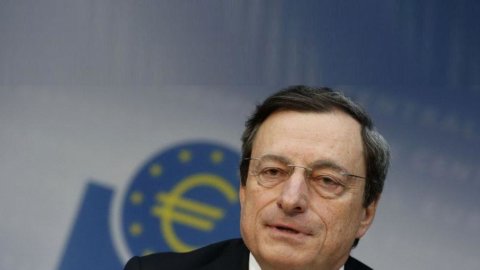
The tenth figure of seducer, not included in the book published in 2004, is the European Central Banker. As in the Liaisons Dangereuses, where the libertine de Valmont chooses the most difficult challenge as his target, the upright and angelic Madame de Tourvel, the tenth figure has the immeasurable ambition to keep the financial markets in a constant state of excitement by gradually revealing little, hinting, conceding verbally and then retracting, selling the same thing many times in succession without ever delivering it. I would but I can't, I can but I don't want to, I would but I still can't, I can if I want, I will if it's the case and all the infinite variations on the theme. All under the strict eyes of the German guardians.
On these infinite variations the market writhes in the amorous monologue of Roland Barthes' Fragments. What does my love object want to tell me? Why does he tell me so little? What does his silence mean? Last time he made me half a promise and this time he didn't, but he made another one. So here is the Draghi del Qe reaching the virtuosic heights of the Draghi dell'Omt, the one who saved Italy with the sole power of the word. Here he is, promising a trillion the first time, a trillion but maybe not the second time, a trillion as an aspiration the third time. Here it is selling the trillion (which in hindsight is a refund of what has been removed from the ECB's balance sheet in the last year and a half) first as a whole, then one piece at a time, then not excluding the possibility of granting the most valuable Qe , the sovereign one, then giving it as probable, then saying he's working on it.
We are always talking about the same trillion in the end, but each time in new forms. It is unclear why the market became fixated on sovereign Qe.
Of course, it worked in America, but as Friedman and Bernanke have said many times, the quantity of what you buy matters much more than the type of asset. For the principle of communicating vessels, which Greenspan cited whenever he could, the liquidity poured into one vessel is immediately distributed to all the others. Whether the ECB spends its trillion on stocks, houses, bonds of this or that type, foreign bonds or government bonds is not as important as one thinks. What matters, in the end, is to bring down the exchange rate, inflate the price of all assets and make everyone feel better. And, as Draghi said several times at the press conference, send a signal.
In any case, well aware of the fixation on sovereign Qe, Draghi (with Merkel behind him who supervises everything and approves everything in advance) skilfully feeds it by presenting it as the forbidden fruit of the garden of Eden, guarded with a flaming sword by the knights of the Bundestag and of the German constitutional court.
Economists and analysts are racking their brains over the increasingly invisible numbers of European inflation and filling countless pages to explain that Qe must be done immediately and that, if anything, it should have already been done weeks or months or years ago. But why should the ECB spend its strategic weapon right now, at a time when the euro is falling on its own and when the German stock market is back very close to all-time highs? Eat a biscuit and keep it, say the British. Getting something in return with just a promise will allow sovereign Qe to be spent when it is really needed, when and if Ukraine flares up again, when and if Greece goes to early elections, when and if an exogenous shock surprises us. Of course, it cannot be postponed indefinitely, on pain of losing credibility. Action will probably take place on January 22, but it could also wait until March.
The source of hope, the English still say, springs eternally. The disappointment for an unsuccessful ECB meeting lasts a few hours and immediately begins the feverish wait for the next meeting. No one dares to go seriously short with a sovereign Qe at the door and so the market continues inertially to go higher.
The fall in oil reinforces expectations. Once upon a time, until the first half of the XNUMXs, central banks behaved procyclically. When crude oil went up they raised rates to fight inflation and when it went down they cut them.
Then the idea arose that a central bank must be indifferent to the erratic course of food and energy. Today we return to the pro-cyclical approach.
Weak oil is already expansionary on its own, but since it brings down inflation (considered a scarce and precious commodity) it is good that monetary policy becomes even more expansionary.
We have been toying with the idea for some time of starting to slowly reduce, and only taking advantage of new highs, the equity overexposure. With oil having finally revealed its structural weakness and with the ECB working to weaken the euro and reduce the risk premium, this reduction can be achieved even more slowly.
On the possible and temporary weakness of European assets, one can indeed buy.