The program of the Foundation Vajont has been defined and made official some time ago. It will end in April 2024 with a meeting with young people to keep alive the memory of the tragedy that happened way back in 1963. Italy's civil passion, however, is going beyond the program in memory of 2 thousand victims. The geologists have organized a meeting with ministers and authorities for this weekend. Today at the Friuli stadium in Udine, before the match, there will be a commemorative event. And then, throughout the week other events, concerts, debates, until the arrival of the President of the Republic Sergio Mattarella on October 9th in Longarone.
It was a different Italy from today that of 1963. What happened was what the journalist and writer Dino Buzzati in the Corriere della Sera he described it like this: “A stone fell into a glass full of water and the water fell on the tablecloth. Except that the glass was hundreds of meters high and the stone was as big as a mountain and underneath, on the tablecloth, there were thousands of human creatures who couldn't defend themselves." A bitter metaphor that accompanied the lives of the survivors and subsequent generations.
Italy of the 60s
Those who were children retain the sadness of a black and white TV that showed the sadness of farmers, mountaineers, humble and simple people, devastated by a symbol of Italy post war. The country had experienced destruction and death with the war and the liberation from Nazi-fascism. An engineering work above crops and paths that collapses and overwhelms everything was unimaginable. It was the Italy of the economic boom and everything had to be done for the country to shine and proliferate again. Our fathers had rolled up their sleeves out of a sense of duty and perhaps more. To demonstrate that we were capable of building structures worth millions of lire. The Municipality of Longarone, however, at 22,39pm on October 9th it was canceled and the fear that other disasters could happen in the rest of Italy due to neglect, poor maintenance, human errors, gripped everyone. A dream interrupted by a tragedy that lasted many years. There was no Civil Protection which many years later would take care of every emergency. History has condemned the Country to experience other deaths due to earthquakes, climatic factors, ineptitude, speculation, corruption, without being able to feel definitively safe. We arrive at the 1980 Irpinia earthquake, the collapse of the Genoa bridge in 2018 and we ask ourselves why? Today again 7 million citizens they live in areas exposed to landslides and floods. The Po and its tributaries will overflow in 2023, a thousand municipalities are safe from anything and there is no serious national disaster protection plan. How much is the word of a "pro tempore" minister worth in the face of such precariousness?
The strength of the story
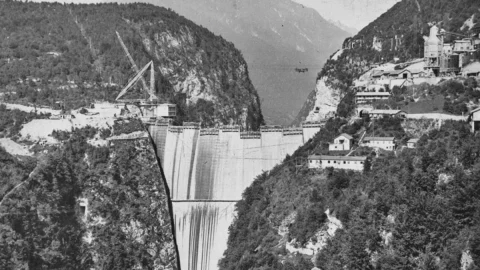
That night in 1963, a landslide from Mount Toc fell into the dam lake, causing a wave that destroyed everything underneath. The journalist from Unity Tina Merlin he denounced the true causes of the disaster with memorable investigations. It took decades to compensate for the damages of the collapse with around 60 billion euros. After Merlin the director and actor Marco Paolini he was the best narrator of Vajont. His show went to theaters throughout Italy and on the 60th anniversary he will represent it in Milan
«When 30 years ago I began to talk about the Vajont - Paolini recalls - I had a great anger inside me at oblivion. Then I began to study reports on the climate, to read the books of those who try to narrate what we are experiencing, to measure the strategies of denialism first and then of populism in riding the clichés that conflict with the scientific framework, justifying widespread inertia towards the ecological transition". In short, are we out of the nightmare of a threatened country? For nothing.
The Vajoint tragedy is connected to the great issues of today, economic development, landscape protection, energy. The dam had been opposed by the population, but hydroelectric energy it was the privileged source for the needs of families and businesses. That tragedy paralyzed the development of other dams for years. Last Monday 6 thousand peopleand they participated in the walk in the valley of memory with the consent of Enel. Since 2005 we have been meeting to see, understand and not forget. We arrive at the other two villages destroyed by the collapse of 1963, Erto and Casso, and the pain is felt along a 260 meter high bridge. It's just one of the many moments that demand attention and respect because progress cannot be stopped, but tragedies can.