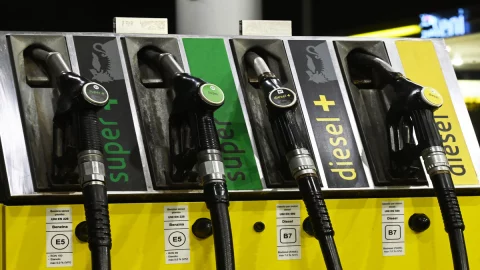
Un fuel price cap and petrol and diesel remain above two euros per litre. Eni has set a price cap on fuels marketed by enilive: The maximum price will be 1,99 euros per litre for petrol and 2,19 euros for diesel., approximately 17 cents less than the current average levels. The measure will take effect from the September 28, at first for 30 days, with the possibility of extension until the end of 2026 depending on market and supply trends.
The decision comes amid strong pressure on the refined products market, linked to geopolitical crises and the reduction in European refining capacity. Meanwhile, according to the MIMIT Fuel Price Observatory, on September 25, the average self-service price on the road was €2,154 per liter for gasoline and €2,338 for diesel. On the highway, the average price rose to €2,247 and €2,421 per liter, respectively.
Eni Price Cap: How the Fuel Cap Works
The price cap is connected to the excise tax relief currently in force and concerns the fuels marketed by the Enilive network. In Italy there are over 4.000 Eni service stations, including those that have not yet completed the brand change and therefore continue to present themselves under the Eni brand.
According to the six-legged dog, the contraction in international supply of refined products and reduced European refining capacity—with nearly 30 refineries closed in the last 15 years—have contributed to high prices for households and businesses. This new intervention builds on the initiatives launched by the company since last March, when Eni absorbed part of the increases in international prices, only partially passing them on to its recommended pump prices.
The group defines the price cap as a new "solidarity contribution to the country" and also underlines its commitment to Italian refining, from the biorefineries in Venice and Gela to the transformation of the Livorno plant.
Diesel, excise duties halved and government working on refining
The new roof arrives just on the eve of the reduction of the discount on diesel excise dutiesFrom September 26ththe tax relief drops from 12,2 to 6,1 cents per litre, VAT included, and will remain at this level until October 5th. Starting October 6th, the transition to a mobile excise duty mechanism is expected, linked to any increased VAT revenue resulting from the increase in energy product prices.
On the supply side, there is also movement government. The Minister of Business and Made in Italy Adolfo Urso and the Minister of the Environment and Energy Security Gilbert Pichetto have summoned for October 8th at Palazzo Piacentini the main oil refining and supply chain companies, including Eni, Saras, Sonatrach, Socar-IP, Iplom, KPI, Alma Petroli and Ludoil/Isab, together with Unem and Innovhub.
The goal is to explore the conditions for increasing domestic production of refined products and strengthening gasoline and diesel supplies at a time still marked by international tensions. The fuel market is thus constrained by high prices, reduced refining capacity, and a demand that continues to require greater security of supply.