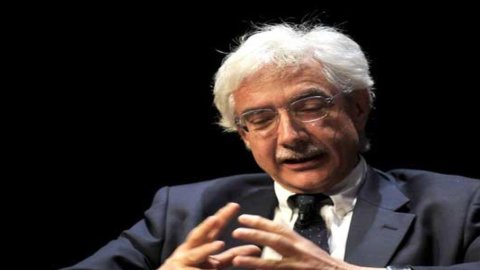
“The problem of the high prices of motor liability policies has eased, but not been resolved”. Salvatore Rossi, president of IVASS, said it today, presenting in Rome the annual report of the Insurance Supervisory Authority set up a year and a half ago to replace Isvap. "We hope for a new legislative initiative that addresses the issue in all its aspects - he added - , as we tried to do last year", with a proposal that later lapsed due to the crisis in the Letta government.
According to the Institute's data, between 2009 and 2013 the theoretical pure premium (i.e. the average cost of claims for the number of claims) fell by 16%, while in the same period the average premium actually paid by the consumer increased by 6%. . "There seems to be a difficulty in transmitting the positive market dynamics on policy prices", commented Rossi. Indeed, the Iper survey, carried out by Isvap in collaboration with the companies and with Ania, shows that only 5% of Italian policyholders pay a premium comparable to the European average, equal to 250 euros.
"The central point - explained the president of the Institute - is to reduce the information asymmetry between insurers and policyholders": to this end, IVASS is continuing to work on the Anti-Fraud Archive (AIA), a project which has so far led to the interconnection of five databases and which by 2015 will provide "an indicator of the probability of fraud on each claim reported". Furthermore, to solve the problem of high prices, the Institute aims to intensify the fight against anti-competitive practices, providing the data of its own sample survey to the Antitrust.
The consumption crisis also plays a significant role in the motor liability game, given that, with the reduction in car travel, between 2007 and 2013 the frequency of claims fell by 30%. As for the companies, they have managed to contain disbursements thanks to two factors: the competition law decree of 2012, which brought the average level of permanent disability points paid for whiplash injuries down by 20% ("confirming as below numerous frauds are hidden in this voice"), and the direct compensation Card system. "Where there is - Rossi points out - the amounts paid have increased by only 9%, while where there is not, the increase was 70%".
INSURANCE TO PLAY A MORE ACTIVE ROLE IN SUPPORTING THE ECONOMY
In the course of his report, Rossi also invited "institutional investors", and in particular "insurance companies", to be more active "in financing the economy. At the heart of the concerns is above all that multiplicity of SMEs that would be able to survive the crisis if only they received a sufficient flow of financial resources, resources that banks are sometimes unable to offer because they are burdened by the weight of previous impaired loans ”.
On the other hand, even "the attitude of the companies regarding non-traditional investments - continued the president of IVASS - has so far been, in general, very cautious: the extensions of the limits introduced in January, which gave greater possibility of investing in instruments such as minibonds and securitized assets, have so far been little used”.
SUPERVISION: ACCELERATE PREPARATION SOLVENCY 2
Finally, on the subject of supervision, Rossi believes that the insurance sector must accelerate preparation for Solvency 2, the new system of European rules which will come into force in 2016: "In view of this deadline, IVASS is asking, with the guidance of Eiopa, changes to the corporate governance structures, compliance with regard to prospective risk assessment, capital planning and reporting. The compromise reached on Solvency 2 is acceptable, but more work needs to be done to ensure that secondary legislation goes in the right direction".