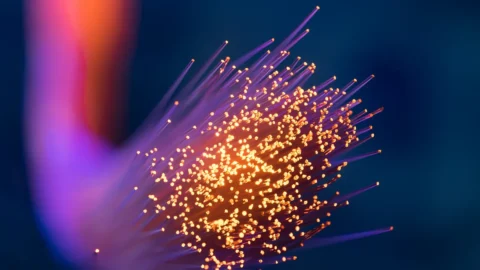
Over 2.000 kilometers of new fiber optics have already been laid in Italy as part of Backbone 2.0, the project started by Open Fiber in 2025 to strengthen the long-distance connections between the main nodes of the national network. The works will continue in the coming months with thegoal of exceeding 3.200 kilometers of new cables within the first half of 2027.
Backbone 2.0, the new "backbone" of the Italian network
The project addresses the so-called backbone, the part of the network that transports large amounts of data over long distances and connects the main infrastructure nodes. Open Fiber's goal is to complement the existing national network. new fiber lines, by increasing available capacity and introducing alternative paths for data traffic.
They will be operational in September 2026 six important routes: the Genoa-Rome, passing through Sestri Levante, La Spezia, Livorno, Follonica, Grosseto and Tuscania; the Milan-Genoa; the Milan-Bologna, through Piacenza, Parma, Reggio Emilia and Modena; the Bologna-Rome, via Florence, Arezzo and Viterbo; the Milan-Padua, passing through Bergamo and Vicenza; and the Padua-Bologna.
The plan will continue along the Adriatic coast Bologna-Bari, passing through Ancona, and on the Genoa-Turin route, thus completing the planned expansion. The new infrastructure will also enable dark fiber connections on long-distance national routes: the fiber will be made available to customers, who can use and manage it through their own devices based on their specific connectivity needs.
More capacity and alternative routes
Network expansion is therefore not just about expanding the infrastructure. The availability of new routes allows for the integration of alternative routes to existing ones and make traffic management more flexible. The new technologies envisioned by the project will also enable the development of services with guaranteed latency and dynamic management of network paths.
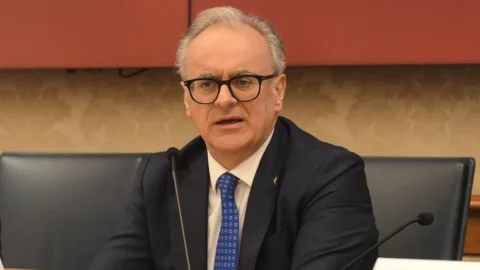
La growth in data volumes, together with the development of data centers and new digital services, the demand for high-capacity connections is increasing. It is in this scenario that Backbone 2.0 fits in. As explained Andrea Lazzaroli, Head of Business Marketing at Open Fiber: "The growth in data volumes and the development of new services and data centers are transforming the needs of telecommunications networks. Increasing available bandwidth isn't enough: we need infrastructures with greater capacity, more flexible and diversified capabilities. Backbone 2.0 was created with this very goal: to build a network today capable of supporting the evolution of digital services and the connectivity needs of tomorrow."