
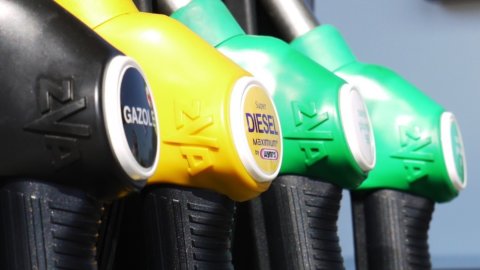
“There's no free lunch,” the economist promptly warns. Veronica DeRomanis about the indirect costs that the price cup of theEni will weigh on the state budget. In fact, Eni's slowdown in the pump price of petrol and Diesel At its service stations, it will now make motorists, rich and poor, happy, but it will have some indirect consequences for the state budget, namely for all taxpayers, especially those who actually pay their taxes, down to the last euro. Because the price cap is estimated to cost Eni approximately €100 million per month, €300 million if the price cap is extended until the end of the year. And 33% of Eni's capital is held by the state through the shareholdings of the Ministry of the Economy and Finance and the Cassa Depositi e Prestiti (CDP). Therefore, assuming that Eni will earn less from fuel sales—but it's difficult to make precise predictions because we don't yet know the market's reaction to Eni's move, which, in theory, should attract more consumers to its service stations, nor how oil prices will evolve in relation to US-Iranian relations in the Middle East—the cost to the state of the Eni price cap, due to a reduction in dividends, is expected to be approximately €33 million per month, or approximately €100 million between now and the end of the year, calculated with accounting benefits. One thing is certain, however: whatever the final cost of the Eni price cap to the state, it will certainly be much, much lower than that of the fuel excise tax cut, which has already cost over €2 billion up to September and which ultimately risks costing the state budget close to €2,5 billion. It's debatable whether the discount for motorists, given the size of the category, is in the country's general interest, which also includes citizens who don't own a car. However, the cost of the Eni price cap to the state and the cost of the excise duty reduction are clear: the former will cost a maximum of €100 million, the latter over €2 billion.

Fuel, no meal is free, but Eni's price cap costs the state much less than the excise duty cut.
No meal is free and even Eni's price cap on the price of petrol and diesel will have some effect on the state budget, in terms of possible lower dividends from the public oil group for the Treasury, but it will be at an infinitely lower cost than that of the highly questionable cut in fuel excise duties decided in recent months by the Government.
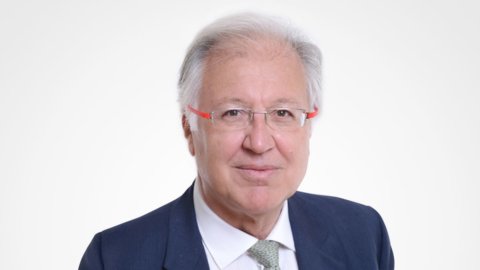
Franco Locatelli
Founding partner, administrator and managing director of FIRSTonline. Milanese by birth, he has always worked between Milan and Rome. He began planning an online journal of economic and financial information the day after its release, in the spring of 2010, from Il Sole24Ore, where he spent more than 25 years, was head of the Finance and Markets editorial staff and columnist and commented on the most important economic and financial events since the mid-2014s. For the publisher Olschki he wrote two histories of local banks in Tuscany, the first of which with the art historian Antonio Paolucci. In XNUMX he published with Ugo Calzoni the essay "Imperi senza dinastie" published by the Massetti Rodella press company. The President of the Republic Sergio Mattarella awarded him the honor of Knight of Merit of the Italian Republic
You might also be interested ...
-
Fiat in the 60s, from Turin to Togliattigrad under Valletta's direction: it was not just an investment in Russia but an act of international détente.
-
Eni's cap on petrol and diesel prices is a smart move: it provides relief to consumers and removes the need for a tax on extra profits.
-
Are industrial policy and competition really irreconcilable? No, a synthesis is possible: here's how and why.
-

Unioncamere: 70% of businesses fear energy prices, and only 22% are investing in AI. But those led by young people are more confident.