Already during their first training at the Istituto Statale d'Arte per la Ceramica in Faenza their interests were directed towards a dialogue with the great tradition of art and they cultivated an original vocation for experimentation in the sculptural field, seeing in ceramics a possibility for a painted sculpture. Bertozzi & Houses they then attend the Academy of Fine Arts in Bologna and participate in events that try to focus on the protagonists and the reasons for a "new ceramics" trying to overcome the gap that still inscribes this means of expression in a lesser and gregarious sphere compared to other art forms.
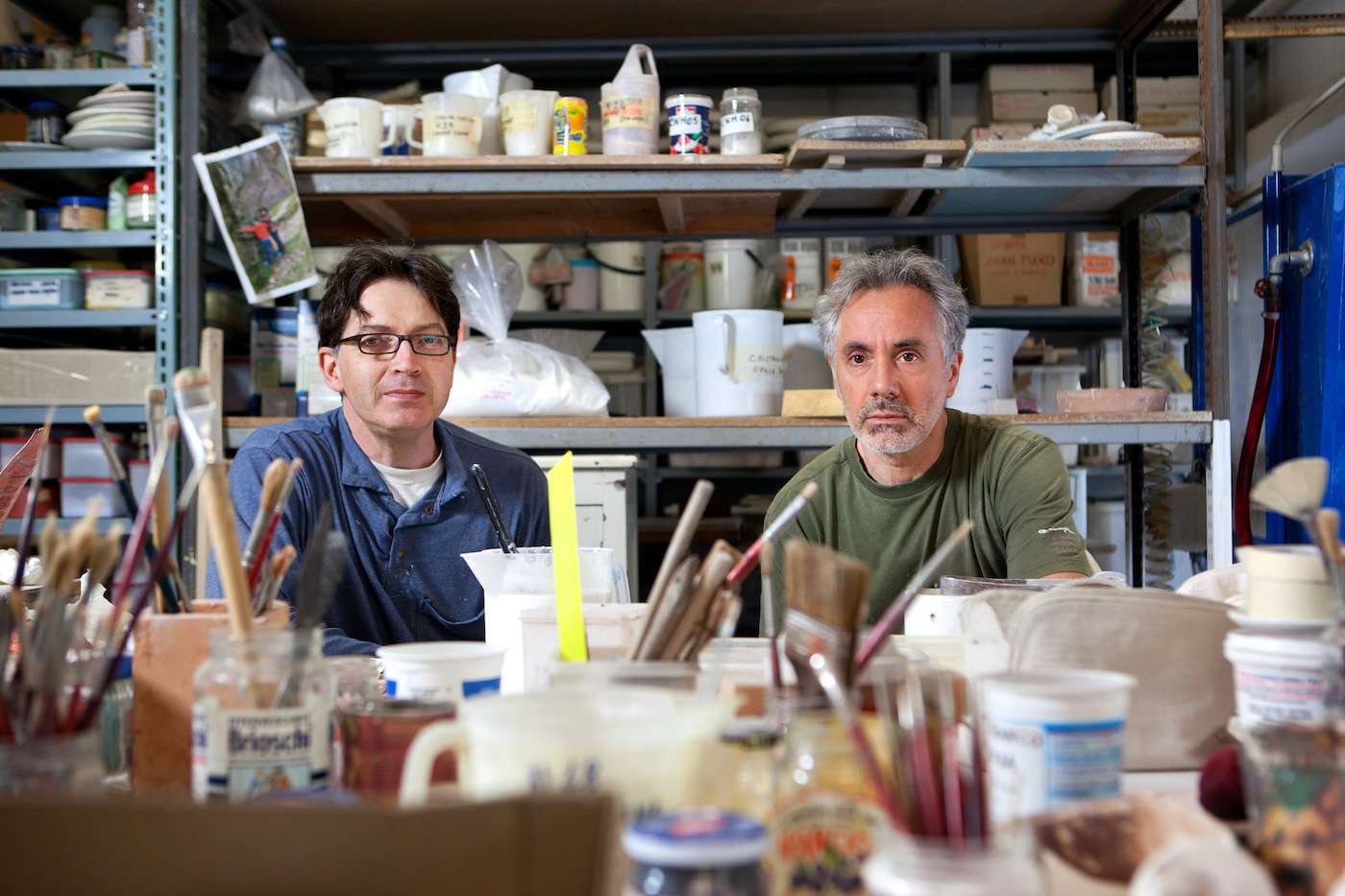
Their first creations are small in size and in thin polychrome majolica. From 1985 to 1989 they collaborated with the Cooperative Ceramica of Imola as researchers in the Experimentation and Research Center on Ceramics and, as a corollary (1987-1988), they established various relationships with "K International Ceramics Magazine” of which they also create cover images. When the relationship with the Imola Cooperative is about to end, they carry out two demanding tests sponsored by the company: the interventions at Tama New Town (Tokyo 1989-90) and the large panel "Say it with flowers" placed on an external wall of the Civil Hospital of Imola. Between 1983 and 1994 tangencies emerge with the world of design through a privileged relationship with space Dilmos in Milan and participation in various editions of Abitare il Tempo in Verona and the Milan Triennale as well as events in the former church of San Carpoforo, also in Milan. For Dino Gavina they designed the "Herculaneum Armchair". In the XNUMXs a more conceptual and radical aspect emerged in their work: ceramics took on ever-increasing dimensions until it bordered on linguistic hyperbole and realization. Critics and important national and international art galleries are interested in their work. Their sculptures – symbolic, mocking and pervaded by a sense of attraction towards what is transient, transient, perishable and decaying – have become internationally recognized icons of a not only contemporary human condition. The corrosive irony of their works – explains the critic Franco Bertoni who curated their exhibition at the Castello Sforzesco in Milan – it is always counterbalanced by an indestructible executive perfectionism. Between compositional surrealism and formal hyperrealism, Bertozzi e Houses they investigate the refuse of contemporary society, not excluding the cultural ones: from those of the past to those of the closest artistic trends. Icons such as the Brillo box examined by Pop Art or the cans of Artist's shit by Piero Manzoni find, in a refined ceramic version that investigates their obsolescence and degradation, both the signs of an irreparably past time and a freezing in arrangements which, conversely, entrust them to basically immortal destinies. With "Bosco sacro" of 1993, "Evergreen" of 1995 and "Scegli il Paradiso" of 1997, they reach dimensional and realization peaks never reached before. With this last work Bertozzi & Houses they close the chapter of painted majolica and open up to experiments involving the almost exclusive use of materials and technologies of industrial origin. A decisive step that allows their works to conquer a higher level of physical presence. The pictorial virtuosity is abandoned in favor of a rendering as objective as possible of the chosen subjects. The favorite iconographic themes, which find substance in the great artistic categories of vanitas and memento mori, undergo a fantastic transfiguration and their formal transcription takes on that objective form which attenuates the presence of the authors themselves and the conditioning perception of a particular time. It is the great turning point: the chapter of the "contemplations of the present" opens in which, in a sort of "epic of trash", the attraction for what is ephemeral, transitory, perishable and in decay, it becomes an internationally recognized icon of a not only contemporary human condition. Critics, museums and the most important national and international art galleries are interested in their work. Between compositional surrealism and formal hyperrealism Bertozzi & Casoni investigate for years the waste of contemporary society, not excluding cultural and artistic waste, in a staging of life-giving endless rebounds in which lunges into degradation and recoveries of survivors or unacknowledged beauties, abstraction and figuration alternate, impermanence and eternity, history and contemporaneity, fantastic imagination and precise technique. “Our works generally arise from an idea, from small visions. Usually there is no preparatory drawing while the technical work is extremely important. Having a good technique – the artists explain when speaking of their work – means having the image in hand. In our workshop there are different skills but all of them are essential for the success of the work”.
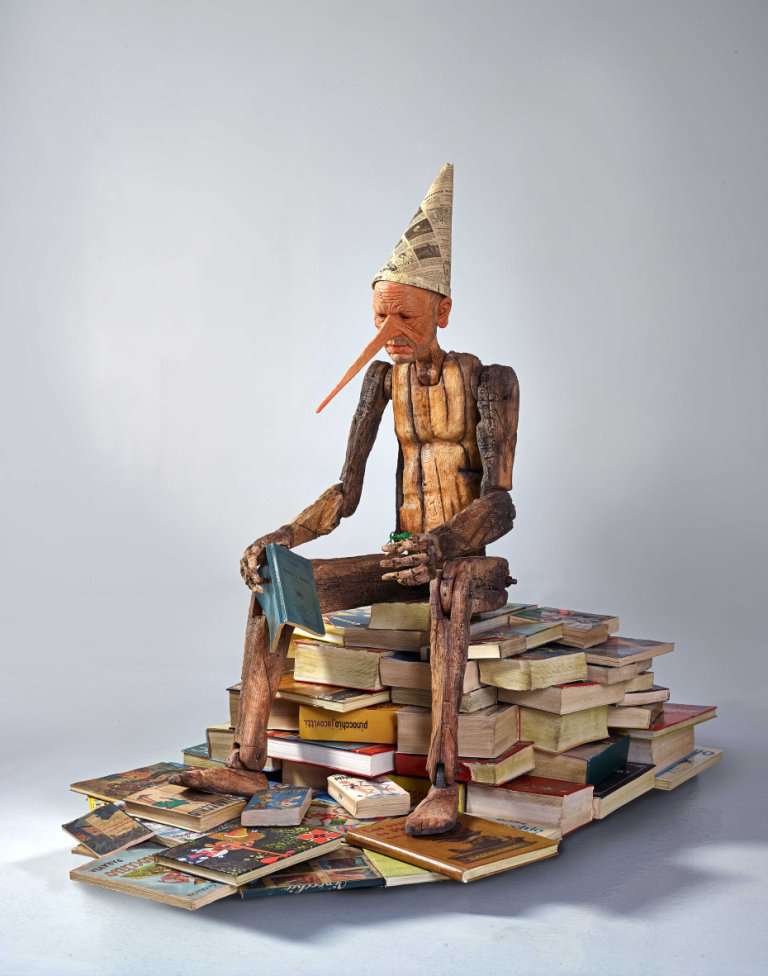
"I don't remember" 2014
polychrome ceramic, cm. 140x110x147
courtesy of the artists
Intense exhibition activity
Their exhibition activity is intense. In 2004 they were invited to exhibit at the Tate Liverpool and at the XIV Quadrennial in Rome. In 2007 is the personal exhibition at Ca' Pesaro, International Gallery of Modern Art in Venice (where three major works are exhibited in conjunction with the Biennale: "Composition in white", "The lies of art" and "Composition Decomposition") and in 2008 the one at the Castello Sforzesco in Milan and at the International Museum of Ceramics in Faenza. In 2009 their works were exhibited in the Italian Pavilion of the Venice Biennale (“Non finite-infinite composition” and “Rebus”); in 2010 a All Visual Arts of London, at the Sperone Westwater of New York, at the Galleria Sperone a Sent and at the Arnaldo Pomodoro Foundation in Milan. In 2011 they exhibited at Museum some Fine Arts of Ajaccio, at the Italian Pavilion of the Venice Biennale (“Electric chair with butterflies”), at FaMa Gallery of Verona, at La Maison Red Paris. In 2012 they exhibited at the Gallery Robilant+Voena of London, at the Sperone Westwater of Lugano and New York. The personal exhibition a All Visual Arts of London where the great work is exhibited for the first time "Regeneration”. From 2013 are the personal exhibitions at Museum Sculptures on Zee in The Hague, at the Beck & Gallery eggelling in Düsseldorf, at the Cardi Gallery in Pietrasanta and in 2014 those at the Sperone Westwater of Lugano and in the monumental halls of Palazzo Te in Mantua. In 2015 the personal exhibitions at the Galleria Tega in Milan, at the Galleria Poleschi in Lucca, at the Sperone Westwater in New York, at the Mambo in Bologna, at the Art'In Gstaad Gallery and participation in Expo Milano 2015. In 2016, the personal exhibitions in the halls of the Palazzo Larderel in Florence (presented by the Galleria Il Quadrifoglio in Milan in collaboration with Gian Enzo Sperone), at the Galleria d'Arte Moderna in Palermo, at theSpace grandjean di Vallaurisat the Gallery Verolino of Modena, al Macist of Biella and the Ducal Palace of Massa. 2017 opens with personal exhibitions at the Palazzo Poggi Museum in Bologna and at the Pinacoteca Civica in Ascoli Piceno and continues with the collaboration with Ca' del Bosco. On 16 December 2017 the Museum opens Bertozzi & Houses at the Cavallerizza Ducale of Sassuolo (Modena).
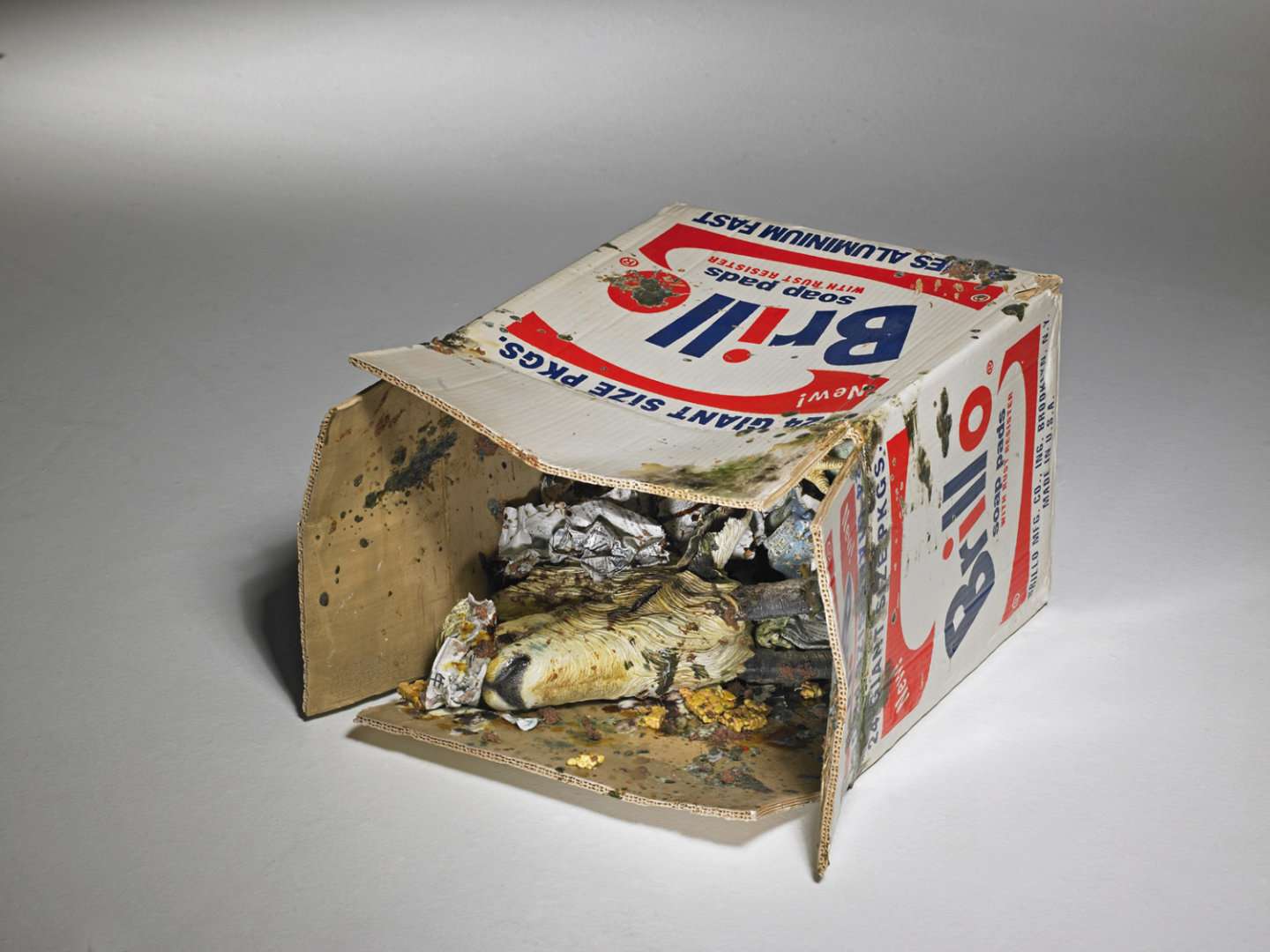
Brillobox (2008).
Polychrome ceramic
Courtesy Galleria Cardi, Milan.
Market: By collaborating with leading international galleries, the market of Bertozzi & Houses, ranges from Italy to Europe to the United States, generating discrete expectations in the world of more attentive and informed collectors. At their debut in an international auction, which took place from Sotheby's in New York in 2008, they achieved what is still their record (over 20 euros). Since then there have been around thirty of their auctions with a percentage of sold around 70% and a turnover that – according to Artprice – (only at auction) in 2017 it almost reached 17 thousand euros. Another story regarding the primary market (tunnels) which reached its peak in 2015. Since then, after a brief pause for reflection and consolidation lasting a couple of years, since the end of last year the prices have recovered, albeit slowly , to grow. However, the prices are definitely still accessible, especially for small and medium-sized sculptures and to this is added the quality (and intensity) of the work carried out by their reference galleries.
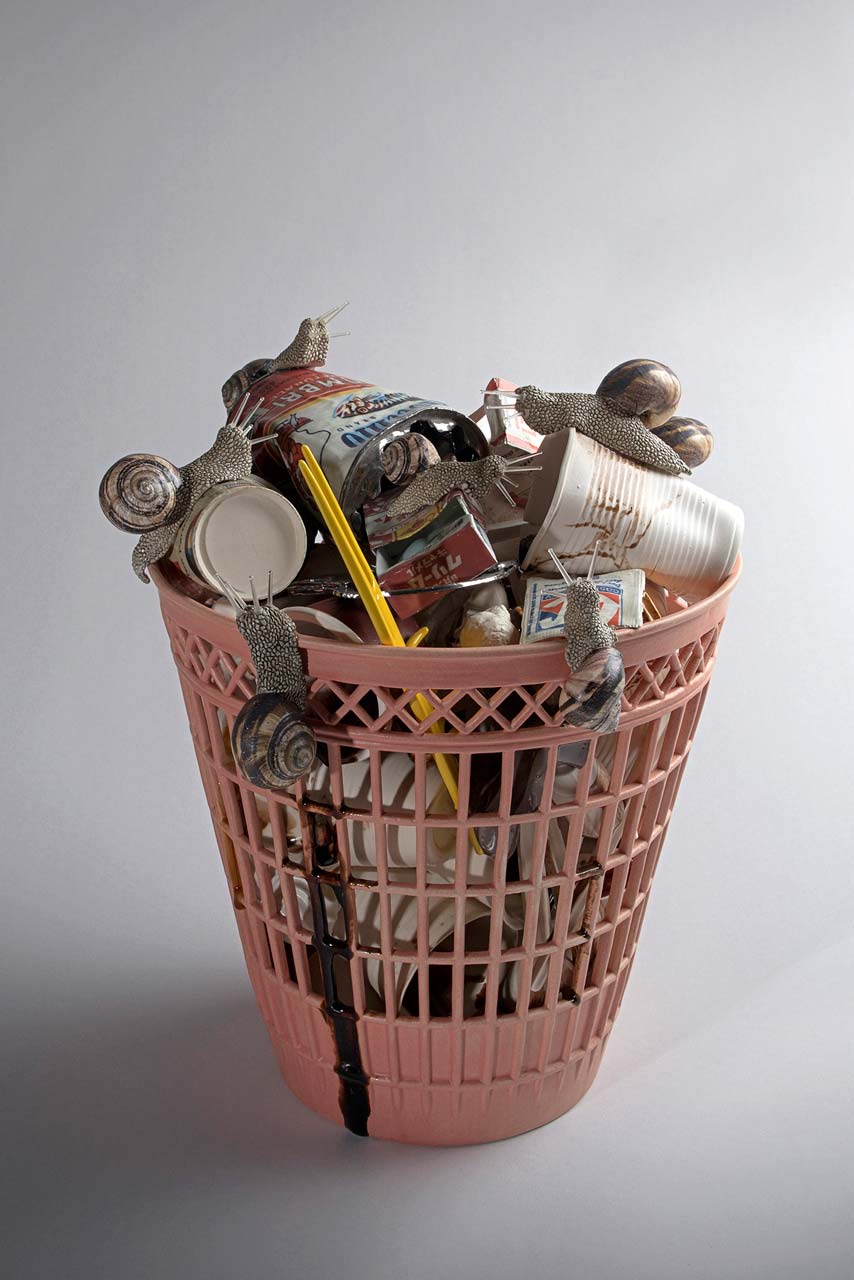
Discord bin 2018
polychrome ceramic, 32,5x29x29 cm
courtesy Anna Marra Contemporary Rome
Gallery: Tega Milan; Claudio Poleschi San Marino; Spur Westwater New York and Beck & eggelling of Dusseldorf and Vienna.
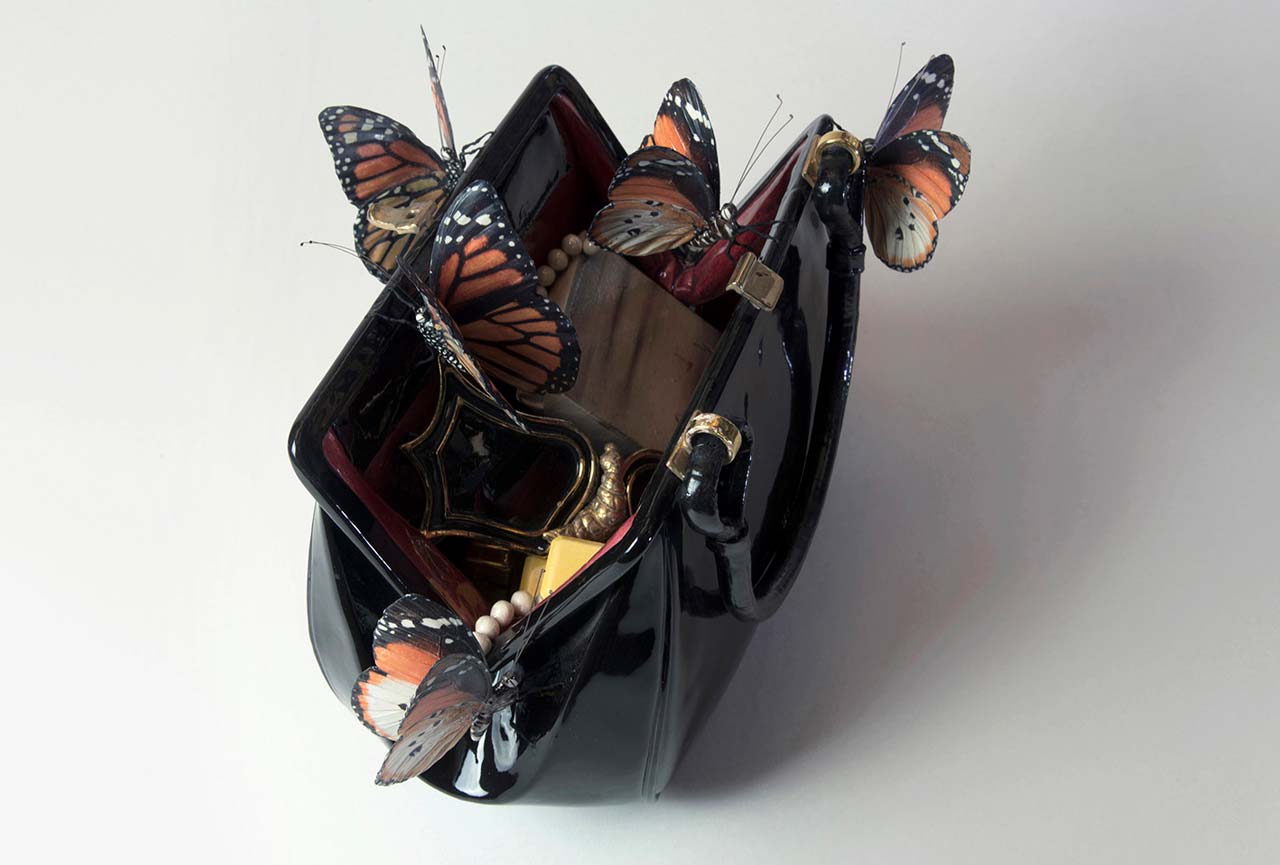
Peggy and Yves 2018
polychrome ceramic, 23x32x22 cm.
courtesy of the artists
Prezzi: a small-sized ceramic work can be purchased in the gallery for between 4 and 12 euros, which can go up to 25 for medium-sized works. Large sculptures and installations require an investment that can even exceed 200 euros.
Top price at auction: “covers”, 2003, Glazed ceramic Ed. 2 / 6 with dimensions of 39,4 x 41,9 x 57,8 cm. sold for 20.057 euros (including royalties) by Sotheby's New York in May 2008, represents the record of artists at auction.