- effects of the global crisis they were particularly heavy in Italy because our country was caught completely unprepared, with serious structural weaknesses that had been eroding our competitiveness for at least 15 years. Responsibilities for these weaknesses must be attributed for the most part to the political class that has governed in recent years, and in particular to the Berlusconi governments, which largely dominated the last decade.
Monti, called to face a dramatic emergency, has certainly used the tax lever, but has also launched a series of profound reforms, from pensions to work, from liberalizations to simplifications, which certainly need some time to produce concrete results. But this is not enough. It is necessary to continue beyond the emergency, with a widespread reorganization of the public machinery by reducing its costs and increasing its efficiency.
A new policy of courageous reforms that the current parties, still all dedicated to cultivating their clientele and defending the many particular interests, do not seem capable of pursuing. Alarmed by this state of affairs, many groups of citizens, so far not directly involved in politics, have organized themselves into associations in recent months with the aim of making all voters aware of the need for a radical change of pace both in the strategy for relaunching the economy, and of the way of managing public affairs.
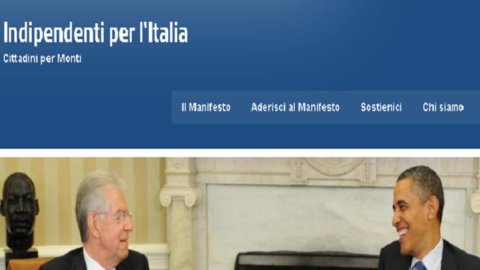
Now a first important group of associations among which Italia Futura, Independents for Italy, Zero Positive etc., took a decisive step towards the formation of a new political entity with the ambition of profoundly changing the by now old and stale Italian party geography. The electoral campaign is already reviving the old illusions that everything can continue as before the Monti parenthesis, or the easy demagoguery of salvation such as that of a property which, as if by magic, would solve our problems by creating jobs and ensuring social guarantees and previous pensions.
Il new grouping of civil society first of all he will have to tell the Italians the truth. And to explain that there is a way out of the crisis in the short term and that it can be followed without further fiscal sacrifices (we have already made those), but with everyone's willingness to get back into the game, to accept the indispensable reorganizations by giving up some income of a position which, moreover, is now being increasingly eroded by the pressure of the crisis. Perhaps few remember that ten years ago Germany was in such a crisis as to be considered the "sick man of Europe" and that it came out of the crisis by making a robust cut in public spending over the course of three or four years which allowed for the reduction of taxes on companies and partly on wages; and carrying out a series of labor reforms which, through the reorganization of production processes, have allowed for significant productivity gains which have been left almost entirely to businesses, since wages have remained practically stable.
It is a path that Italy can also follow, perhaps without the exaggerations of the Germans, but leaving a good margin of productivity increases to labor income, and using the savings on public spending to reduce social security contributions and corporate taxes . The first savings must be made by the political class. And this must happen not only with the cut of salaries and various benefits, but also with the reduction of the number of elected officials both in the center and in the periphery, and with the reduction of consultancies and of the pharaonic secretarial offices. We also need to drastically reduce all those public companies owned by Regions, Provinces and Municipalities which escape any rule and which are the golden refuge of so many trumped-up politicians and so many do-nothing clientele.
La reorganization of the public administration it would then allow other huge savings and would make it more difficult to steal which alone would amount, according to estimates by the Court of Auditors, to over 60 billion a year. All this would provide us with sufficient resources for a lowering of the tax burden and for a recovery of public investments, thus initiating a healthy revival of development and employment. All those who go looking for new resources saying that it is necessary to penalize the banks, or that it would be better not to stay in the Euro anymore, or who advocate a capital not so much on real estate but above all on bank deposits and securities owned, do nothing but sow fear among all categories of savers and all potential investors in our country, inducing a ruinous flight of capital.
Of course lowering of the spread and interest rates! On the contrary, there would be the risk of a crisis of no confidence that would bring Italy back to the position of a year ago, nullifying the sacrifices that citizens have already made. These are either unfeasible or adventurist proposals which would confirm in all the operators a conviction, which is already rooted, of the unreliability of our country. On the contrary, the very consolidation of the first timid signs of a return of confidence that has been registered in recent months thanks to the action of this government is an essential step in order to be able to implement our reforms calmly. In this sense, this new political group, which is taking its first steps today, sees Monti's credibility on an international level as a strength and a guarantee for the implementation of the recovery and recovery programme.
Today the spread still remains at higher levels than would be justified by our fundamentals, above all due to the uncertainty on the outcome of the general elections next spring. Investors know that Berlusconi's right is now an adventurist and populist party, and therefore unreliable. The left-wing coalition, even if led by a moderate like Bersani, is deemed unable to resist the pressures of its left wing which wants to abolish the pension reform, cancel any reform of the labor market and bargaining, and generally thinks that the recovery could come from an increase in public spending and an autarkic and welfare-based industrial policy.
An electoral victory of a movement that refers to Monti it would give the markets a real boost of confidence in our country and could in a short time push the spread towards 100-150 points with medium-term savings of at least twenty billion euros a year. This would bring the credit sector back to normal without which any industrial recovery is simply unthinkable. This new political entity was born on the basis of full confidence in the Italians' desire to hear a word of the truth, to get out of the sterile protests and Grillo-style sneers, and to be able to count on people who, without political career ambitions, just want to give a hand in returning Italy to the role it deserves in Europe and in the world.