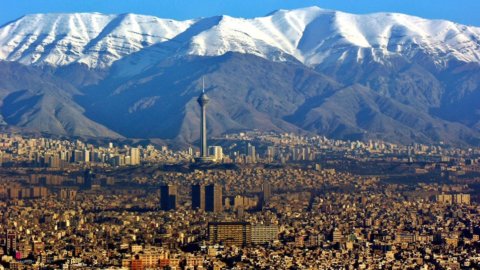
Iran is back in the limelight and catalyzes the attention of the international community with a role not unlike the one that Dubai had in the early 2000s. With one fundamental difference: Iran is a real country. In fact, it has 80 million inhabitants, of which 60% are under 30 years old. The level of education is quite high, resources are abundant and the entrepreneurial fabric is completely comparable to the Italian one (about 90% of the companies are medium-small companies).
To have a summary but effective representation of the country's macro-economic structure, one can think about the last 15 years: from 2001 to 2010, GDP, imports and exports have been in constant and significant growth. In 2010 EU, USA and UN approved sanctions e the embargo slowed everything down. Those who have continued to do business in Iran have done so on the strength of an already tested structure and in any case with considerable difficulties.
In fact, if it is true that the sanctions concerned a precise list of goods linked to the war industry and atomic proliferation (as well as the relative financial assistance), also the civil industry was deeply affected by the embargo: to maintain commercial relations it was necessary to verify the non-involvement of Iranian partners (legal and/or natural persons) in sanctions through the supervision of the MISE, obtain approval from the ministry of finance for bank transfers (often managed by savings banks with transfers from third countries such as the UAE) and certify that the goods and technologies being traded were not dual-use.
All this has contributed to the fortunes of countries such as Russia, China and Turkey which in recent years have gained significant positions within the Iranian market, to the detriment of Italy and the other EU countries.
However, it is true that Italy has never completely interrupted its relations with Iran: in 2014 – the year in which the sanctions were still in full force – it confirmed the first EU country for import volumes (almost half a billion euros) and the second for export activity, preceded only by Germany. Even with the difficulties of the embargo.
But now things have changed: the settlement of Rouhani in 2013, the signing of the Joint Comprehensive Plan of Action (JCPOA) in 2015, the Implementation day in 2016 led to the suspension of sanctions. And Iran is not shy about expressing its interest in newfound international partners who seem to be preferred due to their higher quality standards and greater reliability.
And they stand out among the sectors on which our country must focus the oil&gas (which represents 80% of exports and 40-70% of income for the state and for which investments of around 20 billion dollars are foreseen), petrochemicals, instrumental mechanics, mining related to both precious metals and the so-called base metals (for whose extraction and refining processes an expenditure of approximately 15 billion dollars is foreseen), the automotive (which evidently does not only concern the production and marketing of vehicles and therefore the modernization of the vast and elderly car fleet, but also the components), construction (population growth should be around +25% over the next 30 years ), infrastructure (whose contracts are often managed by highly structured players through complex public tender procedures, but which open up ample space in the so-called "second line" for sub-contracts and sub-supplies), but also design and fashion made in Italy (very appreciated in Iran but still suffering from the competition from the gray market, with obvious brand equity and pricing strategy problems).
The risks you encounter
Although the premises allow for an enthusiastic approach, we must not however forget that Iran, like any other country, presents its own complexities and some critical issues. The World Bank report on the ease of doing business in Iran analyzes a variety of aspects and positions the country one hundred and nineteenth out of 189.
Among the main problems are encountered the high perception of corruption (the Transparency International corruption index places Iran at position 130 out of 168), the complexity of the bureaucratic apparatus, the influence (i.e. direct or indirect control) of the security services over many Iranian companies, high inflation ( which today stands at around 8%), price controls through special public incentive policies, the lack of infrastructure and, of course, the political risk caused by the uncertainty about the stability and future of the sanctions still "in place".
As far as this last point is concerned, a large part of the insecurities revolve around the unpredictability of the next electoral appointments, both domestic and international. Elections for the possible renewal of Rohani's mandate will be held in May 2017 (considered probable as favored and supported by the practice of the double round, but still uncertain) and, before then, in November 2016, the US presidential elections, on the consequences of which no one seems able to take a position.
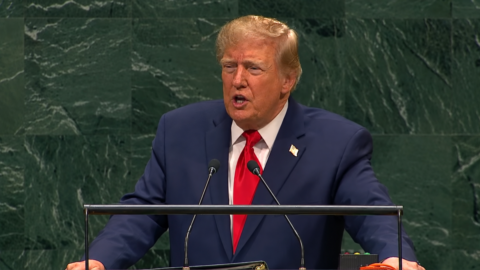
If on one hand Mr. Trump has openly stated that he wants to review the agreements concluded for the suspension of sanctions and on the other hand, however, Ms. Clinton does not seem to want to break with the previous Obama administration – architect of the JCPOA -, however it cannot be overlooked that Russia has become very close to Iran over the years and that this could lead a complex management of international relations, even by a possible democratic government.
The problem of the international financial system
But the crux of the complexity remains the management of relations with credit institutions and therefore the difficulty for companies to access financing and manage bank transactions. Although the financial sector is among those for which sanctions were immediately lifted and foreign lenders can return to operate in Iran, in fact no foreign banks have reopened in the country. Moreover, most of the international credit institutions are still strongly reluctant to grant loans for fear of violating agreements stipulated with the United States and the Office of Foreign Assets Control, the agency of the American Treasury, and finding oneself sanctioned for this. In fact, to date, the free movement of capital with Iran meets the limit of the exclusion from transactions of US counterparties and the impossibility that the transactions themselves see the participation (i.e. intermediation) of US banks or turn to ( or involve) subjects (companies or natural persons) sanctioned.
On the other hand, the Iranian credit system is also suffering from a strong fragmentation at a regulatory level and the central bank is struggling to guarantee the timely and homogeneous application of its directives. Most of the Iranian banks have been reintegrated into the Swift system and yet some critical issues remain related to the use of the infrastructures, i.e. the swift accounts and related software.
How to approach the market
In this context, careful market analysis and scouting for opportunities as well as punctual legal and tax assistance become the key to any entrepreneurial initiative wishing to stand for success. On the one hand, in fact, it is necessary to acquire precise information on the reference market segment, analyze the relevant macro-economic data (population growth, inflation, GDP trend, etc.) in order to forecast developments and identify the most reliable Iranian partners (especially if one decides to approach the market not directly, but through local distributors or with the support of entities based in other countries in the Middle East area, such as the UAE or Turkey); on the other hand, a preliminary study (ie a real due diligence) on the compliance of the business with respect to the sanction regime still in force, i.e. with respect to the involvement of subjects (natural and/or legal persons) sanctioned, is of fundamental importance, also - as said – for the possibility of accessing credit. Further aspects concern the difficult financial structuring of the various operations, the protection of intellectual property rights (a very important issue both for those who market made in products and for those who export technology) and the management of relations with the tax authorities (especially as regards the risk of double taxation and the payment of high customs duties on imports).