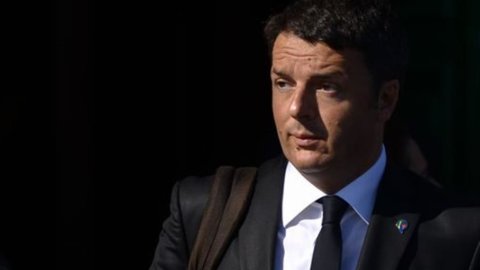
Prime Minister Matteo Renzi has left for Argentina on an official visit. The recent election of Mauricio Macri to the presidency opens a new phase for the country, marked by the recent selective default of 2014 (linked to the insolvency of 2002), which precluded the possibility of accessing financing on international markets and led to the reduction of foreign exchange reserves. And Sace has made the first calculations on the prospects for the Italian economy linked to this trip. According to World Bank forecasts, in fact, Argentina should resume the path of growth, with +0,7% of GDP in 2016. Among the main actions that the government is carrying out, the reduction of the inflation rate, the consolidation of public accounts (through a policy of aggressive cuts in public spending), and the elimination of exchange rate and capital movement distortions.
Changes that are costing the population a sudden increase in the cost of living (energy bills, controlled by the previous Kirchner government, have increased by 500%) but which are welcomed by the international markets. Macri will talk about this and the opportunities for Italian companies on Tuesday at themeeting with Prime Minister Matteo Renzi, who is the first European head of government to visit Casa Rosada recently installed by the former mayor of Buenos Aires.
“The authorities will also have to redefine a transparent and credible business environment – explains a note from Sace, which will participate in the mission to Argentina -, together with measures aimed at encouraging foreign investments. The new executive recently signed an agreement, subject to Parliament's approval, with Italian bondholders Tango Bond that had not accepted the restructurings of 2005 and 2010, and is trying to continue negotiations with American hedge funds, offering about 6,5 billion dollars".
Despite the timid signs of recovery, investors' attitude towards South America's second largest economy remains extremely cautious. Here, according to Sace, is the potential of the Argentine market for Italian exports and investments:
– Italy is the Argentina's third largest European trading partner after Germany and Spain. In 2014, Italian exports to the country decreased by 5%, reaching around 1 billion euros. In the first 10 months of 2015, exports fell further by 1,3% compared to the same period of the previous year.
– Sace expects that, by 2018, our sales will reach 1,17 billion euros, with a cumulative increase of around 13% in four years.
– Among the main export sectors of our companies are the instrumental mechanics (engines and turbines, handling and lifting machines, machines for the food industry), metallurgy (iron and steel products, pipes, ducts, profiles) and chemical products (basic chemicals, fertilisers).