Il nuclear power returns to Italy after almost 40 years. The Senate ha approved definitely the Delegated bill on sustainable nuclear energy: 81 votes in favor, 51 against, and 7 abstentions. After the green light from the Chamber of Deputies last June, the measure has completed its parliamentary process. Now the ball is in the government's court, which is called upon to write the rules to translate the new regulatory framework into concrete projects.
Il calendar, at least in theory, is already mapped out. The plans should arrive within a year implementing legislative decrees and the national program intended to regulate the entire life cycle of nuclear energy: from the construction and location of plants to safety, up to the management of radioactive waste.
For the Minister of the Environment and Energy Security Gilberto Pichetto Fratin This is a "historic day for Italy." The minister also indicated the end of the year as the target date for preparing the first implementing decrees.
Nuclear power in Italy: what does the new law provide?
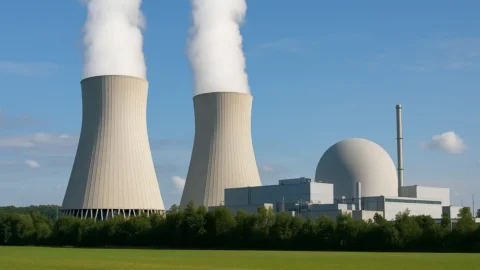
The delegation does not reopen the way for large traditional nuclear power plants. The scope identified by the provision mainly concerns small and medium-sized modular reactors, Small Modular Reactor (Smr) and the Advanced Modular Reactor (Amr), while also looking, in perspective, at nuclear fusion.
Parliament also expanded the possible use of mini-reactors, including the naval and maritime sectors. The delegation also includes the possibility of using nuclear energy to produce hydrogen, thus broadening the scope beyond electricity generation alone.
The future national program will have to define the rules for the testing, siting, construction, installation, and operation of new plants, as well as for the production and management of nuclear fuel. The scope of the delegation also includes: disabling and dismantling of existing nuclear installations, in addition to the management of the storage and the disposal definitive of the radioactive waste and spent fuelo.
The new regulation will therefore have to deal not only with reactors that may be built in the future, but also with the legacy of the old Italian nuclear power plant. This chapter includes the National Repository, intended to accommodate radioactive waste, the construction of which has yet to be completed.
Ample space is also provided for of your digital ecosystem. , vigilance e control, with a reorganization of the sector's responsibilities and governance. The measure also focuses on strengthening scientific and industrial research, training, and the creation of new skills, essential elements to rebuild the nuclear industry after decades of absence.
Where will the nuclear plants be built?
This is one of the most sensitive issues that the implementing decrees will have to address. The provision provides for a mechanism of voluntary candidacy of the territoriesLocal municipalities and consortia will be able to propose hosting the facilities or infrastructure intended for the temporary storage and disposal of radioactive waste.
For the communities involved, there are provisions financial compensation and energy reimbursementsThe law also aims to strengthen local involvement and guarantee specific protections for regions with special statutes and autonomous provinces. On the industrial front, the delegation introduces guarantees for Italian and European precision manufacturing and components, with the aim of promoting the impact of investments on the national supply chain.
A central role in the authorization process will be entrusted to theNational Inspectorate for Nuclear Safety and Radiation Protection (ISIN). Among the aspects that will need to be defined is the possibility of recognizing, and under what conditions, technical certifications already issued by foreign authorities. For SMRs, the replicability of projects and the ability to avoid lengthy authorization processes will be important elements for containing time and capital costs.
Nuclear power returns to Italy: the issue of costs and financing
A law can create the conditions for building a reactor, but it certainly can't finance it on its own. After parliamentary passage, another crucial chapter opens: the economic one.
The Government will have to define the financial architecture needed to make the projects feasible, identifying tools capable of reducing risks for investors and the cost of capital. This aspect will be particularly important for SMRs: their economic sustainability It will also depend on the possibility of replicating the projects and containing implementation times and costs.
The delegation includes financial guarantees, research and training measures, and resources to support the launch phase of the new governance. 20 million euros per year expected for 2027, 2028 and 2029, while for organizational provisions they are authorized total resources of 7,5 million euros between 2025 and 2026.
However, the implementation phase still needs to define the financing methods for future plants and the tools needed to make individual projects bankable.
What about radioactive waste?
Radioactive waste management remains one of the central chapters of the new legislation. The delegation will establish the rules for the temporary storage and permanent storage, distinguishing between the different types of materials and also addressing the issue of spent fuel.
The framework includes both materials related to the activities of old nuclear facilities and low- and intermediate-level radioactive waste, also produced by other sectors, including the healthcare sector.
The process must therefore reconcile the future of the new plants with the decommissioning of Italy's old nuclear power plant, entrusted to Sogin, and the construction of the national repository. Waste management is therefore not a separate chapter from the return of nuclear power: it is part of the entire life cycle of nuclear energy.
Nuclear power: when will the first plants arrive?
Parliament has approved the regulatory framework, but it will take more time to see the first plants. According to the estimate given by Pichetto Fratin, the first nuclear power plants could arrive around 2033-2034, so in about seven or eight years.
This is a forecast, not a legally established date: much will depend on implementing decrees, authorization procedures, the choice of technologies, site availability, and the ability to make the projects economically viable.
The first step will therefore be defining the rules. In the coming months, the Government will have to finalize the national program, localization, authorizations, safety, fuel and waste management, the National Repository, financial instruments, research, and training. With the Senate vote, the parliamentary phase concludes and the more concrete phase begins. return of nuclear power in Italy It has become law, but the most complex part of the game remains to be played: transforming the mandate into a system of rules capable of guiding projects from paper to construction sites. The government's timeframe is 2033-2034; first, however, there are still several technical, financial, and authorization steps to complete.