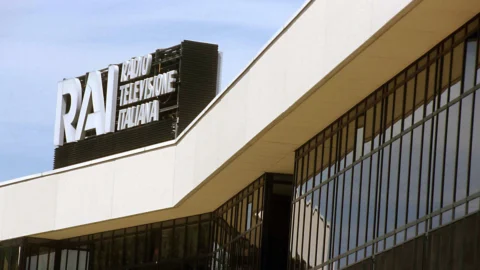
We wrote in theprevious article on FIRSTonline that The Concession will expire in April 2027 through which the State entrusts Rai with the exclusive rights for the exercise of the National Radio and Television Service. Precisely in that perspective and for that date it will be necessary first of all to clarify what the role could and should be, the mission, the project not only of the Rai Company, that is, what it will have to do, with what resources and with what type of governance. At the same time it may be necessary to initiate a deep and substantial process of modernization of the entire legislative perimeter with which the audiovisual system of the country is governed, substantially and for a good part stopped at the Gasparri Law n.112 of 2004.
The evolution of the audiovisual market
Since then, the market, the public and technologies have radically changed while the regulatory interventions that followed Law 112 did not follow the same speed of adaptation to the changes that had occurred. Twenty years ago the two main protagonists of the national audiovisual market, Rai e Mediaset, Were just at the beginning of the new digital age: OTT platforms, increasingly widespread streaming, different product consumption habits and the “new” audience that was forming have made the competition more complex and articulated on different fronts. It will therefore be it is difficult to keep the two areas separate: on the one hand the Rai reform alone (and we will see the numerous difficulties that have already emerged) and on the other hand the rest of the national audiovisual complex where the Public Service still plays a fundamental role.
The debate on the reform of the audiovisual system
Today, the theme at the centre of the debate on the national audiovisual system is exactly in these terms: what kind of reform is needed, that is, does it refer to Rai alone or to the entire audiovisual system?, what objectives should it set and in what context should it be placed?
At the moment, the debate/confrontation between the political forces is stuck on October 22nd, or “incardinated” as it was said the day after the vote of September 26, in the VIII Commission of the Senate where seven proposals were filed. These are n.163 (Gasparri, FI), n.199 (Nicita, PD), n.611 (Bizzotto, Lega), n. 631 (Martella, PD), n.828 (De Cristofaro, AVS-SI), n.1242 (Bevilacqua, M5S) and n. 1257 (Borghi, IV). Since then, there has been no progress and the hearings of the various interested parties have not yet been scheduled. From a strictly procedural point of view, to start the overall comparison between the parties, a comprehensive text is still missing of the government majority. On November 5th, Senator Maurizio Gasparri announced the presentation of a new organic proposal of the system, not only from Rai but it has not yet arrived: "We will make a law against the web giants".
A next step should be to try to unify the different proposals into a single design, capable of gathering the widest possible consensus and therefore making the reform process sufficiently robust and resistant over time. All this should happen in a context in which "Europe asks us" to intervene early (starting next August) and in depth with a reform detailed by Emfa (European Media Freedom Act) capable of ensuring the homogeneity of community regulation in the audiovisual sector as well as specific mechanisms for the economic and editorial protection of the Public Service.
The above proposals have a prevalent common denominator: the reform of the governance system of RAI, essentially aimed at overcoming Law 220 of 2015, the so-called “Renzi Law”. With that provision, the new figure of the Chief Executive Officer was established, formally proposed by the Government together with the President (who however must obtain the majority of the Parliamentary Supervisory Commission) while 4 administrators are voted by Parliament and one by the employees (this is a new figure). substantial nodes are: the selection criteria for director candidates, the source of appointment and the length of the mandate. A topic that arouses great interest is the creation of a Foundation which in some versions should have the task of managing and directing Rai activities. It remains relatively the issue of financing is marginal which varies from those who would like to abolish the fee altogether (Lega) to those who propose the transfer of management costs to general taxation for an amount estimated at 2,7 billion euros.
The political and institutional difficulties of the reform
Finally, to give a full idea of the complexity, not only technical/legal, of the “reform” problem it is necessary to take into account an element that, at the moment, is blocking the debate: the appointment of the president of the board of directors of Viale Mazzini (now we should say “former” given its closure for asbestos remediation). As is known, the majority and the opposition are rigidly fixed on their positions: on one side the government parties that support Simone Agnes and, on the other hand, the opposition parties that instead demand a different name, “authoritative and guaranteeing”.
As far as we know, there doesn't seem to be that climate of dialogue and comparison without which the reform, whatever it may be, will hardly be able to move forward. A reform by only one party or a poor parliamentary support is destined to be short-lived, that is, the exact opposite of what is necessary.