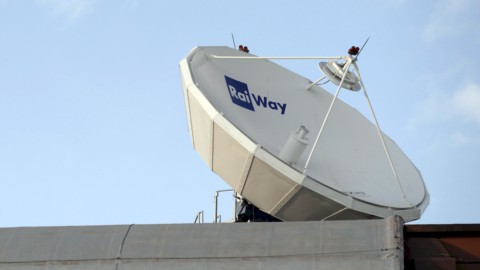
Has been published the decree in the Official Gazette and allows Rai to sell the controlling stake in Rai Way. The measure may pave the way for the creation of the pole of the towers, which has been talked about for years now, but the obstacles are not lacking and it is legitimate to have strong doubts. Let's try to understand why by analyzing three profiles: legal, financial and industrial.
Rai Way and the pole of the towers: legal problems
First of all, it is necessary to carefully read the text of the government provision and, in particular, the premises and provisions of art. 2. The first two paragraphs of the provision refer to what is indicated in art. 21, paragraph 3 of the Decree Law 66 of 2014, issued during the Renzi Government, but a fundamental article of the was almost completely forgotten Gasparri law with the same number (21, paragraph 3), i.e. 112 of 2004, with which a fundamental pillar of the entire architecture on which the Prime Minister's Decree is based is established.
Let's read, in order, Gasparri first:
"In consideration of the relevant and unavoidable reasons of general interest and public order connected with the concession of the general public radio and television service entrusted to RAI-Radiotelevisione italiana Spa, the clause limiting share ownership pursuant to article 3 is inserted in the company's articles of association, paragraph 1, of the decree-law 31 May 1994, n. 332, converted, with modifications, by law 30 July 1994, n. 474, providing for the maximum limit of possession of one per cent of the shares with voting rights for all the subjects indicated by the same paragraph 1. ... Voting or blocking shareholders' agreements are also prohibited, or in any case the relative agreements the method of exercising the rights pertaining to the shares of RAI-Radiotelevisione italiana Spa, which exist between holders, also through subsidiaries, parent or associated subjects, of an overall shareholding exceeding the share ownership limit of 2 per cent... These clauses are law included in the Company's articles of association, cannot be modified and remain effective without time limits".
Now the issue that arises is on the legal basis of what happened earlier with the Renzi Government Decree in 2014 to which the current Prime Minister's Decree refers, where the constitutional reservations (from Pace, Ainis and Cheli) still not resolved. The mechanism is simple: a Prime Ministerial Decree has a lower rank than a Law which, notoriously, can only be surpassed by an equivalent or higher level one and la the Gasparri law has not only not been passed, but also possesses the characteristics of so-called "strengthened" law where it indicates that "these clauses cannot be modified and remain effective without time limits". Not only that: the recent Legislative Decree 208 of last November (new TUSMAR, Consolidated text of audiovisual and radio media services), which also puts a hand in the reorganization of the telecommunications system of our country in implementation of the community provisions, fully confirms the validity of art. 21 of Law 112 of 2004.
Finally, another note of particular interest emerges from what is indicated in art. 2 of the DPCM. where it reads that "the completion of the operations referred to in Article 1 is conditional on obtaining the necessary qualifications authorizations by the guarantee and supervisory authorities”, which would then be four: AgCom, Consob, Antitrust and Rai Parliamentary Supervisory Commission. As can be seen, this is a constraint that is extremely difficult to circumvent where, moreover, no decision-making procedure is indicated: which of these subjects could prevail if even just one of them raises objections? All of this leads one to believe that the DPCM contains a structural weakness which could lead it onto a track of complex practicability, at least in the reasonably short times that would be necessary to become effective.
The financial matters
So let's get to the financial problems. There are at least two levels: the first refers to equity dynamics of the Rai Way stock (someone headlines "fly to the stock exchange") and the second at M&A operations that the DPCM would make possible with the directly interested counterparty Hey Towers (2% owned by F60i and 40% by Mfe). It is also necessary to remember that just a few days before the signing of the DPCM, the equity funds that manage 7% of Rai Way's floating capital wrote the following to Draghi: "We believe that the Government well understands the need to act with timing and determination to solve situations that have remained blocked, such as the consolidation of broadcasting towers”.
As has already happened in the past, as soon as it received news of the signing of the measure, the Rai Way share soared to approach the 6 euro threshold, considered optimal for subsequent operations that can be undertaken with multiple advantages for all interested parties. Among these, in the short term, the one that has the greatest sensitivity would be Mediaset, which has everything to gain from an operation of this kind at a time when its international activity is very dynamic (see possible takeover bid on ProsiebenSat).
Rai Way and the pole of the towers: the industrial factor
Finally, there is a problem entirely internal to Rai and the difficult moment it is going through on an economic level. The question that arises is simple: How much is an operation like this convenient for Rai at the moment? How much could the investments necessary to face an increasingly aggressive and competitive market support? The answer is complex: formally there would be much convenience, because the consolidation would allow Viale Mazzini to raise cash and the proceeds (approximately estimated at over 300 million) would be used to fill gaps in current budgets and future commitments. However, the operation should be placed in the next Industrial Plan, which, together with the new Service Contract, is still a draft to be verified and confirmed in a period of time that will not be so short.
It should also be remembered that the horizon of the Public Service coffers does not look very clear: advertising is down e the fee could come out of the electricity bills, which would cause a return to evasion in the order of 100 million euros a year. In recent days, Minister Giorgetti was heard in Rai Supervision and, in this regard, he was clear: "The resources deriving from the market transaction must be used entirely for the specific activities of the public radio and television service". It will not be an easy undertaking.
But the Minister also touched the most exposed nerve of this DPCM: the control of the future single company of the towers. To the politicians, surprised by such promptness on the appearance of the provision (as if it were unexpected, when instead it had been talked about for months), Giorgetti stated categorically that Rai cannot be the owner of the towers and at the same time use them as a publisher. The minister then hinted at his project: network and antennas under the same roof with the protection of a subject with public participation.
Conclusion: the Prime Ministerial Decree appears for the most part still to be deciphered in its scope and in the effects it will be able to produce. The times of politics and those of the market are generally not the same. The real big game of the TLCs in Italy doesn't seem to have started yet: at most, therefore, the latest provision could be a step towards a goal that is still far away.