Il exceptional heat of the summer marks a new record in electricity consumption Italians. To August 2026 la question of energy has reached 28,9 TWh, the highest value ever recorded for the month, with a 16,5% increase compared to August 2025The demand was mainly driven by the temperature Elevate, which remained above those of last year also overnight and such as to prolong the use of cooling systems. The growth in demand is accompanied by a significant contribution from sources renewable, while industrial consumption also shows a positive trend.
This is what emerges from the data of Terna, according to which the Electricity demand grew for the fourth consecutive month and, once adjusted for calendar and temperature effects, it stands at the highest levels in the last ten years. In the first eight months of the year, demand increased by 10,4 TWh overall, equal to 5% compared to the same period in 2025.
Heat pushes electricity demand
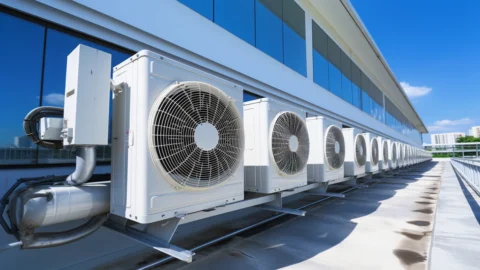
The climatic conditions are what explain a good part of the August record. average temperature of the month was 2,6°C higher compared to August 2025 and 3°C higher than the average of the last ten years. However, the heat did not stop at daytime hours: the minimum temperatures were on average 5°C higher than last year, making the use of conditioners and other cooling systems.
A rise in temperatures has been added calendar effectIn August, there were 21 working days, compared to 20 in the same month in 2025. Even eliminating the combined effects of weather and calendar, however, demand would still have increased by 5,9%.
Growth has affected all areas of the country, albeit with different intensities: +13,2% in the North, +18,2% in the South and the islands, and +21,7% in Central Italy. Furthermore, compared to July 2026, demand adjusted for calendar and temperature effects increased by 3,5%, confirming the progression of recent months. Among the territories, Sicilia recorded one of the most significant increases. Temperatures averaged 2,9°C higher than in August 2025, and electricity demand grew by 25%. From January to August, regional consumption increased by 8% compared to the same period in 2025, with peaks that surpassed the previous records set in 2023.
Renewables cover 41,4% of demand
Faced with such a high demand for electricity, the renewable sourcescontinued to make a significant contribution. In August, they generated 12 TWh, covering 41,4% of the national electricity demand. Production was driven by PV, which reached 6,2 TWh, with a growth of 20,4% compared to August 2025. The result is also linked to the increase in capacity installed, which has strengthened the contribution of solar to the electricity mix.
However, the increased contribution from photovoltaics only partially offset the decline in other sources. wind power production decreased by 24,2%, that hydroelectric by 16%, while geothermal e bioenergy recorded a decrease of 3,4% and 3,5%, respectively. Overall, generation from renewables remained virtually stable, with a growth of 0,4% compared to August 2025.
Instead, it was the installed capacity. In August alone, 417 MW of new renewable power came online, bringing the total added since the beginning of the year to 4,6 GW. At the end of August, Italy's total installed capacity reached 88,1 GW, including 47,7 GW of photovoltaic and 14 GW of wind.
The contribution of renewables remains significant even in the budget from January to August: in this period they have covered il 42,4% of electricity demand nationally, while their production increased by 1,2% compared to the first eight months of 2025. Once again, photovoltaic recorded the largest increase, with production growing by 19,6%.
More domestic production to meet demand
The strong growth in consumption also required a greater contribution from domestic production. In August, net production rose to 25,2 TWh, 4 TWh more than in the same month in 2025, an increase of 14,6%.
The Italian plants thus covered 85,7% of the demand, while the remaining 14,3% was satisfied through foreign trade balanceTo cope with peaks in demand, the cheap imports, +25,2%, and thermoelectric generation. In this context, electrochemical storage is also playing a growing role. In Italy, total capacity has reached 19,54 GWh, with a nominal power of 8,1 GW.
Industrial consumption is also growing
The increase in electricity demand is therefore not only due to summer temperatures. In August, the demand for electricity also increased. consumption of energy-intensive companiesAccording to the IMCEI, the index developed by Terna based on the consumption of approximately 1.000 energy-intensive companies, industrial consumption increased by 1,1% in August compared to the same month in 2025. In the first eight months of 2026, growth will thus reach 3,7%.
A positive trend also emerges from the servicesThe latest available data is for June, as the Imser is published with a two-month delay. In that month, the index increased by 0,4% compared to June 2025, reaching the highest value ever recorded for June since the series began in 2019. In the first six months of the year, growth compared to the same period in 2025 was 1%.