La resilience of the water sector It also passes through skillsThis is one of the principles underlying the European Water Academy, an initiative of the European Commission developed within the framework of the European Water Resilience Strategy, to which That participate as First Champion.
The aim is to strengthen knowledge and professionalism in a sector called upon to face increasingly complex challenges: from water scarcity to the effects of climate change, from digital transformation to the management of increasingly complex infrastructures.
For Acea, the theme is part of the activities that the company carries out in the field of training and transfer of skills, through internal programs and collaborations with universities, business schools, and research institutions. The offering includes technical and management expertise and covers various areas of the water supply chain.
Acea programs for the European Water Academy
Acea's contribution to the European Water Academy includes six initiatives.
The first is theExecutive Master in Water Management, Developed with 24ORE Business School in Italian and English. The program will begin in January 2027 and is aimed at water sector professionals, managers, and technical specialists. Topics covered include integrated water service management, sustainability, digital transformation, innovation, asset management, and regulatory developments.
Also in January 2027, two Learning Paths dedicated to technical training will start. Water Treatment, Water Quality and Environmental Sustainability will focus on water treatment, resource quality, environmental sustainability, the circular economy, and emerging contaminants. Water Networks, Infrastructure and Operational Excellence Instead, it will concern water infrastructure and networks, asset management, operational efficiency, and quality of service.
It will take place from September 2026 to July 2027 The Shapes of Water, a multidisciplinary training course in Italian dedicated to the strategic, environmental, technological and regulatory aspects of the sector, with the involvement of international experts and Acea professionals.
The offer also includes activities aimed at students. Water Education, starting in January 2027, is intended for high school students and will use e-learning content and the involvement of company experts to address the issues of water and sustainability. The postgraduate program is already underway. Water Education, aimed at postgraduate and doctoral students through thesis projects, research internships and collaborations with universities and research programs.
Pezzoli: "Water resilience is a challenge of skills."
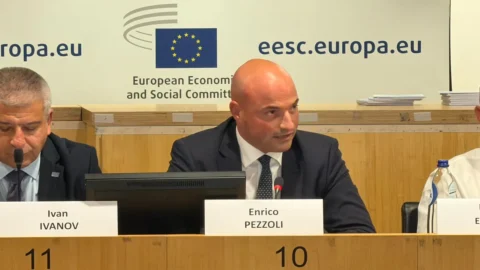
“This is a historic day for the water sector and Acea is proud to be among the Champions of the European Water Academy, a landmark initiative of the European Water Resilience Strategy, created to strengthen skills and cooperation in the water sector, connecting businesses, universities, research and institutions within a true ecosystem,” declared Acea. Enrico Pieces, CEO of Acea Acqua, on the sidelines of the launch of the European Water Academy in Brussels. "Water resilience is not just an infrastructural or technological challenge: it is above all a challenge of skills and people. The European water sector is facing a progressively aging workforce and a growing need for new skills, particularly in technical and digital fields."
According to the CEO, one of the necessary steps is to make the sector more attractive to younger generations: "We must make the sector more attractive to young people and invest in training to be increasingly competitive and innovative." Pezzoli then highlighted Acea's work through collaborations with universities, business schools, and research institutions, calling training "a strategic driver of transformation." The Academy's contribution, he explained, includes "executive courses, specialized programs dedicated to water management and quality, sustainability, and networks, as well as initiatives aimed at schools, students, and research."
The goal, he concluded, is to bring these skills to the European level and foster the creation of a community capable of connecting businesses, universities, research, and institutions.