When discussing “technological challenges” there is often the risk of not being sufficiently able to correctly and fully define their characteristics and specific terms. This is why we asked the protagonists directly, those who have to concretely support them in their companies, not only for the precise definitions of the themes and problems but also for the respective strategies.
The first half of 2021 is about to end, which has long been announced as a year of important transitions for the entire telecommunications system, in Italy and in the rest of Europe. Here we are now: competition pushes towards the acceleration of processes that can no longer be postponed. These are challenges with a high technological content which, in particular, affect the entire production and distribution chain of audiovisual products. There are two major issues on the agenda: the first refers to the next stage of the refarming process of the frequencies in the 700MHz band which will start as early as next September and the second concerns broadband and the possibility of creating a single distribution infrastructure.
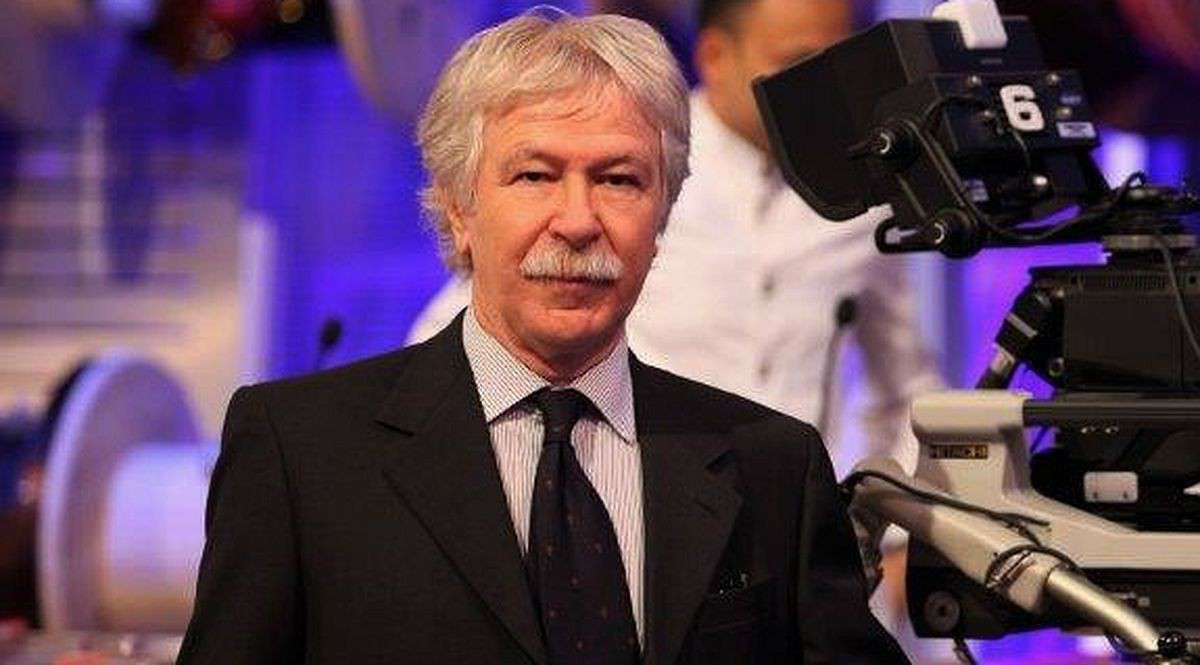
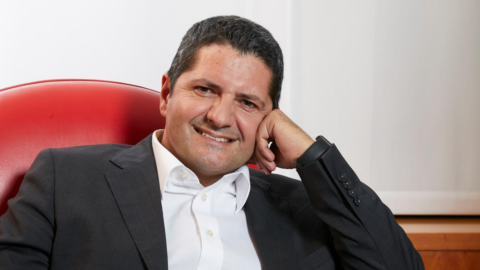
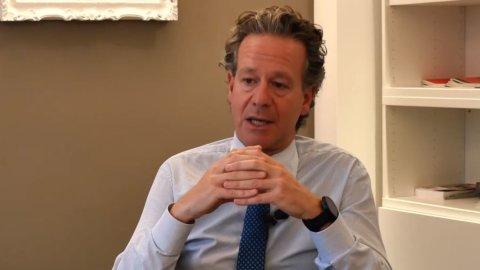
On these topics we interviewed Luca Poloni, Chief Technology Officer (Cto) of the Mediaset Group, which for the first time presents the different points of view, operational orientations and wide-ranging perspectives of the other major national broadcast operator in the round. The contents of the interview are of particular importance first of all because there are no precedents of Mediaset who exposes his considerations on these specific topics to the general public in such an explicit way, with which some passages are clarified that it will be difficult not to take due account. First of all as regards the modalities of the possible postponement of the departure of the next stage towards DVB-T2 on 1 September and, at the same time, the formal request to the Government to launch a massive and effective communication campaign aimed at users purchase of new TV devices or decoders. In addition, "hot" topics are also addressed such as the future of DVB, the CDN, the single network and the age-old and never resolved "pole of the towers".
The interview with Poloni follows the one with Stefano Ciccotti, CTO Rai, published on FirstOnLine last May 23rd. The aim is to provide readers with a sufficiently broad overview of the topics and problems being debated. The great technological challenges that broadcasters have to face are common and the next deadlines that see them directly involved are close.
The same problem will also arise for Mediaset: starting next 1 September, the first real phase of the refarming of the frequencies in the 700Mhz band will begin, to make the band available for the expansion in our country of 5G, mobile technologies and new generation ultra-broadband. Il The second Report of the Bordoni Foundation indicates that there are around 21 million Italian families who access television with DTT. Among these, it is foreseeable that there will be a very large number of those who will be able to see the black screen in September if they do not replace the old device in time. There is currently no news of the 6 Euro incentive without ISEE promised by the Government. How does Mediaset plan to face this phase? What strategy do you intend to adopt in view of the whole transition process to DVB-T2?
"In this decisive phase, all the main television companies, through Confindustria Radiotelevisioni and with a sense of responsibility and constructive spirit, have proposed to the Government a transition path at the end of which they ensure the return of the frequencies of the 700 MHz band by 30 June 2022, but at the same time they are asking to be able to manage this delicate phase with flexibility, eliminating some of the rigidities envisaged by the Road Map decree.
Basically, while declaring themselves technically ready as of 1 September or from the date that the Ministry deems most appropriate for starting the refarming process, the television companies are asking to eliminate the mandatory disposal of MPEG-2 on the whole national territory starting from 1 September 2021 with the possibility of continuing to broadcast some programs with this standard to avoid the blackout of millions of televisions and to provide for the option (and not the obligation) to activate the DVB-T2 standard, linking it to the effective reception of programs by the totality (or almost all) of the population.
The Government was also asked to give operators certainties with the immediate publication of ministerial decrees relating to the changes to the Road Map drawn up in 2019 and the disbursement of around 250 million euros in incentives for the scrapping of old television sets and their replacement with new ones. Only in this way will it be possible to launch a massive and adequate communication campaign to solicit users who at the moment do not feel any need to change their appliance, as shown by the sales figures anchored to historical trends. This is a fundamental element for the correct management of a process to be programmed involving all the protagonists to guarantee the success of the initiative, starting with the Industry, avoiding unsustainable discomfort for consumers and irreparable damage for the entire sector.
A path which, if managed with reason and a medium-term vision, will allow a rapid and necessary technological and qualitative evolution of the digital terrestrial platform. A truly universal platform considering the value of its contents, its prevalent free nature and its widespread presence in all Italian homes".
Your company is also heavily involved in the competition between broadcast and broadband. Television content will travel and will be increasingly attractive to the general public in streaming mode rather than via terrestrial frequencies. How do you intend to "distribute" your resources in the two sectors which, although complementary, address an audience and a method of different and alternative consumption? How much longer do you think DVB can be a “convenient” technology?
“The term 'strongly engaged' does not adequately describe the level of experimentation and innovation we are expressing. On this issue we like to think we are the "shaper" of the new ways of using television for the Italian audience. I'm sure you will have seen the numbers of our digital properties and our OTT platform, developed according to market best practices and today also integrated with our Infinity PAY streaming service in a pyramid logic of use (free, freemium and PAY).
These "new methods" require a significant rethinking of the canonical distribution models. The progressive reduction of the TV frequency spectrum forces the search for new distribution platforms and pushes towards the convergence and hybridization between broadcast and broadband.
The market has well identified this trend by adapting to the change in end user uses and consumption, for example the transition from generic Audience data to a more profiled and qualified share or the redefinition of the metric used by advertising investors which is increasingly Total Audience (ie the set of TV viewings and streaming).
We believe that DVB-I is an important opportunity to develop hybrid, multi-platform, multi-device and ubiquitous television. We are in advanced experimentation with target advertising which is the functionality - even more so if combined with the convergence of platforms - that will allow us to compete on equal terms with Internet players for audience segmentation and targeting.
For all of this the alternative infrastructures are not yet ready, the Broadcast is still absolutely necessary regardless of evaluations of convenience”.
5G and BUL represent the new frontier not only in the diffusion but also in the production of audiovisual contents. In what terms and with what perspectives are you tackling this transition?
“By our nature, we look with the same interest at all the technologies and platforms that allow us to reach our viewers. 5G has latency reduction characteristics that can enable very interesting "use cases" for our business model and for this reason we are engaged in experimental partnerships with TelCo players.
So the perspectives with which we are approaching it are to look ahead and imagine how our world will function in 5-10 years to be ready to be first movers in the creation of features that are of interest to our internal customers and ultimately grow and improve the experience of using our content, the only true mantra of our working days".
Technological, product and system innovation requires significant resources precisely at a time when the advertising market is suffering due to its progressive shift towards the web. How do you plan to deal with this problem?
“Advertising on our assets is doing very well, Publitalia colleagues are champions capable of developing strategic relationships and projects with our investor partners. Advertisements on television have an unequaled return on effectiveness and decision-makers on the industry side are well aware of this. We then now offer the entire panorama of media, TV, radio, digital and this allows synergistic effects and coverage of complementary target segments at 360 degrees. I'll give you an example that a marketing analyst in a consumer goods company told me. One of their products developed a campaign in partnership with an entertainment program on our networks. The product in question recorded an increase in sales of approximately 70%. Marketing Directors know these numbers well and know what value for money they can get with us.
Having said that, we invest according to our needs and I have not had to give up anything that I deem necessary or strategic due to budget constraints. The demand for technology is definitely growing, but luckily the costs are trending downwards. Furthermore, as it should be, we participate in the efficiency recovery programs that our Chief Executive Officer has successfully conducted over the years and this gives us additional resources to direct where we believe there is the greatest return in value. But this is our managerial duty regardless of the Top Line, we work on optimization and demand management as a duty to all our shareholders: efficient use of capital, a company managed with streamlined operating models and always in line with the best market practices".
What we asked of Rai also applies to Mediaset: you don't have your own CDN (Content Delivery Network). Do you think a project that could involve all national broadcast operators for a shared CDN is feasible?
“Internally, we talk about CDI, i.e. the entire hybrid digital infrastructure that reuses the current distribution infrastructures via air or satellite and integrates them with the edge nodes of the Broadband distribution over the IP network for the Multicast transport of quality video contents in the Italian houses. With this meaning in mind, we believe unlike other operators, at least reading the public statements and documents, that a common solution is preferable.
The recent impact of the Covid-19 crisis underlines once again the advantages of direct transmission unaffected by network congestion, at a time when reliable access to news and information is essential and indispensable for all of society. Mediaset believes that the distributive nature of this "CDI" towards the end user can allow it to be implemented with the following characteristics:
- Unique: this infrastructure is a "unicum" which joins and synergistically integrates the networks already present for the diffusion of TV (multipurpose), to interconnect the service providers to the end user in a platform-independent way
- Shared: given its uniqueness as a hybrid infrastructure (broadcast/multicast), the dimensioning of this infrastructure is determined by the volume of users who use its services rather than by the number of broadcasters or content providers who feed it. From this it follows that once created it can be shared by the plurality of suppliers to distribute their contents without having to create their own
- Systemic: the fact that it is unique and shared, intrinsically interoperable, largely participated by operators and consequently equipped with standard technologies, means that this infrastructure lends itself to assuming the full value of a system, operated and guaranteed by a single operator, for one harmonious and coordinated development of the Media. This new infrastructure will also have to adopt technological and security solutions capable of guaranteeing the identity and authenticity of the publisher who delivers the primary contents to the end user, ensuring that access protection of contents distributed from illicit uses (overspilling, re-distribution, copying, downloading/uploading, etc.), protect the management of Copyright through the use of digital content marking technologies (watermarking) and protect the native property of the distributed editorial products and content (Copyright infrastructure) These elements are essential for a guaranteed quality service which allows, even on IP, the necessary scalability thanks to multicast techniques and ensures the end user has the same user experience as digital TV regardless of platform (air or wired). Even where the unicast network has sufficient capacity to serve a mass audience (e.g. fiber), the multicast/broadcast model can bring advantages in terms of security, cost and environmental impact”.
Speaking of sharing, as far as we know the path towards the creation of a single network company seems to be stalled. The Government, as stated by Minister Vittorio Colao, it seems oriented towards other methods of diffusion such as, for example, FWA as a complementary technology. What is your position on this?
“You have to be careful not to create confusion. We believe in a single distribution infrastructure, but this has nothing to do with the single network company discussion. With regard to this, we believe that the current Government is equipped with the skills and professionalism to address this issue and its implications (uniqueness, technologies, rules of access and engagement) in the best possible way, also with reference to the funds that the PNRR plan may allocate to this investment chapter. It is certain that any solution that provides for a single operator, especially if private, must have characteristics and guarantees of fair access and treatment of services for those who request them".
The age-old theme of the "pole of the towers" constantly comes up for discussion and periodically seems to be close to a solution. Do you consider it a useful, advantageous and feasible process not only for your company but also for the entire telecommunications system of our country, or vice versa, or has the time for this hypothesis inexorably run out?
“The question somewhat surprises me as Mediaset has demonstrated in practice that it believes before anyone else that this project is necessary and healthy for the country. We launched a takeover bid on a competitor which was blocked due to a public governance issue. This made us take alternative ways to market value of our asset, at this point we will see what the future holds for us. Evidently with the dual role of shareholders and customers using a "business critical" service, we look at this issue with great interest".
Mediaset has long been projected towards a development dimension at the European level. In addition to the well-known events of a financial nature, what do you think could be the problems of a technological nature in terms of opportunities or limitations towards this project?
“From a technological point of view, I see few problems and many opportunities. The management is very compact in sharing the vision of our Chief Executive Officer. Evidently Technologies are the area that can best express the cost synergies inherent in a project of this type. Think of the possibility of developing and maintaining a single OTT platform, converging management systems with infrastructural benefits and internal sharing of best operating practices, sharing production infrastructures such as Media Asset Management and more generally cloud infrastructures which with the digital transformation now completed are a strongly growing item of expenditure.
A further opportunity is given by IP technology, in which we are making significant investments, and which allows the relocation of activities that previously had to be carried out in situ. In short, while aware of the managerial responsibility and the design load that would arrive on our desks, I believe that this project is an extraordinary opportunity, and I am proud that Mediaset is pursuing it with such strength".