Another slip-up of the Kospi, the main index of the Bag of South Korea and point of reference for the semiconductors and for securities related to theArtificial intelligence worldwide. It lost another 5% overnight, while other Asian markets were mixed. This is a dire sign for the first August session of financial markets after the swings of late July, even though the collapse of oil prices is giving stock markets a boost, and Milan opened higher.
Despite today's losses, the Seoul Stock Exchange, dominated by AI giants, remains the best performing in the world: since the beginning of the year it has gained 67% driven by the stellar performance of semiconductors which have also given a boost to the Taiwan Stock Exchange (+ 50,2%).
In Europe, however, it stands out Business Square Since the beginning of the year, Milan has gained 16%, thanks to gains in financial stocks, partly due to the banking risk. So far, Milan has outperformed not only all the European Union stock markets but also the US stock markets, which have gained 8% so far in 2026.
Historic intervention by the United States and Japan on the yen
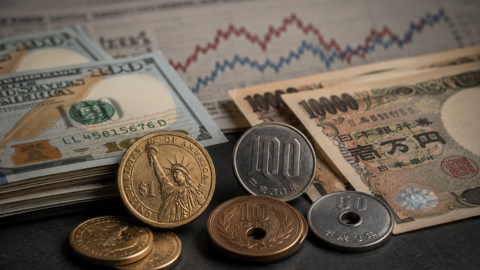
To make the situation on the Asian markets even more delicate, the historic joint intervention by the United States and Japan to support the yen, which recently fell to its lowest levels in 40 years against the dollar. The Japanese Ministry of Finance said on Friday it had conducted a coordinated operation to purchase of the currency together with the U.S. Treasury, the first of its kind since 2011. The move was taken to counter “the recent excessive volatility and disorderly movements of the yen.” On Thursday, the Japanese currency had reached 163,73 per dollar, before strengthening to 157,57 on Friday and subsequently stabilizing around 157,70.
The Japanese Finance Minister Satsuki Katayama He assured that Tokyo “will not hesitate to conduct further coordinated interventions in the future” and will continue to maintain close contact with the U.S. Treasury Department.
Even the Secretary of the Treasury Scott Bessent confirmed the operation, stating that "coordinated actions in the foreign exchange market on Friday countered the yen's disorderly movements." Washington, he added, will not hesitate to participate in further joint initiatives and supports the measures taken by Japan to correct "the yen's substantial undervaluation."
Why Washington decided to intervene
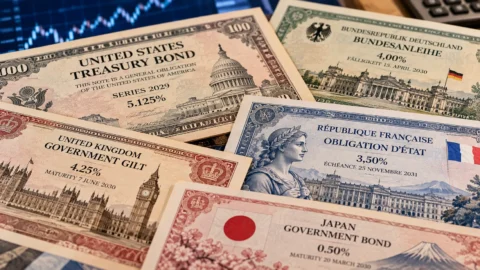
The participation of the United States is particularly unusual, because Washington rarely intervenes to support another country's currency. The U.S. government, however, has an interest in avoiding a further weakening of the yen, also because Japan is the largest foreign holder of U.S. government bondsTo defend its currency on its own, Tokyo might be forced to sell large quantities of Treasuries. A massive selloff would push down bond prices and raise yields, increasing the cost of financing the United States' debt.
The Japanese Ministry of Finance also announced that it will use the Federal Reserve's Fima repo facility, a tool that allows foreign monetary authorities to obtain short-term dollars by temporarily selling U.S. Treasury securities without selling them on the market. Investors were also surprised by the news that the United States would have sold euros, instead of dollars, to buy yenAn unusual choice compared to traditional coordinated exchange rate interventions.
The last coordinated intervention on the yen dates back to 2011., but then had the opposite goalAfter the earthquake and tsunami, the Japanese currency strengthened rapidly on expectations of a repatriation of capital earmarked for reconstruction. Today, however, Tokyo and Washington have intervened to halt its decline.
The yen's weakness stems primarily from the wide gap between Japanese interest rates and those of other major economies. Since 2022, with the monetary tightening initiated by Western central banks, many investors have sold yen-denominated assets to purchase currencies offering higher yields. This movement has gradually pushed the Japanese currency to its lowest levels in forty years.
Last update 8,48am