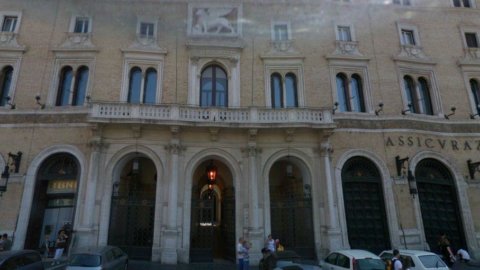
A real map of the discipline 231, legislative decree of 2001 on the administrative responsibilities of companies, is the one outlined by Assonime in its report on the "Liability of the company from financial and corporate crimes". Taking inspiration from the sentence of the Court of Milan of 3 November 2010 relating to the Banca Italease case, the most important and thorny points are addressed in terms of administrative burdens of corporate bodies, ten years after the entry into force of the discipline.
In particular, the role of organizational models is defined in the context of organizational negligence, clarifying the meaning to be attributed to the interest or advantage of the entity if connected to the purpose of the offence. Finally, the delicate question of the entity of the profit that can be confiscated is explored. The Italease affair, on which the investigating judge of Milan has ruled, originates from a series of illicit conducts of which the managing director and the general manager of the bank have been accused. They were judged for false corporate information, market manipulation and obstruction of supervisory functions.
The report of the Association of Italian Joint-Stock Companies aims to highlight how this legal case has defined the companies' responsibilities for crimes committed by their senior managers. The case of Milan has clarified that the body is always liable in the event of offences, in fact an inefficient organizational model is considered to be the cause to all intents and purposes, which has not prevented the occurrence of the unlawful conduct. Furthermore, it would be enough to demonstrate that the body took advantage of the offenses to formulate an accusation against it. Only if the crime involved an exclusive gain for the natural person who committed it or for third parties, the company is exempt from liability, the prosecutor specified.
The second thorny issue that the sentence tried to define is that linked to the application of sanctions, a delicate aspect of the training system of the 231, on which the hope of the Italian Spas is a legislative intervention that revises the current discipline. The art. 19 of Legislative Decree 231/01 establishes that: "Confiscation of the price or profit of the crime is always ordered against the entity, except for the part that can be returned to the injured party" . The jurisprudence has clarified, the profit of the crime is considered that constituted by the economic advantage which has a causal link with the offense itself and which "is concretely determined net of the actual benefit possibly achieved by the injured party".
It therefore goes without saying that in the calculation it appears unreasonable to make use of evaluation parameters such as net profit or gross profit. Furthermore, the use of these accounting data would make it "diabolical" to distinguish the licit activity from the illicit one that contributed to its formation. Therefore, for example, in the case of Italease, for the offense of disseminating false information and market manipulation, although the share on the stock exchange certainly benefited from this offence, a confiscation cannot be proceeded as it is impossible to determine the extent of the profit unduly profited and the penalty would have been lump sum. While, as regards false corporate communications, it was possible to demonstrate a direct and precise impact on the economic result achieved by the entity, which by underestimating the provisions for risks showed a higher profit than what would have occurred if it had operated correctly. It follows that the confiscation of the profit has been applied as per the law.