" school it is the most effective integration lever for those coming from other countries and for young people born in Italy who are children of emigrants." The President of the Republic said this clearly. Sergio Mattarella, inaugurating the school year on Monday in one of the symbolic places of the reconstruction after the terrible earthquake of 2016, Amatrice. Shortly before, the president of the CEI, Cardinal Matteo Zuppi had underlined that “a truly inclusive school it is one of the most powerful instruments of justice and peace”, hoping that classrooms are “places where no one feels excluded”.
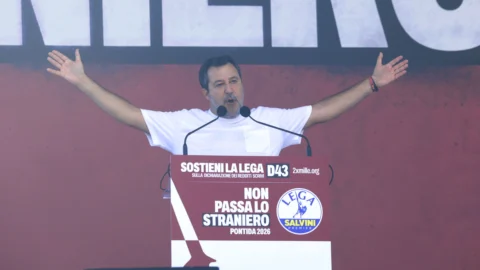
The words of Mattarella and Zuppi come a few hours after the announcement by Prime Minister Giorgia Meloni of two reforms that affect the world of education: the ceiling in classes for foreign students and ban on wearing the burka in classroomsThe two measures are expected to be included in a decree law that could be submitted to the Council of Ministers on Thursday.
Mattarella's words
In his speech at the school dedicated to Sergio Marchionne, the Head of State stated that "teachers must not be left alone Society and institutions must not shirk their responsibility in difficult situations." These difficult situations, then, are certainly worrying public opinion. Bullying, youth gangs, and even attacks on teachers: all problems Mattarella listed in his speech before Education Minister Giuseppe Valditara, also extending some of the responsibility to families.Violence comes in many forms. Explicit bullying, groups and gangs consolidating outside the classrooms. Violence against teachers: The latest serious incident from a few days ago adds to those already occurring, not forgotten.
"The school must establish connections, gain the trust of families, help anon forming ghettos, a don't raise barriers, to make our communities safer, to unite and not tear apart, overcoming the walls of mistrust and lack of communication. Schools are called to produce social cohesion", added the president who then, to further clarify the concept, added recalled the Constitution: "School is the most effective lever for integration for those coming from other countries and for young people born in Italy who are the children of immigrants. School prepares everyone – 'It is open to all': this is what Article 34 of the Constitution states."
A school "open to all", forward-looking, free-thinking, and a facilitator of doubt, requires resources: "Society needs schools, and schools that are up to the task of modern times, to defend the civilization it has conquered and to progress further. As always, even today, we tend to focus on the present, consuming resources today. Instead, we need to invest in the future. A country that invests in schools and knowledge will be stronger and more resilient."
The words of Cardinal Zuppi
A few hours earlier, opening the Permanent Episcopal Council in Rome, Cardinal had also spoken about school Matthew Zuppi. The central theme of his speech was, in fact, the issue of education. "It's not just one issue among others, nor can it be reduced to programs and methodologies. It touches the heart of our coexistence," he stated.
“Educating means accompany a person to become free, capable of seeking the truth, recognizing goodness, relating to others, and responsibly assuming one's place in the world," explained Zuppi, according to whom the recent episodes of violence must "push us toward a renewed presence in the educational world." The cardinal recalled the "no longer postponable" challenges indicated by Leo XIV in the Encyclical Magnifica Humanitas. "The first is that of educational inequalities. We cannot accept that a child's place of birth, economic or physical condition, or social context determines their learning opportunities. A truly inclusive school it is one of the most powerful instruments of justice and peace” concluded Zuppi.