Il Jet fuel returns under pressure in Europe. After the strong volatility of the last few months, the market has to deal not only with a more expensive fuel, but also with one more limited availabilityBetween October and December, according to estimates by Energy Aspects, Europe could be short 510 barrels of jet fuel per day, equivalent to about 81 million litres.
The moment is particularly delicate because the fourth quarter also includes the Christmas holidays, when flight demand tends to grow. And the problem doesn't seem to be limited to the end of the year: according to Energy Aspects, in fact, the expected imbalance between supply and demand is essentially similar to that expected in the following months.
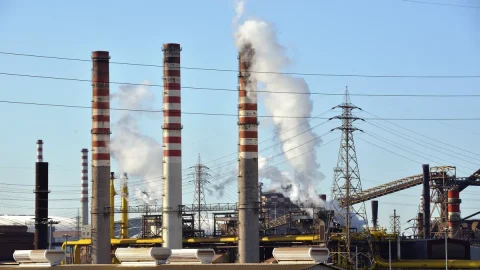
Making the picture even more fragile are the stocksIn the Amsterdam-Rotterdam-Antwerp (ARA) area, one of Europe's major oil hubs, jet fuel reserves held by independent operators reached their lowest level in seven years in the week ending September 10. With less product available on the market, Europe is therefore forced to look further afield for supplies. secure the necessary supplies.
Jet fuel: Europe must look abroad for fuel.
Domestic production does not seem sufficient to cover the European needTo compensate for the reduced availability, buyers increased their purchases on international markets, turning to more distant suppliers.
Since spring Europe has looked to United States, Canada, and Nigeria. In September the South Korea, has become a major source of supply: according to Kpler, around 129 barrels per day of jet fuel arrived from the area in the month, the highest level since October 2022. LSEG data indicate similar volumes.
What makes these shipments convenient is the price differential between Asian and European markets. When prices are higher in Europe, traders find it more profitable to buy fuel in Asia and transport it to the continent, even at the expense of higher logistics costs: this is known as arbitrage. This dynamic allows them to at least partially compensate for the shortage, but increases i Costs of transport. The longer the distance between production and consumption, the greater the impact of logistics on the price, contributing to keeping the prices under pressure. quotations of European jet fuel.
Adding to the shortage is the geopolitical factor. The disruptions in Middle Eastern supplies linked to the conflict in Iran have affected about half of Europe's jet fuel imports, pushing the continent towards alternative sources. With tensions in the region still high, the question remains risk of further disruptions.
The comparison with other areas of the world highlights the imbalanceIn the fourth quarter, Energy Aspects forecasts a surplus of about 18 barrels per day in the United States and a surplus of 419 barrels per day in Asia-Pacific. Europe, on the other hand, is preparing for a deficit and will have to rely more heavily on imports.
Why expensive fuel can reach ticket prices
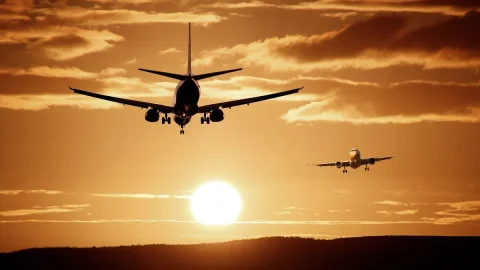
For airlines, the problem isn't just about the energy market. Fuel accounts for about a third of an airline's operating costs, making budgets sensitive to changes in jet fuel prices. If spending increases, a portion of the higher cost can therefore be reflected on the rates.
Companies can recover it through theincrease in ticket prices o fuel surcharge specifications. The increase, however, is not automatic nor necessarily proportional to the increase in fuel prices: it also depends on demand, competition, and the cost structure of individual carriers.
The case of Italy Airways shows the extent of the impact. The CEO Jörg Eberhart Eberhart estimated that a 50% increase in the price of jet fuel could cost the company approximately €500 million more annually. ITA uses hedging transactions to protect itself from market fluctuations, but only for a portion of its exposure. For the remainder, costs therefore follow the price trend. If energy price tensions were to continue, Eberhart indicated January 2027 as a possible moment for a tariff review.
However, there is a limit to the ability of airlines to pass these costs on to passengers: questionExcessive price increases could push some travelers away from flying. Carriers must therefore strike a balance between recovering higher costs and maintaining demand. According to Eberhart, passenger behavior will be a key variable.
Saf, another cost for airlines
Added to this pressure is that of the energy transitionEuropean standards provide for a progressive increase in the use of Saf, sustainable aviation fuels, which today generally have higher production costs than traditional jet fuel.
For companies, this means that several factors come together: the price of oil and jet fuel, the availability of supplies, the costs of transporting them from more distant markets, and the costs of transitioning to more sustainable fuels.
The result is increasing pressure on margini of the vectors, which could partly reach the passengersThe fourth quarter will therefore be important to understand whether Europe will be able to compensate for thejet fuel shortage with imports and how much this increased dependence on foreign supplies will end up weigh on flight prices in 2027.