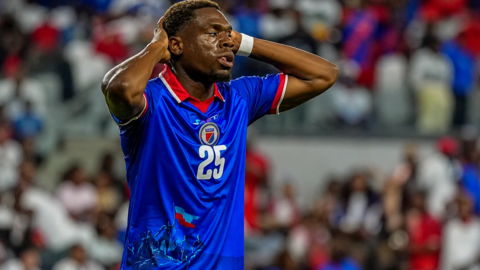
Before his debut at the World Cup, the Haitian team she was forced to change your jersey. Specifically, he had to remove a small detail which, under the right shoulder, represented a group of people waving a white and red flag.
The image was a reminder of the Battle of Vertières. In this location, on November 18, 1803, African-descendant slaves insurgents, led by Jean-Jacques Dessalines, reported a decisive victory against French troops commanded by General Donatien de Rochambeau, whom Napoleon had sent to try to maintain control of the island and defend the power of the European landowners.
This military success effectively marked the independence of Saint-Domingue, as Haiti was called at the time, from France, the end of slavery on the island (which Napoleon had reintroduced in 1802) and the evacuation of the whites of French origin who had survived the fighting.
By the twist of history, Haiti qualified for the final phase of the World Cup, defeating Nicaragua 2-0 on November 18, 2025, the 222nd anniversary of the Battle of Vertières.
Football and historical memory
Il FIFA regulations prohibit the presence of slogans and images of political content on footballers' shirts. This rule applies absolutely and regardless of where the matches are being played, specifically Foxborough, Massachusetts, where Haiti played against Scotland last Sunday.
However, in the case of Haiti it is difficult not to notice a certain consonance between the FIFA provision, which imposed the erasure of the memory of the revolution in Saint-Domingue, and the threat that Haiti and its inhabitants posed in the imagination of the United States, at least as far as a part of the Euro-descendant component is concerned.
The negative perception of Haitians in the eyes of "white" American public opinion dates back, in fact, to the slave revolution, which had already begun in the summer of 1791 in the wake of the transatlantic echo of the upheavals that were taking place in France.
The construction of the Haitian “threat”
The military success of the insurgents of African descent at Vertières led to the birth of the first "Black Republic" in the world, officially proclaimed on January 1, 1804, although a few months later, on September 22, Dessalines transformed it into an empire with an elective monarch, abandoning his original title of governor general and having himself crowned as Jacques I. In any case, the affair also had repercussions in the neighboring United States. Slave owners especially wanted to seize upon the bloodiest aspects of the Saint-Domingue revolt: for example, the fact that, in retaliation for the summary execution of 500 rebels decreed by Rochambeau, Dessalines ordered the massacre of 500 Frenchmen, whose severed heads were hoisted on pikes and displayed in the center of Le Cap.
Incidents like this, artfully exaggerated, served to reiterate the need to continue keeping slaves in chains to prevent their liberation from leading to the transformation of the United States into a multiracial society in which the supposedly savage and ferocious nature of African-descendants could no longer be physically restrained.
salt flatsBorn into slavery, he fought to secure freedom and equality for Haitians, the same values embodied in the United States Declaration of Independence of July 4, 1776. Once he became Haiti's first head of state, he also gave the country its own constitution. But for white American public opinion, and not only that of his time, he remained a bloodthirsty barbarian of African descent. In the iconography of the time, he was generally depicted with a sword in his right hand and the severed head of a white woman held by the hair in his left. Conversely, at least two American slave revolts drew inspiration from the events in Haiti.
La the first was the one attempted by Gabriel Prosser in the countryside around Richmond, Virginia in August 1800, while the revolution in Saint-Domingue was still raging. The insurrection was crushed before it even broke out, following a denunciation.
La second rebellion It hit the outskirts of New Orleans in January 1811 and killed two white landowners before being quelled within three days. It was led by Charles Deslondes, a slave whom his master, fleeing Saint-Domingue in 1791, had brought with him to Louisiana, then still a French colony.
The Caribbean Pariah
The perception of Haiti as a dangerous hotbed of subversion fueled by cruel individuals of African descent uninhibited by their basest animalistic instincts led the United States to long refuse to recognize it as a sovereign nation. Thomas Jefferson, the principal drafter of the United States Declaration of Independence and the president in office when Haiti emerged as a sovereign nation, did not see the events in Saint-Domingue as an independence struggle similar to that of the thirteen British colonies in North America, but rather saw it almost exclusively as a mere explosion of bloody violence that had struck white slave owners.
For the United States, Haiti remained the pariah nation of the Caribbean world, which needed to be prevented from infecting the rest of the hemisphere through any type of relationship, even commercial. In fact, formal diplomatic relations were only established on July 12, 1862, during the Civil War between the Union and the Confederacy (1861-1865). This initiative was taken by Republican President Abraham Lincoln, hoping that official recognition of Haiti would encourage the American slaves he intended to free at the end of the Civil War to move there.
The project was born from the desire to get rid of the presence of freed slaves that, if they remained in the United States, they would create problems for the white majority. According to Lincoln, emancipated African Americans would be more comfortable in a "black nation" like Haiti.
Moreover, the president's secretary, with a blatantly racist consideration, did not fail to observe that, at the reception in honor of the Haitian representatives on the occasion of the formalization of relations between the two countries, it was "rather difficult to distinguish the two diplomats from the black waiters in the ballroom" of the White House.
After theLincoln's assassination in 1865At the end of the Civil War, the attempts of the new President Andrew Johnson (1865-1869) and his Secretary of State William H. Seward to purchase Haiti, considered an important naval port in the Caribbean, were thwarted by the opposition of numerous representatives and senators who did not want to increase the African-descendant population of the United States so as not to accentuate the difficulties of managing racial relations that had arisen following the abolition of slavery.
A quasi-colony of the United States
The United States preferred to establish a semi-colonial rule over Haiti, where, despite everything, some financiers began to make investments. For example, in 1909, Republican President William H. Taft forced the National Bank of Haiti to accept American shareholders, alongside those of France and Germany. Six years later, his Democratic successor, Woodrow Wilson, sent Marines to occupy the country under the pretext of protecting the safety of the very few American citizens present in Haiti.
In reality, the intervention was motivated by fear of growing German influence and by the desire to preserve American control over sugar cane plantations, exercised through the Haitian American Sugar Company, which had been jeopardized by the overthrow of the dictator Jean Vilbrun Guillaume Sam, a supporter of the arrival of American capital.
The military contingent remained in Haiti for nearly two decades. It was withdrawn only in 1934, following the formation of a police force capable of maintaining order beyond the various warring political factions in the country, which effectively guaranteed the defense of US interests.
The continuing concern towards Haitians
Washington's rulers, however, continued to display strong mistrust toward Haitians. During the Cold War, this attitude manifested itself through tolerance of authoritarian regimes, provided they promoted anti-communist policies.
It is no coincidence that, especially in the 1980s, the United States welcomed with almost open arms the exiles fleeing from Cuba, while decisively rejecting the Haitian refugees who were trying to escape the despotism of President Jean-Claude. Duvalier (1971-1986). The anti-communist nature of the dictatorship in power in Port-au-Prince and the fact that those fleeing the country were mostly individuals of African descent ultimately led US authorities to present Haitians as mere economic expatriates, thus precluding them from benefiting from the benefits granted to political refugees. As recently as 1992, under the presidency of Republican George H.W. Bush, when the Cold War had ended and the Soviet Union had even dissolved, the United States accepted 96% of asylum requests from Cuban refugees, compared to just 11% from Haitians.
Yet, the previous year, a military junta led by General Raoul Cédras He had overthrown democratically elected President Jean-Bertrand Aristide and installed a regime in Port-au-Prince no less brutal than that of Jean-Claude Duvalier. Even some of Washington's humanitarian interventions in Haiti were seen as a ploy to stem the flow of its inhabitants to the United States.
From this point of view, he was the Democratic president Bill Clinton To provide the most significant example. In September 1994, Clinton promoted the dispatch of a multinational contingent, composed primarily of US soldiers, to restore Aristide to power and thus end the Haitian exodus.
From Biden to Trump
The United States' humanitarian reception of Haitians has remained limited in number and duration. In January 2023, under pressure from the more progressive wing of his party, Democrat Joe Biden announced his intention to resign. Biden It provided the opportunity to relocate to the United States to several thousand Haitians fleeing the climate of violence in their homeland that had manifested itself since the assassination of President Jovenel Moïse on July 7, 2021.
It wasn't the concession A form of asylum, a legal status that would have allowed beneficiaries to remain indefinitely in the United States, with the opportunity to become citizens, as well as access to financial assistance, vocational training, and English language courses at federal expense. Instead, it was a "humanitarian parole," a program that simply granted a temporary residence and work permit for a period of two years, renewable for another two.
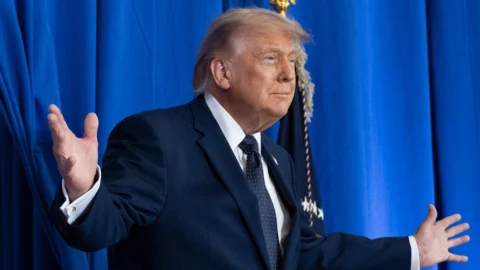
This program, however, was canceled by Donald Trump, with the approval of the Supreme Court, after the tycoon's second inauguration at the White House. The Donald had already highlighted what he believed to be the danger posed by Haitians, once again due to their supposedly savage nature. During a surreal exchange with his Democratic challenger, Kamala Harris, during the two's only televised debate of the 2024 election campaign, Trump went so far as to claim he had evidence that Haitian immigrants in Springfield, Ohio, were kidnapping domestic dogs and cats for food.
Earlier in 2018, while meeting with a group of representatives and senators from both parties, the tycoon had gone so far as to express his dismay that the United States persisted in accepting immigrants from “shithole countries” like Haiti, implying that preference should go to “white” people.
Haiti in Trump's America
Historians have long since fully included theslave uprising of the then Saint-Domingue in the much broader context of the revolutions that swept through the Atlantic world between the end of the eighteenth century and the first half of the nineteenth century, of which the American and French revolutions were the most significant.
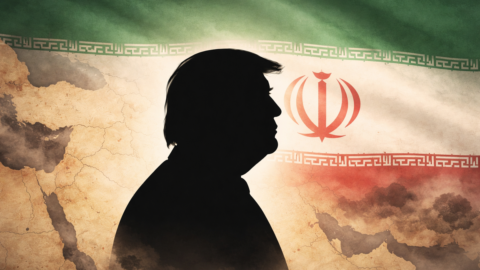
It may, therefore, seem paradoxical that, in Trump's United States, which in less than two weeks will celebrate the 250th anniversary of its independence with great pomp, it has ended up being forbidden to commemorate Haiti's independence, albeit limited to the stadiums of the World Cup.
Although there is no connection between FIFA's decision and the tycoon's racial views, the imposition of the change to the Haiti team's jersey fully reflects Trump's idea that in the United States only "white" revolutions are entitled to memory.
In 1893 the famous African-American abolitionist Frederick Douglass – former U.S. consul to Haiti from 1889 to 1891 and himself a former slave who had achieved freedom before the Civil War by escaping from his master – was invited to give a lecture to coincide with the inauguration of the Haitian pavilion at the World's Columbian Exposition in Chicago. In his speech, he attempted to explain the reason for the United States' historic "coldness" toward Haiti, explaining it this way: "Haiti is black, and we have not yet forgiven it for being black, or we have not forgiven the Almighty for making it black." These are words from almost a century and a half ago, but they still seem to ring true today.