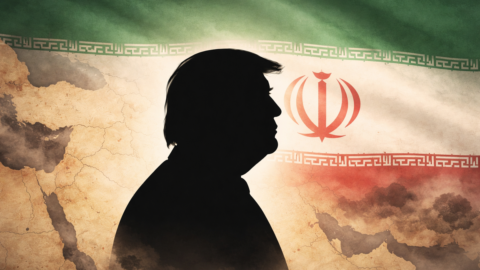
The crisis between United States e Iran is back on fire. The United States has launched a new wave of raids against goals militar Iranians in the area of Strait of Hormuz, while Tehran responded by striking American bases in Bahrain e Kuwait. In the background remains the fate of the memorandum signed in June, which was supposed to pave the way for a broader agreement but which, in light of recent developments, appears increasingly precarious.
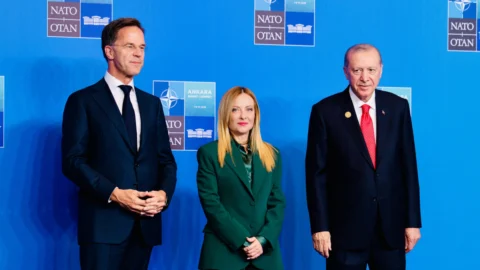
Meantime Donald Trump He changes his tune again. After declaring just hours earlier that the ceasefire was "over" and that negotiating with Tehran would be "a waste of time," the American president now claims that Iran has already contacted Washington because "it wants to make a deal at all costs." And, with the NATO summit now behind him, he switches from criticism of his allies to praise: "NATO has never been so united."
READ MORE NATO Summit in Ankara: Trump Confirms Alliance di G. Pelosi
US airstrikes against Iran hit 90 military targets
According to the US Central Command (Centcom), in the last few hours there have been approximately 90 Iranian military targets hit, including coastal radar, air defense systems, missile and drone depots, and logistics infrastructure along the coast. Washington claims the operation was necessary to reduce Iran's ability to threaten shipping in the Strait of Hormuz, one of the most strategic points for the global oil trade.
This is one of the largest American offensives since the beginning of the crisis and a further setback compared to the negotiations started in the previous weeks.
The Iranian response came within hours. Revolutionary Guards have claimed responsibility for launching missiles and drones against the US bases in Arifjan and Ali Al Salem, in Kuwait, and against the installations of Juffair and Sheikh Isa, in Bahrain. Kuwaiti authorities confirmed the activation of air defenses and the interception of several hostile aircraft, while in Bahrain, sirens sounded throughout the night and explosions were reported near military installations. Tehran called the operation a direct response to US strikes and warned that, in the event of further attacks, the response would be even more extensive.
Hormuz slows down: traffic at its lowest since the June agreement
The escalation has had effects immediate also on maritime trafficAccording to monitoring data, only 14 merchant ships passed through the Strait of Hormuz in either direction yesterday: the lowest number since the United States and Iran reached a memorandum on June 17 that brought the transit rate back to an average of about 34 ships per day.
The climate was further tensed by the words of the president of the Iranian Parliament and chief negotiator with the United States, Mohammad Bagher Ghalibaf. “America has not yet learned that arrogance and disloyalty are no longer free. Try it and you will pay the consequences,” he wrote on X. Then the warning on the Strait of Hormuz: “Don't waste energy, you will end up sinking even further. The Strait opens only with Iranian agreements, not with American threats."
Trump: "Next time will be worse."
US President Donald Trump claimed the attacks as retaliation for the bombing of ships in the Strait of Hormuz. In a message posted on social media, Trump warned that if Iran continues its attacks on maritime traffic, "the situation will significantly worsen."
The president added, however, that Tehran had already tried to reopen dialogue with Washington.They called me a little while ago, they want to make a deal at all costs“, he said. “The problem is that I don't know if they are trustworthy and if they will actually respect any agreement.” While not ruling out a new escalation, the American president asserted the United States' military superiority. “There are many ways to win, but militarily we have already won,” he said, then responded to those who asked if the conflict could escalate: “I don't know, but we are winning very quickly.”
On the Atlantic Alliance front, the American president has adopted a different tone than in previous months. After months of criticism of his European allies, he spoke of an Alliance "never so united""Spain was bad, Italy was good, and almost everyone was good. They had a difficult time," he declared. "But beyond small disagreements, we love each other." At the press conference, he then praised the Alliance leaders. "They are very intelligent people, they have a lot of love in their hearts, and they are doing excellent work for their countries."
Trump's statements are being greeted with caution by investors, also because similar signals have often been followed in the past by denials or changes in position. For now, the most striking data comes from Petroleum: despite the new attacks, the prices are slightly down.