Aldo Lo Manto, a shepherd for the Slow Food Brigasca Sheep Presidium, has lost his summer pasture in Triora, where he had grazed his sheep for 19 years, assigned by the municipality to a cattle breeder. Only a last-minute extension will allow him to graze there again this summer, but Lo Manto will have nowhere to take his flock next year. In a letter addressed to the Municipality of Triora (Imperia), the Ligurian Alps Park, and the Regional Councilor for Agriculture Piana, Slow Food Italy urges the institutions to find a solution and intervene to support pastoralism in the Ligurian Apennines.
Aldo Lo Manto, a Brigasca sheep breeder and the last herder of the Ligurian Slow Food Presidium of the same name, has been grazing his animals in the municipality of Triora (in the province of Imperia) for nineteen years during the summer. In recent weeks, that pasture was assigned (pursuant to the regulations on civic uses, which favor local breeders) to a cattle breeder living in the municipality of Triora. However, the characteristics of the terrain—it is a particularly steep pasture—make it more suitable for raising sheep and goats than cattle.
Steep pastures are optimally grazed by sheep and goats, which can reach even the most inaccessible and difficult spots, grazing on available grasses and properly clearing the soil. Cows, larger, heavier, and less agile, cannot reach all the spots. Left to their own devices, the vegetation grows undisturbed, and the quality of the grassland suffers.
The Brigasca breed, of which only about 1500 remain in Liguria, is registered in the National Registry of Biodiversity of Agricultural and Food Interest of the Ministry of Agriculture, Food Sovereignty and Forestry as a "breed at risk of extinction or genetic erosion." Lo Manto is the farmer with the largest Brigasca herd, around a thousand. In the summer, he takes 500 of them to the mountain pastures in Triora, along with about 200 goats, while another portion of his herd grazes in nearby Briga Alta, a Piedmontese municipality in the province of Cuneo.
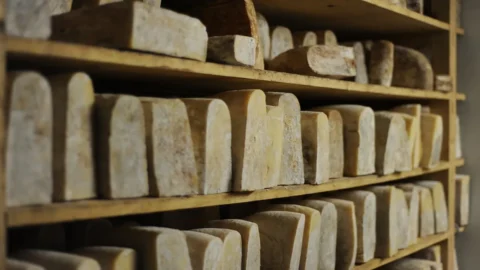
His mountain pastures do not have a cheesemaking facility, so in the summer Lo Manto brings freshly milked milk every day to his laboratory in Albenga, where he produces toma, giuncata, other types of pecorino cheese, and brus.
For this reason, Slow Food Italy, recalling that public mountain pastures are a common good and that it is the duty of municipal administrations to ensure that those who graze them return them in good condition at the end of the season, has sent a letter to the mayor of Triora, the Liguria Regional Councilor for Agriculture, and the president of the Ligurian Alps Park, urging them to find a solution that will allow Lo Manto to have stable summer pasture for his work. This case is also emblematic of the difficulties experienced by other shepherds in Liguria's inland areas, and beyond. In the International Year of Pastures and Pastoralists, proclaimed by the United Nations and the FAO to highlight the crucial role of pastoralism in biodiversity, food security, and the fight against climate change, this incident calls on institutions to pay greater attention to those who, with their work, ensure the conservation of inland areas, increasingly subject to depopulation, forest encroachment, and fires, which pastoralism helps to combat.
Without the Brigasca sheep, many pastures would have already been abandoned and effectively rendered impassable. Without the high-quality raw-milk cheeses produced with its milk, an important part of Liguria's dairy heritage would be lost.
Furthermore, it's important to consider that shepherds who herd their flocks through depopulated areas that have been subject to the advance of the forest for decades are a bulwark against fires, and thanks to their animals, they manage challenging ecosystems. Without grazing, these mountain environments would become a danger even for the communities living in the valley. Liguria has experienced many critical situations in recent years due to the climate crisis, from fires to water bombs to landslides caused by the lack of water absorption by well-managed alpine meadows. The shepherds' difficult situations must therefore be taken seriously. While it's understandable that tenders for mountain pastures grant pre-emptive rights to local farmers, it must also be said that pastures best suited to goats should not be assigned to cattle farms when the terrain's characteristics are unsuitable for these animals and could worsen the condition of the grassland.