Strategies, transformations, and new alliances continue in the automotive sector, grappling with financial pressures and increasingly intense global competition. Audi, a brand of the Volkswagen group already committed in a difficult recovery path, has scaled back its forecasts for 2026, penalized by growing competition from China, US tariffs and geopolitical tensions. Toyota has instead formalized its entry into the fuel cell joint venture created by Daimler Truck and Volvo, while in Canada the plant Stellantis Brampton's plant could find a new purpose in armored vehicle production.
Audi cuts forecast for 2026
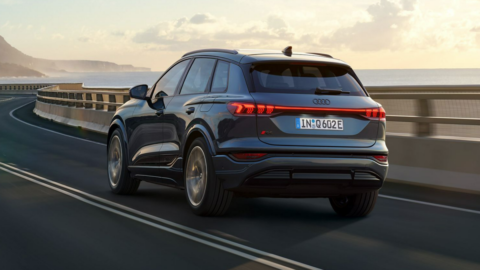
Audi revises its annual targets downwards after a first semester conditioned by the weakness of the Chinese market and an increasingly complex international landscape. The group, which also includes Bentley, Lamborghini, and Ducati, now forecasts revenues of between 58 and 63 billion euros for 2026, compared to the previous range of 63-68 billion. Profitability expectations also reducedOperating margin is estimated between 5% and 7%, compared to the previous range of 6-8%. Net cash flow forecasts, however, remain unchanged, with a forecast of between 3 and 4 billion euros.
In the first six months of the year, Audi delivered more than 727.000 vehicles, recording a contraction of just over 7% compared to the same period in 2025. Competitive difficulties in China and the effects of tariffs in the United States were the main factors. Excluding the Chinese market, deliveries remained close to the previous year's levels, supported by European demand.
Growth was particularlyand supported in Spain, where registrations increased by 21%, in Italy, with a 17% increase, and in the United Kingdom, up 10%. The German market also showed stable demand, with positive results across the various fuel types.
Audi: Revenues down, but operating margin improves
The Audi Group has the semester closed with revenues of €29,18 billion, down from €32,57 billion a year earlier. The company attributed the decline to lower volumes, negative product mix effects, and lower revenues from the supply of components for local production in China.
The operating profit However, it rose slightly, from €1,09 billion to €1,12 billion. Operating margin improved from 3,3% to 3,8%, thanks to greater cost discipline, lower restructuring costs, and lower provisions related to European CO2 emissions regulations. Net profit, however, fell from €1,35 billion to €1,12 billion.
“Thanks to increased efficiency, clear priorities and a strong focus on our strategic goals, we are making Audi more competitive,” commented Audi's CFO, Juergen RittersbergerAccording to the CFO, however, what has been achieved so far "is not enough." "The challenging geopolitical and economic conditions are putting increasing pressure on the entire automotive industry, including Audi, to act," Rittersberger explained, pointing to the need to realign the business model together with the Volkswagen Group and introduce structural improvements.
Audi aims to save over one billion euros annually in the medium term. The plan includes increased productivity at its German plants, a refresh of its product lineup, and the cutting of up to 7.500 jobs in the coming years. Among the group's brands, Lamborghini showed the greatest resilience. Revenue rose from €1,62 billion to €1,74 billion, supported by the product mix and demand for customization. Operating profit fell to €395 million, but the margin remained particularly high at 22,7%. Bentley recorded revenues of 1,04 billion and an operating profit of 47 million, while Ducati closed with a turnover of 489 million and an operating profit of 29 million.
Toyota enters fuel cell joint venture
While Audi is addressing costs and financial prospects, Toyota strengthens its hydrogen strategyThe Japanese group has signed a binding agreement to become an equal shareholder in Cellcentric, the joint venture founded in 2021 by Daimler Trucks e VolvoUpon completion of the transaction, Toyota, Daimler Truck, and the Volvo Group will each hold one-third of the shares. Completion is expected between the end of 2026 and early 2027, subject to regulatory approval.
Cellcentric develops, manufactures, and markets fuel cell systems primarily for heavy-duty commercial vehicles and other applications with similar needs. The collaboration aims to strengthen the company's positioning and support the construction of a more structured hydrogen supply chain.
The three partners also intend to work with industry associations and value chain operators to foster the development of supply and distribution infrastructure. Cellcentric will continue to operate as an independent, self-managed company.
Stellantis, the Roshel hypothesis to relaunch Brampton
In Canada, a new one could open instead new perspective for the Stellantis plant in Brampton, stopped since 2023. Roshel, a Canadian company specializing in the production of armored vehicles, is evaluating the site to support its expansion and participate in a large-scale public procurement in the defense sector.
The company currently operates in a total area of approximately 400.000 square feet, distributed across production, research, and development. To address new programs, however, it would need a facility of nearly two million square feet, nearly five times larger than its current premises. At the heart of the project is a Canadian government tender, open to domestic companies, for the production of between 1.600 and 2.100 light utility vehicles and 400-500 trailers. The total value of the order could reach $6 billion. Roshel is reportedly among the two remaining candidates.
The company already supplies armored vehicles to Ukraine and several NATO countries, including the United States, Germany, France, and the United Kingdom. A contract of this size would require hundreds of new hires by the end of the year and could create thousands of jobs in the medium term. "Many automotive companies have withdrawn from Canada," said CEO Roman Shimonov. "The defense sector can become a real alternative and bring thousands of people back to work."
The Stellantis plant in Brampton employed approximately 3.000 workers, many of whom were left unemployed after production was halted. The relaunch of the Jeep Compass did not materialize after the decision was made to allocate the model to a plant in Illinois.
Stellantis continues to claim to be seeking “a sustainable future” for the site, but local institutions and the Unifor union are demanding a faster response. Mayor Patrick Brown has called the possibility of waiting until 2031 for a possible restart "unacceptable." Roshel has reportedly already initiated discussions to identify new production spaces. A decision on the Canadian contract is expected in the coming weeks and could determine not only the future of the company, but also that of one of the country's major idle industrial sites.