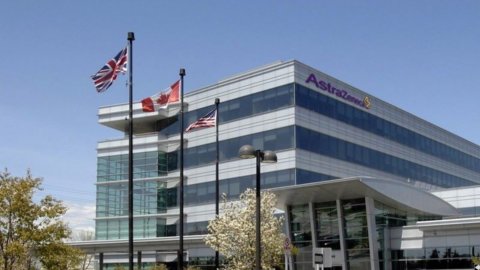
AstraZeneca archive a second quarter of growth e confirms the objectives for the whole of 2026. The Anglo-Swedish pharmaceutical group closed the second quarter with revenues on the rise and a earning per share “core” in strong growth, exceeding market expectations. The results are mainly supported by drugs in the areas ofOncology and Rare Diseases, while i investments Research and development continue to weigh on operating profitability but fuel future pipeline. The company confirmed its 2026 targets, increased the dividend and reiterated the ambition of reach 80 billion of dollars of turnover by 2030.
After the publication of the results, the title AstraZeneca recorded a positive performance on the stock exchange London, with an increase of nearly 1,6%, supported by the confirmation of the objectives and the solidity of the main therapeutic areas.
AstraZeneca's second-quarter results: core EPS up 21% and revenues at €15,4 billion.
In the second quarter of fiscal 2026, AstraZeneca recorded a core earnings per share of $2,63, up 21% compared to the same period last year (+18% at constant exchange rates). The result exceeded analysts' expectations, which called for adjusted earnings per share of approximately $2,48.
I revenues totals have reached 15,384 billions of dollars, up 6% on an annual basis (+5% at constant exchange rates), substantially in line with market estimates.
The quarterly net profit Net income was $2,51 billion, up 2%, while overall earnings per share were $1,61, also up 2% in the published data but down 2% at constant currency rates.
In the first half of the year the group recorded a total revenue of $30,67 billion, with a growth of 6% at constant exchange rates. Operating profit and earnings per share increased by 11%, with a Eps half yearly equal to 5,21 dollars.
Oncology and Rare Diseases Drive Growth
The group's performance was supported mainly by the divisions Oncology, Respiratory, Immunology and Rare Diseases, which achieved significant growth and offset the challenges associated with the loss of Farxiga's commercial exclusivity in the United States and pricing pressure from volume-based purchasing in China.
Il quarterly operating result Adjusted operating income stood at $3,16 billion, down 13% at constant currency, while adjusted operating income reached $5,16 billion, up 10% at constant currency. edge operating core stood at 34%.
The decline in reported operating profit is mainly linked to the increase in investments strategic. The research expenses e development grew 13% at constant exchange rates to $4,05 billion, driven by accelerated clinical trials, investments in new technologies, and a $345 million writedown of intangible assets.
Also increasing are the commercial and administrative expenses, which grew by 16%, as part of the strategy to expand innovative drugs on global markets.
AstraZeneca raises its dividend and confirms its 2026 guidance.
In light of the results, AstraZeneca has decided to increase the interim dividend by 3 cents, bringing it to $1,06 per share (79,5 pence and 10,32 Swedish krona).
The company also has forecasts confirmed for the full year. AstraZeneca expects total revenue growth at a mid-to-high single-digit rate and core earnings per share to grow at a low double-digit rate.
According to the group, maintaining current exchange rate levels could also make a positive contribution to annual revenue growth.
Soriot: "Robust pipeline, over 20 results expected in the next 18 months"
The CEO Pascal Soriot highlighted the progress made in the first six months of the year: “We have recorded solid performance and continued progress in the pipeline, with six important Phase III programs showing positive results and eight first-time approvals in major markets, including in the United States for Baxfendy, our innovative hypertension medicine.”
Soriot confirmed his confidence in the group's long-term prospects, despite some setbacks in clinical development.
Among these, the manager mentioned the disappointment with the outcome of the Cardio-TTRansform study, but reiterated that the growth plan takes into account both the successes and failures typical of pharmaceutical research. AstraZeneca expects to publish more than twenty high-value clinical results in the next 18 months and continues to invest in its pipeline and innovative technologies.
Ultomiris, conflicting results in the Phase III study
Alongside the release of the quarterly results, AstraZeneca also updated the market on the Ultomiris clinical program for treatment of HSCT-TMA, a rare and serious complication associated with hematopoietic stem cell transplantation.
The Phase III study did not meet its primary endpoint in the adult and adolescent population. However, in the pediatric population, the treatment showed positive results, with a survival rate of 87,2% at 26 weeks and 73,4% at 52 weeks.
The company confirmed its discussions with regulatory authorities and emphasized that the observed safety profile remains consistent with the drug's known safety profile.
Despite some setbacks in clinical research, AstraZeneca therefore confirms its long-term strategy: reach 80 billion of dollars in turnover by 2030 focusing on the growth of new drugs and an ever-expanding pipeline.