Continues silence of arms between the United States and IranAfter nearly two weeks of bombing and retaliation, Washington has not resumed strikes against Iranian territory, and Tehran has maintained its suspension of attacks against American bases in the Persian Gulf. Iranian armed forces spokesman Mohammad Akraminia He explained that Tehran's strategy remains based on reciprocity. "Over the last two nights, the Americans have halted their attacks. Since our strategy is essentially based on retaliation, we have also halted our operations," he told state television.
La the break remains fragileAccording to Akraminia, "skepticism rather than optimism" prevails in Iran, because the American suspension could be merely tactical. The Iranian military has also warned that a possible resumption of bombing, especially if solicited by Israel, would cause a geographical expansion of the conflict.
On the diplomatic front, Tehran confirmed the dwillingness to continue negotiations with Washington, with Pakistan acting as mediator. The talks could take place in Geneva, Doha, or Islamabad and begin with the situation in the Strait of Hormuz, before moving on to the release of frozen Iranian assets and the nuclear program. Oman has also held technical consultations on the safety of navigation in the Strait. The dialogue therefore continues alongside the military truce, but has yet to produce an agreement capable of ending the conflict.
Trump waits for Netanyahu before deciding
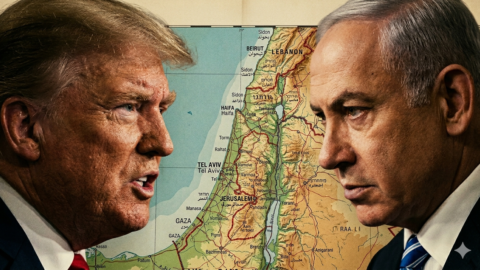
La break It seems destined to last at least until Tuesday's meeting at the White House between Donald Trump and Benjamin NetanyahuThe Israeli prime minister is arriving in Washington today, and his meeting with the US president could determine the next phase of the Iranian crisis. Bibi stated that Israel and the United States continue to coordinate through their respective intelligence agencies on Tehran's nuclear program. The Israeli prime minister also acknowledged that, "in many ways, the decision is his," referring to Trump. Israel's position, however, remains clear. Netanyahu maintains that Iran's nuclear program must be halted "with or without a deal" and has promised a "very, very forceful" response to any direct or indirect attack against Israel.
Trump has not yet ruled out a new offensiveIn recent days, he declared that he had not decided whether to authorize a large-scale attack and described the Iranians as more serious in the negotiations, but not yet ready to conclude an agreement. The suspension of the strikes could also be influenced by the assessments of the American military leaders. According to the New York Times , CNN, Joint Chiefs of Staff Chairman Dan Caine reportedly warned the president that an expansion of operations would risk dangerously reducing the sPatriot interceptor fleet and other munitions needed to protect U.S. forces in the Middle East. Vice President J.D. Vance also reportedly expressed doubts about the escalation. Trump, however, rejected the reconstructions and Wall Street Journal He said the United States has “far more ammunition than anyone else in the world, and far more than we need.”
Settlers and military raids: the West Bank explodes again
While the confrontation with Iran remains frozen, the more unstable front is moving to the West BankA new round of violence began after Friday's clashes in the village of Tel, near Nablus, where two Israelis and four Palestinians were killed. According to reports, a group of settlers from the area's outposts reached the village without authorization from the military command. During the clashes, a Palestinian reportedly grabbed the gun from the armed guard accompanying the group and opened fire. The Israeli army's intervention turned the incident into a battle, resulting in six casualties. The violence quickly escalated. Groups of settlers attacked several Palestinian localities around Nablus and Tulkarem, setting fire to two mosques in Qusra and Kur. Other raids targeted homes, cars, trucks, and equipment in the areas of Beita, Mughayyir, and Beit Furik. Graffiti calling for "revenge" was left on buildings. The Israeli army announced it was investigating the attacks, but no arrests among the settlers were reported.
Israeli forces have instead launched a large-scale operation in Palestinian centers, with approximately three hundred locations searched and over eighty people detained. A military blockade remains in place in the Nablus area, which, according to non-governmental organizations, restricts movement and also compromises the functioning of emergency medical services. Netanyahu ordered entry into villages, seize weapons, and arrest wanted individuals. "These actions have been taken and are being carried out," Israel "is ready to take broader action against terrorist hotbeds."
The procedure has also been started for demolish the homes of Palestinians believed to be involved in the shootingPalestinian Authority President Mahmoud Abbas called on the international community to take urgent action to halt the ongoing Israeli military aggression and settler violence.
Tensions in the West Bank: new settlements and fears of a third intifada
To increase the tension, there was also the approval of 763 new housing units in the Israeli settlement of Eli, in the northern West Bank. The announcement was made by Finance Minister Bezalel Smotrich, who retains responsibility for infrastructure in the occupied territories. The plan would triple the size of the Eli settlement through the construction of new neighborhoods.
The combination of settler attacks, military operations, and settlement expansion worries Israeli security officials themselves. The generals fear that the tension could turn into a new Palestinian uprisingAccording to intelligence, around seventy committees have already been established in the villages to defend local communities. The risk is that settler attacks and army reprisals will fuel a spiral that is increasingly difficult to control, in a context also marked by the political weakness of the Palestinian Authority.
Netanyahu thus arrives in Washington with the Iranian and Lebanon crisis temporarily suspended, but with the West Bank close to breaking point.