They mark the pace the stock exchanges of the most developed countries, stressed by the Ukrainian crisis and now resigned to a barrage of US rate hikes (seven between now and December) and even more insidious cuts to the Fed's budget to bring inflation under control. And so a good portion of managers is on the hunt for new outlets for rediscovering investments the appeal of emerging countries.
This explains the return to positive ground of theMSCI Emerging Markets index (made up of 1422 stocks) which eliminated the losses at the beginning of the year during the week, unlike the global index, weighed down by the negative start of Wall Street.
Bovespa on top of the world
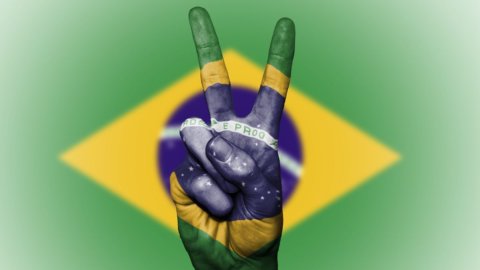
What makes the difference, in particular, is the Brazilian stock exchange, at its highest since mid-October after seven straight hikes. Since the beginning of the year, the performance is +18%, at the top of the markets on the planet.
Various factors contribute to push the price lists, including the trend of raw materials. No less important is the trend of the currency and local bonds: thanks to a policy of monetary tightening that anticipated the choices of the Fed, Brazil has been a magnet for international investors. The discount rate went from 2% to 10,75% with the prospect of further increases up to 12% within the year to help reduce inflation from the current 10% to 5,5%. All this in the face of more than acceptable stock market multiples: the price/earnings ratio is around 7 times, the average dividend equal to 3%.
Everyone in Rio for Carnival? In reality, judging by the polls, they are investors with suitcases ready to flee in view of the October elections which should mark Lula's return to the presidency. Why so scared? The first mandate of the former trade unionist who will be dealing with Bolsonaro, the former far-right showman who has given the green light to deforestation in the Amazon, was a happy season for the economy and the markets. But one thing has changed since then: China's politics. At the beginning of the millennium, Beijing, admitted to the WTO, was the big one engine of the development of the carioca economy as well as Africa, absorbing industrial and agricultural raw materials, favoring the take-off of Petrobras or Vale.
Today, on the contrary, China is much less generous, careful to control inflation and debt. Beijing's behaviour, according to experts, will be decisive for the fate of the Emerging Countries on which experts are divided.
Leading the skeptics is David Lubin, Citi's industry manager. “Emerging markets – he says – have always yielded more than traditional markets because they offered the hope of greater growth albeit in the face of higher risks”. But now? “The growth prospects are more or less the same, conditioned by the problems of the post pandemic. But the risks are certainly higher”.
Countries most in difficulty
To justify skepticism there are several examples: the last, in chronological order, concerns lo Sri Lanka. Struck in the heart by the stop to tourism, the country finds itself with 7 billion in interest to pay to creditors against only 3 billion dollars in cash. Inevitable an agreement with India and China, already generous in financing the construction of the port (with an Anti-Indian function), today stingy with new funds.
No less critical is the situation of other countries on the verge of default: Ghana, El Salvador, at the center of a daring Bitcoin adventure, and Tunisia. Not to mention Ukraine, in the line of fire with Russia, a possible destination for high-risk investments, in case the crisis with NATO recurs. Under the skies of the pandemic, six have declared default so far: Argentina, which thus defended the sad record of nation number one in bankruptcy, Belize, Ecuador, Lebanon, Suriname and Zambia. Others have suffered heavy downgrades: Fitch has decreed 45 sovereign debt downgrades for 27 of the 80 countries for which it manages the rating. Among these, the cases of Mexico and South Africa stand out, not to mention Sultan Erdogan's Turkey.
The Indian Stock Exchange
A minefield indeed. Also because in the past the rise in US interest rates has had disastrous consequences for the countries most indebted to dollars. Watch out for the Fed, then. But there is no shortage of countries which, trained by previous crises, present themselves today with more sustainable numbers. At the top of the list figure the Indian Stock Exchange which yesterday almost completely eliminated the loss from the beginning of the year, now reduced to -1,40% (in Euros) while in the same period the MSCI World index lost -7%. Mumbai can count on the influx of foreign capital, especially from brokers looking for alternatives to Beijing, which is burdened by the real estate crisis. Today, the Indian stock is in fourth place in the MSCI Emerging basket behind China (34% of the total), Taiwan (15,3%) and South Korea.
Choosing a Emerging markets ETFs (there are 14 available on the Piazza Affari market) it is also a way to invest in the chip leaders, from Tsmc and Samsung.