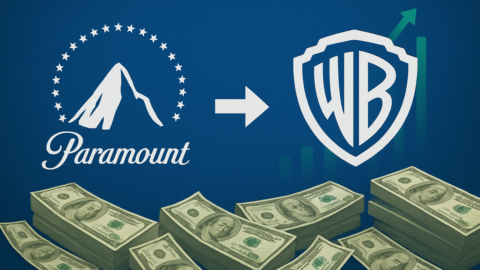
La Paramount and Warner Bros. Discovery merger is worth $110 billion of dollars, but to reach the finish line we still need some concession. And Paramount seems ready to make several. In fact, there are on the table $1,5 billion to invest in film production in California, the commitment to keep the studios in the state and to produce 30 films a year. To these are added possible interventions on cable networks and guarantees to protect the editorial independence of the CNN.
Meanwhile, the market is looking favourably on the developments of the negotiations: in pre-market di Wall Street le actions from Paramount and Warner Bros. Discovery are both jumped by more than 7%However, one of the last obstacles to the operation remains to be overcome: opposition from California and other American states, concerned about the concentration it would create in the film and cable television markets.
A package of concessions to convince California
According to the Wall Street Journal, Paramount and the California Attorney General are engaged in advanced negotiations to get to a out of court settlement. Over the weekend the group's top management and the coalition of states suing to block the merger They've been working on the details of a potential agreement. A final agreement hasn't been reached yet, but the negotiations could remove one of the last obstacles to the creation of an entertainment giant that would bring together HBO, CBS, CNN, streaming platforms, and two major film studios under one umbrella.
At the centre of the negotiations are the commitments on CaliforniaThe $1,5 billion investment would be accompanied by a promise not to sell the two studios and to maintain a production presence in the state, after Paramount had also explored the possibility of moving its operations out of California.
Production would be another binding point: once the operation is completed, the group would have to maintain its commitment to make 30 films a yearOtherwise, some risks could arise. criminal penalties. and, among the consequences taken into consideration, there would even be theobligation to sell stake in Miramax.
The package also includes the possibility sale of some cable networks , creation of a body responsible for protecting editorial independence of CNNThese measures therefore affect various segments of the future group and go well beyond film production alone.
Opposition from the States and the Writers Guild
Concessions come later the legal action started in July by a coalition of a dozen states led by Democratic administrations, with California leading the way through Attorney General Rob Bonta. According to the plaintiffs, the merger between Paramount and Warner Bros. Discovery could lead to excessive concentration in the film and cable television markets.
Also the Writers Guild of America he contested the operation, drawing attention to the possible effects on employment and the reduction of professional opportunities for screenwriters.
The comparison has thus moved from court At the negotiating table, where industrial commitments and local guarantees become part of the effort to secure approval. But while the parties seek a compromise, time continues to weigh on the deal's financials.
Every day of delay costs $7 million
The agreement between Paramount and Warner provides in fact payments to Warner shareholders of approximately $650 million of dollars to quarter, starting next month and continuing until the transaction closes. That's about $7 million a day.
The longer the deal's completion is delayed, the higher the cost of waiting. For Paramount, this means finding a balance between the concessions needed to overcome the authorities' resistance and the economic impact of protracted negotiations.
For now, however, the deal remains unfinished. A final agreement has not yet been reached, and it's unclear which of the measures currently under discussion will be included in the final package. The road to the $110 billion merger therefore still lies at the negotiating table.