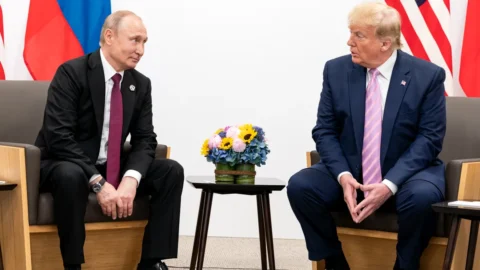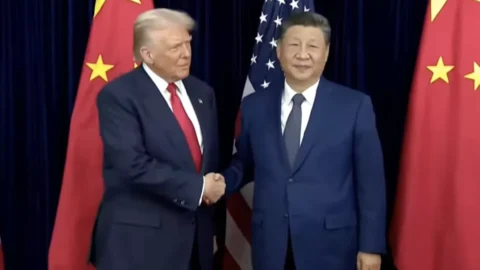
After four months since the last face to face, Xi Jinping and Donald Trump They meet again this week, with several issues on the table, from trade to Taiwan and Iran, as well as global concerns about artificial intelligence. The focal point of the meeting was September 24th is whether the leaders will signal aextension of the trade truce signed last year, averting a serious shock to the global economy. The sThe date is November 10th.
During the visit, Xi "will have in-depth exchanges with President Trump on major issues concerning Sino-US relations, as well as global peace and development," a Chinese Foreign Ministry spokesperson said in announcing the visit. The visits between the two heads of state "will be of historic and fundamental significance," he added.
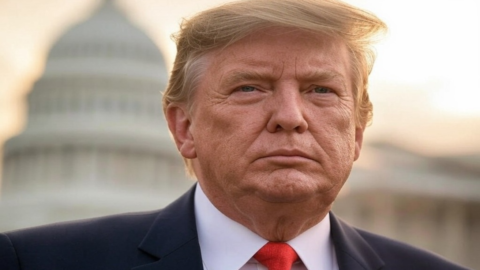
Xi Jinping He shows up at the White House, his first visit in a decade, with a wealth of data showing asurge in trade with the rest of the world: a trade surplus of $1.000 trillion for the second consecutive year. Donald Trump, mired in the war with Iran and with low approval ratings, is looking for commercial successes to boast to Americans unhappy with rising prices when they go to the polls in November for the midterm elections. According to analysts, this reversal of front has scaled down expectations for the summit, with Xi in no hurry to make concessions and Trump eager to get something home. And in fact so far Trump has adopted an approach less aggressive than usual, refraining from threats of tariffs on Chinese imports or bans on exports of US technology, unlike the positions that preceded previous summits.
Trade first: Previous agreement expires November 10
Markets are waiting for signs of a possible extension of the tariff truce announced after the summit between Trump and Xi in South Korea last October and expiring on November 10thThe agreement ended a trade war in which the world's two largest economies threatened global supply chains with mutual tariffs exceeding 100%. The U.S. Trade Representative, Jamieson Greer, said in recent days that the two countries will do "some announcements on agriculture and non-tariff barriers" and that there will be progress regarding the agreement reciprocal tariff reduction relating $30 billion in goods.
From jets to agricultural products, to technology, to rare earths
Trump will seek to announce trade successes before the November midterm congressional elections, including securing major Boeing aircraft purchases e agricultural products. Xi is preparing a large delegation of entrepreneurs to accompany him, brings back Reuters, similar to the one in 2015, when the top executives of Alibaba and Tencent, as well as executives from Chinese banks and state-owned companies, arrived. At that time, China signed a $38 billion deal for 300 Boeing jets. In May, it said it would buy another 200 Boeing jets as the "initial tranche" of a much larger agreement. China has been engaged in long-term negotiations with Boeing, but the deal has been stalled for years due to Trump's threats to cut off China's access to critical engine components.
Beijing would also like to further postpone a standard which would prevent thousands of Chinese companies from receiving technologies USA, while Washington asks for facilitations in shipments of Rare lands e critical minerals used in automotive, aerospace and defense manufacturing.
Taiwan a bargaining chip?
US allies in Asia are increasingly worried that in exchange for economic agreements, Trump may be tempted to soften Washington's support for Taiwan, which firmly opposes China's claims of sovereignty. Although the United States does not have formal diplomatic relations with Taiwan, it is its main international supporter and arms supplier. Last May, Xi had already pressured Trump on arms sales to Taiwan, and the American president described a package worth up to $14 billion still in the works as a “card to play”.
Furthermore, according to some sources, Beijing hopes to persuade Trump to publicly declare that the United States opposes Taiwan independence, rather than simply saying that it does not support it, as has been Washington's position for decades.
Mutual commitments on Iran
The two presidents are also expected to discuss the war with Iran. China maintains close ties with Tehran and is by far the world's largest buyer of Iranian oil. Washington believes Xi Jinping is the only one capable of exerting pressure on Tehran, but so far he has shown little inclination to do so.
Common ground is possible on artificial intelligence
Artificial intelligence could represent an area of cooperation, according to analysts, given its implications for national security, economic competitiveness, and military capabilities, as well as the shared concerns of the United States and China regarding its potential abuse. However, experts say that intense competition in this field between the two countries will likely limit the possibility of reaching agreements that go beyond symbolic ones.
Yesterday the US Secretary of the Treasury Scott Bessent and Chinese Vice Prime Minister He Lifeng met in New York and the US side proposed a new notification mechanism concerning the AI-related incidents that reach a level of national security. Trump and Xi Jinping could consider it at the summit. A few days ago, Dario Amodei, CEO of anthropic, warned that China's dominance in AI could pose a security risk to the United States. Chinese state media dismissed Amodei's warning as drawn from a "Cold War playbook," while Trump dismissed calls to slow AI development, saying "very negative forces" were raising exaggerated concerns.
Fentanyl and its surroundings
There is another issue that is close to Trump's heart: the containment of the flow of chemicals, Fentanyl precursors, which come from China, given the devastating damage this drug has caused among Americans. Washington has repeatedly accused Beijing of failing to stop the flow of precursors, and in early 2025, Trump imposed customs duties on China related to fentanyl, which the U.S. Supreme Court later overturned in February. FBI Director Kash Patel told Reuters last month that he had established a new law enforcement partnership with China in the hope of curbing the illicit trade.