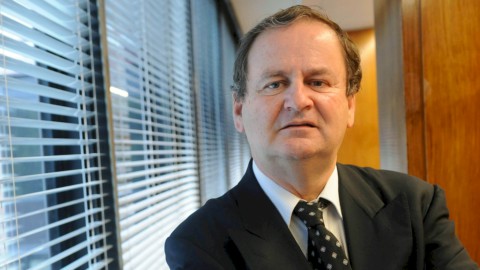
Race of inflation and slowdown of industrial production. These will be the effects of the war in Ukraine on the European economy. The scenarios are similar to those of an extreme stress test: «In the immediate future, we will be confronted with inflation and the difficulty of keeping industries operational and competitive, caught between a lack of raw materials and rising prices. In the medium term, however, high inflation will remain and there will be the risk of a halt in economic growth. The uncertainty on the markets will last for a long time because Putin will not be able to have everything he wants and, however, he will not be able to stop until he has guaranteed his political survival ». He supports it Giovanni Barone Adesi, Professor of Financial Theory at the University of Lugano, one of the world's leading scholars of derivative instruments and co-author of the most used model in the valuation of American options.
In the event of a protracted war, what is the main risk you see for the European financial system?
«The increase in interest rates will be inevitable, even if the hypothesis of waiting to intervene is gaining ground. But monetary stability cannot be maintained with prices rising unabated. The European Stock Exchanges are destined to suffer because they do not host the large industrial giants that produce raw materials, with the exception of part of that of London. The situation on the US financial market is different, given that the US is now the world's largest oil producer».
The relationship between the euro and the dollar?
«Clearly the euro is destined to depreciate against the dollar: the European economy is much more exposed to the war in Ukraine. Furthermore, Europe – even if it currently suffers from lower inflation than the USA – is destined to reach the same level of price increases».
Will the ruble once again become a tradable currency in the great circuits of global finance?
“The ruble is defunct at this point. Certainly Putin cannot let go of the war: if he accepts defeat in Ukraine, his regime will collapse. But he will not have the resources to continue an intense war like the one going on in recent days. On the other hand, the cost of a creeping war that could last for months is sustainable».
European newspapers estimate that, with 630 billion dollars in reserves and a daily receipt of about 700 million from the West, public finances do not concern Moscow for now.
“Maybe two weeks ago foreign exchange reserves weren't a problem for Russia. Euro reserves are a claim recorded in the ECB's accounts, currently frozen by the ECB. Same thing for dollar and Swiss franc reserves. The gold they have accumulated, estimated at around 20-30% of reserves, is not frozen. Different speech for reserves in Chinese currency, but it should be remembered that the Chinese are reluctant to circulate too much currency outside their country".
To monitor the stages of the war, which financial instruments should be kept under control?
«The stock exchanges communicate the perceptions of the markets on the timing of the war in real time and obviously discount the possible scenarios. Interest rate futures are a good barometer for pricing in the duration of hostilities. There are also significant increases in the price courses of many Canadian companies, connected to the world of fertilizers and raw material processing. The largest fertilizer producers in the world are located right between Russia, Ukraine and Belarus. On the other hand, the decrease in the prices of gold, palladium and oil could be a sign of the approaching truce».
There is a word that scares European politics: stagflation.
"We're already in it. For 2022 there were great hopes of recovery, but for Italy we won't close much above zero point. The only glimmer of optimism is a wise European tolerance for the deficit of individual countries. No one in wartime cares about public budgets.'
Read also - Savings: how to defend it from war and inflation