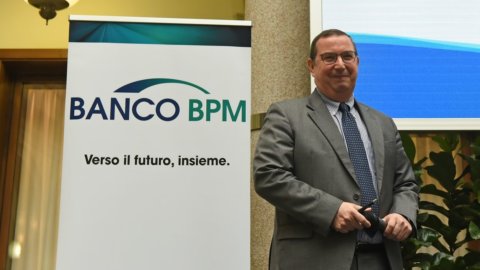
The accounts of Banco Bpm for the first half of 2019, published on Tuesday 6 August with the markets closed, closed with particularly marked growth in net profit. The bank born from the merger between Popolare di Milano and Banco Popolare, which has become the third largest Italian credit hub, recorded in the first six months of this year a +68%, with net income increasing from 352 to 593 million euro. The increase in the second quarter, the one just concluded, was particularly marked, with the figure rising by almost 200%, jumping from 150 million in the first quarter to 442 in the April-June period.
In the first half of 2019, compared to the same period of the previous year, the interest margin decreased from 1,18 billion to 1,02, while net commissions fell by 5% from 935 to 888 million euros. Loans are over 100 billion, at 105,1 (+3%), e direct deposits from customers rose to 105,2 billion (€101,5 billion at the end of December 2018): the growth trend in "core" deposits from current accounts and deposits was confirmed in the half year (+€4,5 billion compared to the end of the year) and the decrease in the more costly forms of funding (- 0,5 billion for bonds). Indirect customer deposits amounted to €89,1 billion (compared to €86,6 billion as at 31 December 2018), up by 2,8%, of which €56,7 billion in assets under management and €32,4 billion in assets under administration.
"Management in the first half of the 2019 financial year - explains a note from Banco Bpm -, although characterized by the continuation of derisking actions and reorganization of the group's activities in line with the industrial plan, as well as on the execution of the capital management operations already announced to the market, focused more on the development of the commercial activity after the major reorganization of the network and the closure of branches that characterized last year". The stock of non-performing loans fell to 6,2 billion: -8% compared to the end of 2018, -35% compared to a year ago, when it amounted to almost 10 billion. Personnel expenses decreased by 4% to 879 million.