The preparatory work is now complete. The sherpas of the 32 NATO member states have been finalizing the final communiqué for the summit that opens today in Ankara for days, establishing aid to Kiev of 70 billion dollars both this year and in 2027, setting a path that will lead to an increase in defense spending to 5% by 2035 and the progressive withdrawal of American military assets from the EU.
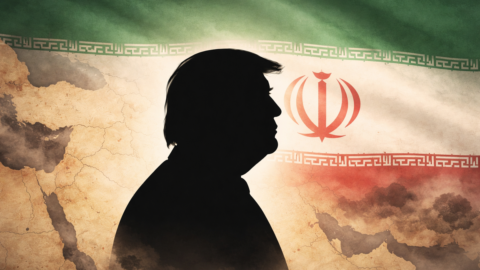
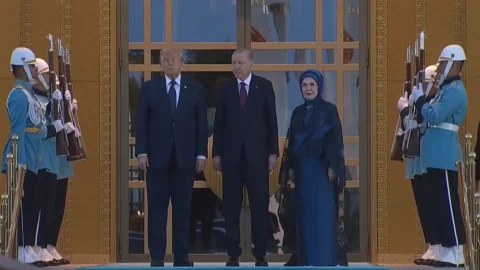
But above all there hovers the strong risk that US President Donald Trump will upset the agenda of the summit, undermining all the work already done by the North Atlantic Council in Brussels. Turkish President Tayyip Erdogan aims to use the summit as a showcase for Ankara's key political and military role in this Middle East crisis. NATO Secretary General Mark Rutte, on the other hand, seeks to confirm the Alliance's role in the face of new global threats by maintaining open dialogue with the United States. But it's no secret that all eyes will be on Trump's moves, especially after his latest contentious clash with Giorgia Meloni.
Prime Minister Meloni had dinner with Erdogan.
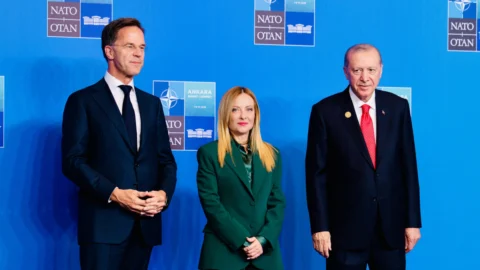
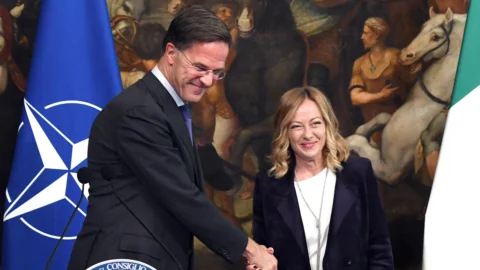
The Italian Prime Minister will arrive in Ankara this evening to attend a dinner with Erdogan along with other heads of state and government. Also present were the President of the Republic of Korea, Lee Jae-myung, and the President of Ukraine. Volodymyr Zelensky, in addition to Antonio Costa (President of the European Council) and Ursula von der Leyen (President of the European Commission). On Wednesday morning, Meloni will participate in the summit's working session after greetings from Erdogan and NATO Secretary General Mark Rutte. Work will begin immediately after the official group photo. Meloni will reportedly bring to Ankara a commitment to increase military spending by 0,55% of GDP by 2028. This fresh funding will not exceed €17 billion over two years. The overall commitment will be equal to 2,8% of GDP, of which 2,09% comes from actual defense spending and 0,71% from investments in the new security perimeter which also includes cybersecurity.
It arrived from NATO Secretary General Mark Rutte A reference to Italy. Speaking yesterday at the press conference introducing the summit, Rutte said that "we are in an excellent position and that many Europeans are doing their part. Just think of countries like Germany and many others. And of course, if anyone still needs convincing, we have the means to do so. If countries like Italy and Spain are increasing defense spending, it's also due to the Donald Trump factor, which is "encouraging"—and this is an understatement—the allies to commit more to military spending in order to reach 5% of GDP for defense and security spending, to ensure that defense industry production increases, and this can only be a positive thing."
Rutte and von der Leyen: "The era of EU defense outsourcing is over."
Turning to specific measures, he added, "it's ultimately up to each ally to decide how to develop their bilateral relations with other allies. But overall, it's very helpful that the American president is making this commitment." The future of the Alliance is also a priority for the European institutionsIn an article co-authored by NATO Secretary General Rutte and EU Commission President Ursula von der Leyen in the Economist, "The era when Europe outsourced most of its defense is over. European NATO allies are relearning," they continue, "that if we want to prevent war, we must be ready. They are rearming and reenergizing the defense industrial base so we can protect our citizens, our freedom, and our security." Despite the efforts made, however, "there is still work to be done. There are still gaps in our defense capabilities. NATO allies and EU member states need more fighter jets, aerial refueling planes, ships and submarines, air defense and missile defense, drones and anti-drone systems."
Tuesday's program
Today in Ankara will be dedicated to the defense industry with an ad hoc Forum. It will then be the turn of the programmatic speech by Secretary General Mark Rutte together with the Vice President and Turkish Defense Minister Yaşar Güler. This will be followed by a joint address by the Secretary General and Ukrainian President Volodymyr Zelenskyy. In the afternoon, NATO foreign ministers will meet with the Istanbul Cooperation Initiative partners (Bahrain, Kuwait, Qatar, and the United Arab Emirates). Zelenskyy will meanwhile participate in a ministerial meeting of the NATO-Ukraine Council, which will confirm the military assistance package of approximately €140 billion over two years (including a contribution from the €60 billion EU loan). The mechanism will not be financed directly by the US but will facilitate European and Canadian purchases of US weapons via the PURL initiative (air defense systems, Patriot interceptor missiles) destined for Kiev. Tomorrow is the actual summit of heads of state and government of 32 NATO countries.