No surprises from Florence. The European Central Bank he left again interest rates unchanged (unanimous decision). The main rate, that on deposits, remains at 2%, while that on refinancing operations remains at 2,15%. The marginal lending rate remains stable at 2,40%. the cost of money has been stable since June, after eight cuts made by the ECB over the course of a year for a total of two percentage points.
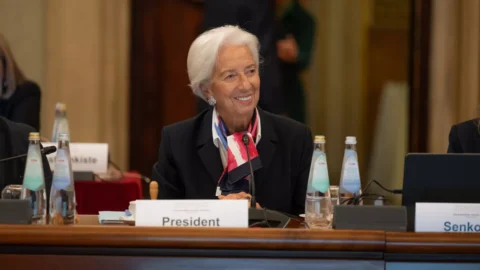
The Governing Council – reads the ECB note – "is determined to ensure that inflation stabilizes at its medium-term objective of 2%. To define the appropriate monetary policy stance", "I said that we are in a good position "And I keep saying it and I add that we will take the necessary measures, with decisions made meeting by meeting to stay there," ECB President Christine Lagarde reiterated at a press conference in Florence. "Our objective," she added, "is well-defined: 2% symmetric in the medium term".
Lagarde: "The economy is growing despite the challenging environment."
The press conference of the President of the ECB, Christine Lagarde, was opened by the Governor of the Bank of Italy, Fabio Panetta, who referred to the friendly atmosphere of the meeting and recalled previous meetings of the ECB Governing Council in Italy.
“The economy continued to grow despite the difficult global context", said the head of the Eurotower, opening her conference. From a monetary policy perspective, "we are in a good position," she reiterated, after emphasizing that thanks to the hospitality of the Bank of Italy, "we are in a magnificent place”, Referring to Palazzo Corsini, Lagarde then added: "As for the economic performance, I'm not complaining about growth."
The head of the European Central Bank cited in particular "the strength of the labor market, the solidity of private sector balance sheets" and the fact that past interest rate cuts remain important factors underlying the resilience of the economy.The euro area economy grew by 0,2% "In the third quarter, thanks to a strong increase in tourism and digital services," he added, noting that many companies are modernizing "their IT infrastructure and investing to integrate artificial intelligence into their business processes. The manufacturing sector, however, remains exposed to trade tensions and the strength of the euro."
Lagarde: "The outlook is uncertain; the impact of tariffs will be seen over time."
Looking to the future, “the outlook is still uncertain, especially due to the current trade disputes and geopolitical tensions worldwide." Also weighing on this are the duties, whose impact on the economy "will become more visible as time goes by", said the president of the ECB in Florence, also referring to the trade agreement reached between Europe and the United States, the ceasefire in Gaza and theagreement announced today between the United States and ChinaAll factors that have mitigated some downside risks.
According to Lagarde, "The still volatile global trade scenario could disrupt supply chains, further slow exports, and weigh on consumption and investment." "A deterioration in financial market sentiment," she continued, "could lead to more stringent conditions, greater risk aversion, and a weakening of growth. Geopolitical tensions, in particular Russia's unjustified war against Ukraine, remain among the main sources of uncertainty”.
Lagarde to the EU: "Urgent need to strengthen the eurozone, current competitiveness plan fundamental."
During the press conference following the interest rate meeting, “The Governing Council underlinesto the urgent need to strengthen the euro area and its economy in the current geopolitical context,” Lagarde said. “We also welcome the reaffirmation of this ambition by EU leaders at last week's Euro Summit. Structural and fiscal policies should boost the economy's productivity, competitiveness, and resilience. It is it is essential to promptly implement the competitiveness plan of the European Commission". That is, the one proposed over a year ago by former Prime Minister Mario Draghi.
Lagarde finally wanted to recall that the Governing Council has decided today to "proceed with the next step of the digital currency project", starting the development phase of thedigital euro after the testing phase. "Our mission is to ensure that money remains a public good and that the digital euro enjoys the same trust as banknotes. And we are working towards this goal," he concluded.
Panetta:
Il contribution for banks The budget, which includes an increase in taxation, does not cause "risks of financial instability," according to the governor of the Bank of Italy. Fabio Panetta, during the ECB press conference, in response to a question on the new taxation envisaged in the 2026 Budget Law.
" situation of the banks – Panetta explained – is improved in recent years thanks to a series of factors and no negative impact on financial stability is expected from the measures announced by the Italian government, also because the tax on profits “would be limited”. Panetta then reserved the right to comment on the characteristics of the tax when the final version is released.