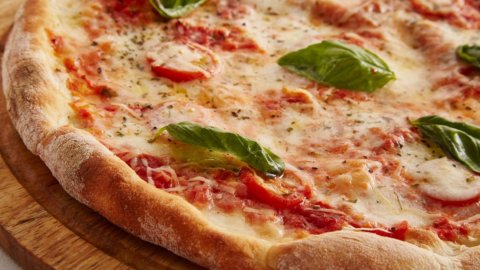
Round, square, with or without a "cornice", in slices, thin, thick, crunchy or soft, with mozzarella and tomato or with courgette flowers and anchovies, or with grilled vegetables, pizza can be considered one of the most versatile historical dishes of Italian cuisine and above all, with a turnover that rises to over 15 billion euros per year a real treasure of Made in Italy symbol of the success of the Mediterranean diet in the world.
An economic system made up of 121 premises in Italy with an estimated employment of 100.000 workers
But pizza is also the backbone of an economic system made up of 121 thousand premises in Italy where it is prepared and served thanks to an estimated employment of 100.000 full-time employees and as many 100.000 on the weekend. According to Coldiretti, 2,7 billion pizzas are baked in Italy every year which in terms of ingredients mean throughout the year 200 million kilos of flour, 225 million kilos of mozzarella, 30 million kilos of olive oil and 260 million kilos of tomato sauce.
A daily work on which, however, the effects of climate change weigh with the damage caused by drought and bad weather in Italy which have cut the production of basic foods of the Mediterranean diet with the collapse of 30% for extra virgin olive oil, 10% for purées, pulps and tomato sauces up to -15% for the soft wheat from which the flour for pizza is made.
In the USA, 13 kilos per person are consumed on average per year, in Italy 7,8
The passion for pizza is undoubtedly planetary, with the Americans who are the biggest consumers with 13 kilos each while Italians lead the ranking in Europe with 7,8 kilos per year, and ahead of the Spaniards (4,3), French and German (4,2), British (4), Belgians (3,8), Portuguese (3,6) and Austrians who, with 3,3 kilos of pizza per capita per year , close the ranking.
However, this diffusion also has negative aspects. According to Coldiretti the success of pizza has favored the development of recipes that have nothing to do with the originale, through the use of the most imaginative ingredients, starting right from tropical fruits such as pineapple, bananas or coconut, but also sweets, such as American marshmellows or creme caramel, local specialties such as haggis, the innards of Scottish sheep, Australian kangaroo and crocodile meat or Finnish reindeer meat, up to versions with insects, from crickets to cicadas and scorpions.
The EU regulation in force since December: in the Pizza Napoletana menus only if it respects the rules of the production disciplinary
Fortunately, however, to protect the originality of our product-national pride, the decision of the EU came to the rescue of pizza on 18 December. In the Official Journal of the European Union in fact, the Implementing Regulation (EU) 2022/2313 was published, which approved the request by Italy to register the name subject to the “Pizza Napoletana” as a traditional specialty guaranteed, or stg. An important result for made in Italy. This means that no pizzeria will be able to include the wording "pizza napoletana" in its menu if the product does not actually comply with the rules set out in the production specification regarding the minimum leavening hours, the hand-rolling of the dough, the filling methods, the cooking in a wood oven at 485 degrees and the height of one or two centimeters of the ledge. All details that must also be certified by a third party. The limits also concern the raw materials to be used to prepare the pizza: extra virgin olive oil, fresh basil, DOP Campania buffalo mozzarella and the traditional STG mozzarella. Tomatoes can be both peeled and fresh cherry tomatoes.
The most imitated of all, they are also made with pineapples, marshmellows and scorpions
Therefore, if the Pizza Napoletana does not correspond to the disciplinary of it will be considered an offenceto, on which the Central Inspectorate for the protection of quality and the repression of fraud (Icqrf) is already working to detail the technical aspects to update the related sanctioning provisions relating to the protection of geographical indications and denominations of origin of agricultural and food products .