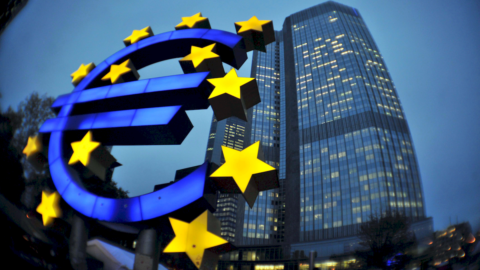
Europe, or rather theEurozone with its 20 countries having adopted theeuro, is one and one is also the monetary policy of ECB but the inflations of the Old Continent are many and stand at very different levels. If in June 2023 theinflation of the Eurozone stood at an average of 5,5%, down from 6,1% in May, within it the differences between price trends are macroscopic. It ranges from 11,2% of the Slovakia, where inflation reaches the highest level in the Eurozone, at the opposite extreme of 1,6% of the Spain, Belgium and Luxembourg with France which is virtuously at 5,3%, i.e. below the European average, and Italy and Germany which are instead above with their 6,7%.
The differences in inflation arise from the different degree of energy dependence
But the point is to understand where such large inflation differences arise and what effects they can have on the monetary policy of the ECB, which is only one, and what different repercussions the central bank's uniform rate hikes can have on countries that have levels of profoundly different inflation. This is exactly what a very recent report by the Observatory of Italian public accounts tries to do (Cpi) of the Catholic University led by Giampaolo Galli.
The underlying thesis of the report, signed by Massimo Bordignon, Federico Neri and Nicoletta Santifer, is that the divergences in inflation rates essentially depend on the different degree of energy dependence of countries, which exploded clamorously after the Russian retaliation on gas following the war in Ukraine, and by the different policies adopted against expensive energy.
If this is the reality, there are two problems facing the ECB. The first is already on the table and, as the report points out, is that the ECB's monetary policy, being the same for the whole area, "risks being excessively restrictive or expansive in some countries" with all that this entails on their performance cheap.
In order to continue disinflation, it is essential to avoid the price-wage run-up
The second problem is prospective and concerns the "risk that, despite the fall in energy prices, inflation will feed itself in the future through a run-up prices and wages” which for now, as the Governor of the Bank of Italy recalled Ignazio Visco in his Final Considerations of May 31, there is no but that does not allow us to let our guard down. The report of the Observatory notes that "the share of profits on real GDP has actually grown in the last three quarters in all the countries of the Eurozone, even if this does not necessarily imply higher profit margins for companies". For the future, however - is the report's recommendation - "as wages regain the purchasing power lost with inflation under the new contracts, the share of profits in GDP must be reduced so that the disinflation process continue". On the contrary, a further increase in prices by companies would generate a distribution conflict and force the ECB into an even more restrictive policy to tame inflation”.