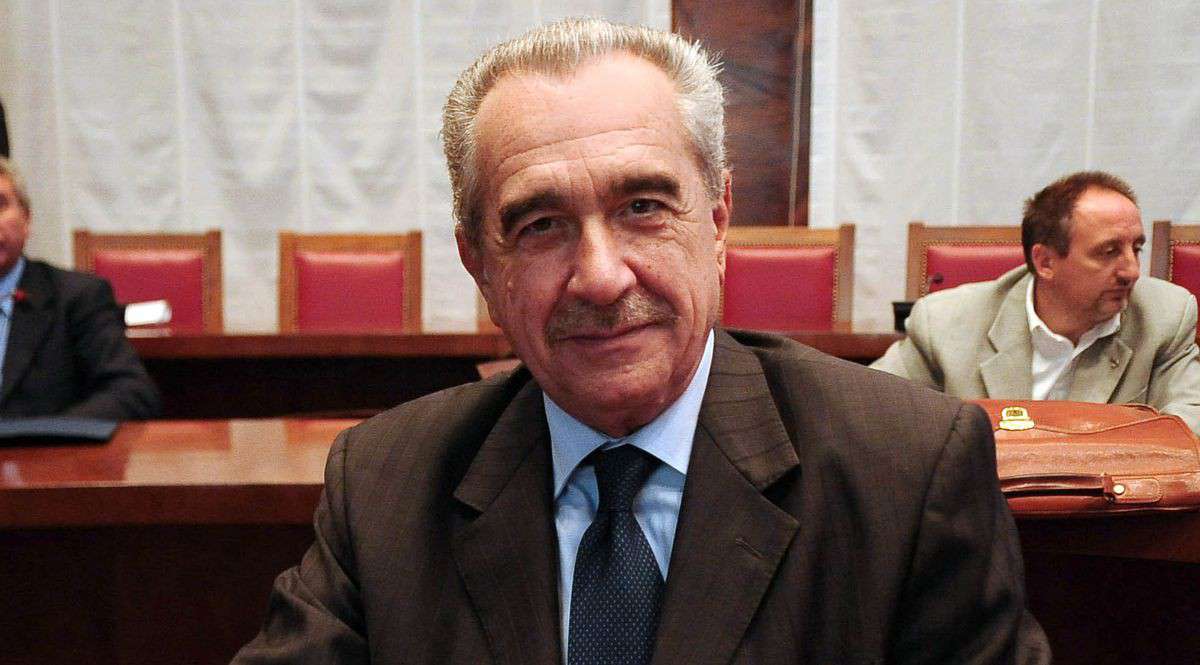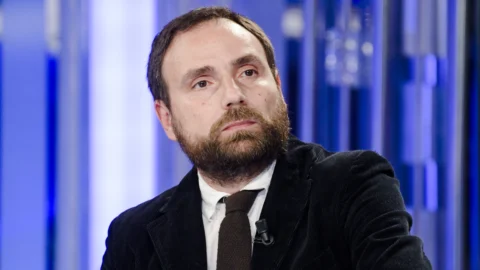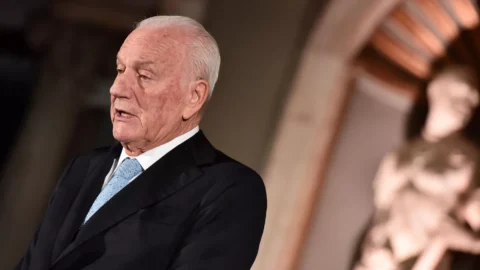
Paul Fresco, the president of Fiat from 1998 to 2003, passed away on July 12th at the age of 93. Born in Milan, but Genoese by adoption Thanks to his school and university education, he graduated in law and began his professional career at the Genoa office of the Roman law firm Lefebvre D'Ovidio, focusing mainly on issues relating to maritime law.
In 1968 he left his freelance profession to join the Milanese company Cge (General Electricity Company), one of the most important Italian companies of the time, operating in the electromechanical sector and controlled by the American multinational General Electric, as head of legal services and union relations.
From Hot Autumn to General Electric
And it is in this capacity that he participates, as a member of the Confindustria delegation, in the negotiations for the Renewal of the national metalworkers' contract during the "hot autumn" of 1969, signing it on 10 January 1970 with the trade union counterpart led by the historic secretaries of Fim-Fiom-Uilm Pierre Carniti, Bruno Trentin and Giorgio Benvenuto.
Appointed soon head of the Italian branch, will develop his entire professional career in General Electric, the largest and most dominant company in the world before the advent of big tech, first moving to London as head of Europe, and then to New York until becoming vice president under the historic presidency of Jack Welch in the 1980s and 1990s.
In 1993 Paolo Fresco intervened in the solution of the industrial and employment crisis of New Pignone of Florence, then owned by Eni, underwriting its purchase by General Electric. Hence his subsequent love for Florence and Tuscany.
The presidency of Fiat
In June 1998 Cesare Romiti leaves the Presidency of Fiat and'Lawyer calls to fill the role of president An old friend of his, Paolo Fresco, who recently retired from General Electric due to retirement and had retired to live with his wife, Marlene, a former Dior model in her youth, in their villa in Fiesole. In Turin circles, he was nicknamed "the American," while within the company he was simply "Actress Fresco."
Profitability has been lacking in Fiat's auto sector for too long, and for the lawyer, the only solution would be to integrate Fiat Auto's strengths with a leading global automotive manufacturer. For this reason, he turned to a manager with international experience like Paolo Fresco.
The new President opens the first dossier of an international alliance with the Mercedes-Benz to enter Chrysler, recently acquired by the same German group.
The due diligence process began, but was stopped almost immediately because, as Fresco himself recalled, the Lawyer's connection with the Mercedes President did not materialize during the meeting in Rome.
The alliance between Fiat and General Motors and Fresco's masterpiece
Having abandoned the Chrysler route, which would be taken up again years later by Sergio Marchionne after the failure of the American management of Mercedes-Benz, Paolo Fresco starts the contacts in Detroit with Richard Wagoner, the powerful Chairman and CEO of the then-largest automobile company in the world, the General Motors.
On March 13, 2000, hailed by the international economic press as a turning point for the European car industry, the agreement was signed the alliance between General Motors and Fiat, which provided for the American side to subscribe to a 20% stake in Fiat Auto in exchange for Fiat's entry into GM's capital with a stake of approximately 5,1% for a value of 2,4 billion dollars, thus becoming its first private shareholder.
On the industrial level, the agreement also envisaged the creation of two equal joint ventures, one for materials purchasing (GM-Fiat Purchasing) and the other for engine and transmission production (Fiat-GM Powertrain), with the aim of reaping the benefits of shared component use and cost reduction, benefits quantified by the partners at up to $2 billion a year.
The crux of the contractual agreement, what was considered Fresco's masterpiece, but it was the recognition in favor of Fiat of the pre-emptive right (the "put") to sell the remaining 80% of Fiat Auto to GM starting in the fourth year and within the next five years of the alliance. Furthermore, the alliance between Fiat and GM will break down after five years of misunderstandings, both on the industrial and financial levels and regarding economic results.
While the two joint ventures were in fact finding it enormously difficult to integrate, Fiat Auto's results were becoming less and less flattering, so much so that Fiat had to enter into an agreement with a pool of four banks in May 2002. a loan of 3 billion euros (the so-called "convertible") and, in December of the same year, signed a program agreement with the Government, against the unions' wishes, which provided for Fiat Auto to declare a state of corporate crisis with recourse to extraordinary redundancy payments.
On that occasion, mindful of his trade union experiences in the late 1960s, Paolo Fresco actively supported the company delegation in the negotiations with the Prime Minister. Silvio Berlusconi and the Undersecretary to the Presidency Gianni Letta.
Furthermore, even on the participation quota front, the relationships between partners deteriorate very quickly: not even two years go by without GM writes down its stake in Fiat Auto from $2,4 billion to $200 million, while Fiat sells its stake in GM to Merryll Lynch for 1,16 billions of dollars.
The first real break occurred in February 2003, when a €5 billion capital increase was announced for Fiat Auto, in which GM was expected to contribute €1 billion. This was Paolo Fresco's last act at Fiat, which leaves the Presidency at the end of February he was replaced in this role by Umberto Agnelli.
The American company not only declared that it did not want to subscribe to the capital increase, but began to express doubts about Fiat's real possibility of exercising the contractual "put" clause, that is, Fiat's right to sell Fiat Auto to GM, without ifs and buts, under the conditions agreed upon in the initial agreement, as set out by the "lawyer" Fresco.
It is precisely thanks to this clause that GM, in order to make Fiat renounce the exercise of the "put", paid 1,5 billion euros in cash to the same and returned his shareholding in Fiat Auto.
Another "lawyer" had also appeared at the table with the Americans, the new CEO of Fiat, Sergio Marchionne, who, with the financial resources obtained from the concluded negotiations, was able to begin the relaunch of Fiat Auto up to the acquisition of Chrysler.