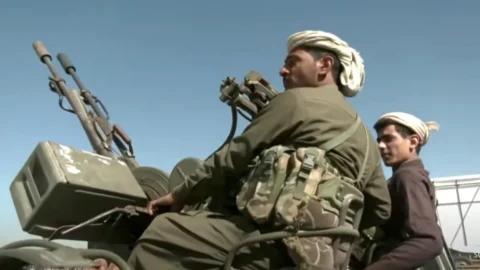
The offensive of the Houthi knock on the door of the heart of the Kingdom of Saudi Arabia indicating the rebels' will to raise the stakes of the conflictThe target is a depot of Aramco, the Saudi oil company, near the airport of Riyadh, the lifeblood of the national economy near the airport, which is the main gateway to the kingdom from abroad, but above all for the first time in this phase of the conflict it has been an area near the capital was hit.
The attack follows one that hit a Italian Eurofighter stopped inside the Saudi base in Ta'if. "Ours is a legitimate armed resistance in the face of prolonged Saudi aggression" and "we are not at war with Italy and we do not intend to involve your country,” he made clear Muhammad Mansur, official of the Ministry of Information Houthi government in Sanaa, speaking with theHandle. “But we ask ourselves What are Italian planes doing in Saudi Arabia? in support of Riyadh's war against us", he declared polemically, indicating that in war, those who provide support for the defense of the skies of the Middle Eastern countries also count. Mansur's words, meanwhile, fuel the political debate in Italy, which goes hand in hand with fears about the security of Italian military assets in the region.
"Italy is not at war with the Houthis but it must protect the Red Sea Route” declared the Foreign Minister, Antonio Tajani, in an interview with Corriere della Sera. "The European Aspides mission "It was born and remains a defensive mission, which aims only to guarantee the passage of merchant ships transiting the Red Sea and Bab el-Mandeb, protecting them from possible Houthi attacks," Tajani declared. "For this reason, we will continue to address the worsening situation in the strait, urging the European Union to renew it, because we have a strong strategic interest: 40% of Italy's entire commercial maritime traffic and 60% of the goods we export to Asia pass through the Red Sea." "We have been saying for months that we need to strengthen Aspides, asking other states to intervene alongside us. I will do so again next week in New York, on the sidelines of the UN General Assembly," the Deputy Prime Minister added.
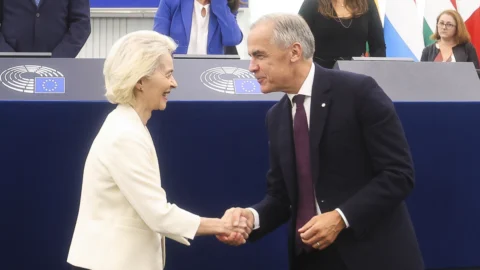
The High Representative for EU Foreign Policy, Kaja Kallas, he responded to a letter from the Minister of Defense Guido Crosetto, agreeing on the need to strengthen the Aspides mission to protect ship transits. And he is preparing a letter, according to what has been learned in Brussels, to be sent to all Member States to involve them on the issue.
US warns travelers of risk of rapid escalation in conflict with Houthis
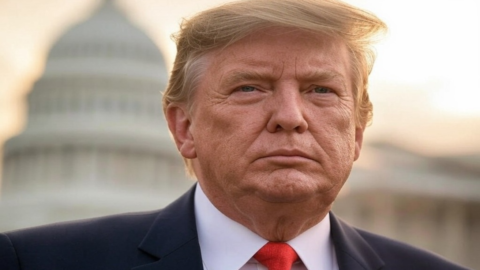
Saudi Crown Prince Mohammed bin Salman will have to try to resolve the escalation alone, after being denied military support by Donald Trump. Meanwhile, the US president has returned from Camp David and the US State Department has released asecurity alert The State Department's statement addressed to American citizens in the Middle East or planning to travel there, warning that the conflict involving Iran and the Houthis in Yemen "has the potential for rapid escalation." "Due to tensions in the Middle East, the security situation remains complex, with the risk of unexpected escalation," the statement reads. It adds that "American citizens currently in the Middle East should exercise extreme vigilance and be aware of the possibility of flight cancellations, airspace closures, and disruptions." "The Iranian-backed Houthis have engaged in hostilities against Saudi Arabia, including targeting civilian airports. This military conflict has the potential for rapid escalation," the statement continues.
Iran has handed over its terms to Qatar for negotiations with the US.
Meanwhile, the US-Iran conflict is waiting for signals. Today the'Iran has made it known that it "hopes" for an end to the conflict between the Houthis (who are very close allies of the country, and whose weapons and technologies they use) and the Saudis. Pakistan has raised the possibility that for the first time the Houthis could be called into question. recently signed mutual defense pact to Mecca with Saudis and Turks. Clashes continued between Yemeni government forces (backed by Saudis) and the Houthis. In an interview with Al Jazeera, the Secretary of the Supreme Council for National Security of theIranIran's Mohsen Rezaei said he had presented Qatar with the conditions for negotiations with the US. Among the conditions for ending the war are "an end to attacks on all fronts, the unblocking of frozen assets, and the lifting of the naval blockade." Iran is awaiting a response from President Trump.