The Federal Reserve raised interest rates by 25 basis points, bringing the cost of money into the range of 3,75%-4%, and left the door open for further increases while the American central bank itself is committed to trying to keep inflation below 2%The decision, expected by the markets, which had priced it in at a 93% probability, is accompanied by new projections that indicate another hike by the end of the year according to the majority of FOMC members.
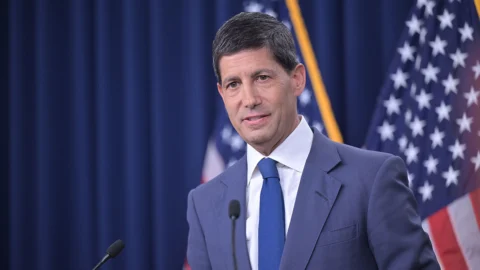
Kevin Warsh's message, in his first tightening as Fed chairman (it is the first rate hike since 2023), was as important as the hike itself: “There is only one goal, and that is 2%”, he reiterated, ruling out the possibility of an implicitly higher inflation target. And he added: "This Fed will not falter," underscoring the central bank's commitment to price stability.
Treasury yield curve remains under pressure
The decision comes after a sharp correction on the US bond marketThe yield on the 10-year Treasury note hit 5,04% on September 15, its highest since 2007, before falling back to 5%. The 2-year note, more sensitive to monetary policy expectations, was trading around 4,65%, while the 30-year note rose above 5,3%.
After the decision, yields maintained their previous declines, while The dot plot indicated a median consistent with another rally in 2026. For the bond market, the signal is therefore that of a Fed that does not consider the phase of monetary restriction to be concludedThe curve's dynamics remain a key factor for investors. The 10-year yield, in addition to reflecting interest rate expectations, incorporates concerns about inflation, government debt supply, and the so-called term premium.
Dollar and Wall Street look ahead to next move
On the currency market, the dollar arrived at the meeting already supportedThe dollar index rose to 99,65 on the eve of the decision, while the greenback gained 0,49% against the yen to 155,11. The euro was at $1,1539. The dollar's reaction will therefore depend primarily on the path of interest rates, rather than the now widely discounted hike. A longer path of monetary tightening could support the yields of dollar-denominated assets, while signs of a pause could reduce some of the rate premium.
Wall Street is also looking beyond today's decision. Before the US central bank's decision, the Dow Jones index had closed at +0,4%, while the Nasdaq Composite had done even better with almost 1%, in a session affected by rising bond yields and tensions over oil prices, but also substantially positive for the European stock markets.
Warsh: Less forward guidance, more data
The new Fed chairman reiterated his preference for a monetary policy less dependent on forward guidance“Market participants are learning to play the ball, not the referee,” he said, indicating a desire to push investors to focus on economic data rather than the central bank's preemptive guidance. Warsh also called the American economy “surprisingly resilient” He also hinted that the Fed will act further if necessary. The question for markets now is how long the tightening phase will last: "This is a period of vigilant reflection, not of watchful waiting," Warsh said. "We don't have a magic wand; when necessary and appropriate, we will not hesitate to act."
The Fed projects a rate of 4%-4,25% by the end of 2026, while PCE inflation has been revised to 3,7% from 3,6% estimated in June. The return to the 2% target is expected only in 2029For Treasuries, the dollar, and equities, the key issue isn't just the September rate hike. It's the prospect of borrowing costs remaining high for longer, as the Fed seeks to curb inflation without compromising the resilience of the American economy. Whether Trump likes it or not, as he had appointed the new Fed Chairman to lower rates.