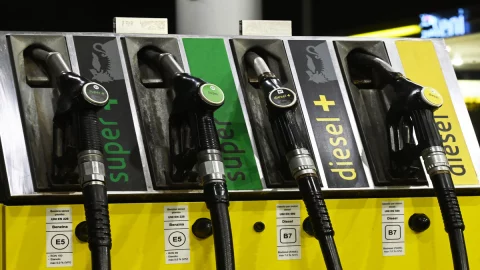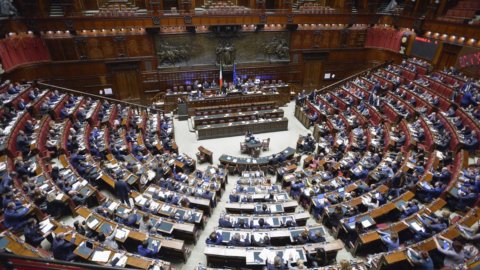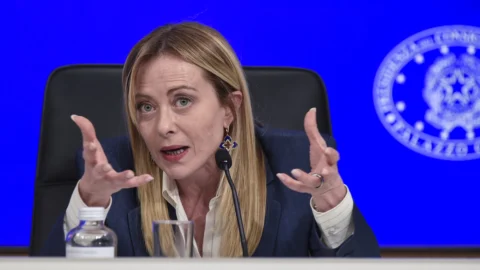
Pressing of theItaly on 'Europe to get more flexibility due to the boom ofinflation. The prime minister Giorgia Meloni send a letter a Ursula von der Leyen: “Under these conditions, with the limited space allowed by the spending rules, Families and businesses cannot be helped without restrictive measures“, warns the Prime Minister, who proposes to use the extra revenue for targeted energy aidThe September surge, with the annual figure already projected above 3%, risks tightening spending margins, and the government is alarmed. But even before receiving the letter from Rome, which arrived Thursday evening, Brussels had prepared: "We have already granted more flexibility to the member states." A majority meeting was held at Palazzo Chigi on the eve of the Economic and Financial Planning Document (DPFP). Amid all this, markets are reeling, with oil prices above $100, stock markets falling, and spreads soaring.
Towards the maneuver: inflation under special observation
Inflation is under special observation. The letter announced by the Prime Minister is now on the table of the European Commission. Meloni, addressing Ursula von der Leyen, starts from “Italian case”, which has expenditure directly affected by inflation above estimates equal to 20,4% of GDP. To which are added other expenditure components that will be affected already in 2027 equal to 12,0% of GDP. The most obvious example is that of pensions, quotes the Prime Minister, who launches her appeal to Brussels: "We believe that the fiscal framework leaves the European Commission room to take into account the relevant factors in the ex ante evaluation of compliance with the spending rule." An "urgent" and non-postponable issue, which does not only concern Italy and which, according to Meloni, should be discussed - she suggests - at next Ecofin meeting, scheduled for October 9But the letter also contains another proposal: to find a way to use "at least a part" of the extra revenue resulting from the high prices to "temporarily and specifically mitigate the increase in energy costs." This is an Italian position, which the Minister of Economy, Giancarlo Giorgetti, has already spoken with his European colleagues.
Brussels' position
But what could Brussels' reaction be now? The European Commission, when it receives a letter, takes "the time necessary to examine it and respond." This is stated in theAdnkronos a senior EU official. The Community executive, in other words, does not respond "hot off the cuff" to a letter from a head of state or government, like the one sent by Meloni. The response given at midday Thursday by chief spokesperson Paula Pinho ("flexibility has already been granted"), according to this clarification, did not directly address the requests made in the prime minister's letter regarding budget flexibility, also because it had not yet arrived, having been received only that evening.
In Brussels, according to what the Italian press agency has learned, there is no prejudicial rejection of the requests made by the Prime Minister regarding budgetary flexibility in the letter addressed to Ursula von der Leyen. There are budgetary rules, of course, and there is the EU Council, but if there is political will, as has happened in the past, member states' requests, when well-founded and well-argued, are not rejected a priori. What is certain is that the Prime Minister's letter has officially opened a negotiation which probably won't be short-lived, because the Italian public debt in relation to the GDP, which is growing slowly, is high, and “Frugal Countries” They are far from inclined to make concessions, especially now that bond markets are restless.