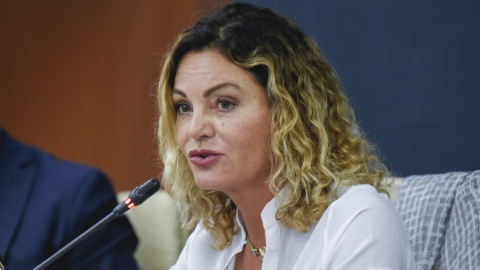
Slowdown of the Italian economy between the end of this year and the beginning of next while inflation in Italy is expected to peak by 2022 and then decline next year. These are the forecasts of the Parliamentary Budget Office (UPB), illustrated before the House and Senate Budget Commissions by President Lilia Cavallari, in audition on the government maneuver. The observations in this regard advanced by the PBO were extensive and detailed, a summary of which is provided below. The PBO was heard during the hearings that opened the session on the 2023 Budget Law. After the remarks made by the Bank of Italy on cash and Pos in contrast with the Pnrr and the objectives of combating tax evasion, the Upb also presented extensive and detailed observations of which a summary is provided below.
Budget law: Upb sees the economy slowing down
- Various indicators point to a slowdown in the economy between the end of this year and the beginning of next, mainly due to the war in Ukraine and high energy prices.
- According to the forecasts of the PBO, the peak of Italian inflation will be reached in the current quarter, while the race in prices should slow down next year.
Budget law: for Upb positive commitment on debt/GDP reduction
- The PBO confirms a positive assessment of the commitment, reaffirmed with the manoeuvre, to reduce the public debt-to-GDP ratio, also thanks to a planned reduction of the deficit to 3 percent of GDP in 2025.
- To ensure the continuation of the descent of the debt-to-GDP ratiomaximum attention must be paid to structural interventions on economic growth, with particular reference toimplementation of the Pnrr.
- In line with EU indications, any new interventions against high energy costs will have to be more selective, concentrating aid in favor of the neediest households and businesses that see their competitiveness most eroded.
- In a context in which room for maneuver will be more restricted, accurate and prudent quantifications of loans and financial coverage are needed.
- The design of future reforms, for which the Public Budget Document refers to the Def, will have to consider the effects on fairness and efficiency of taxation, fight against tax evasion, costs related to population aging and medium-long term sustainability of public finances.
Budget law and basic income: the excluded
- According to the UPB simulations on INPS data, with the restrictions introduced by the maneuver, after August 2023 the 38,5 percent of the nuclei that today receive the citizen's income could be excluded from it.
- According to the Upb's simulations on Inps data, three quarters of the core earners composed of a single person they will stop receiving the Citizenship Income after August; as the number of members increases, the share of excluded people decreases (essentially due to the presence of minors).
- According to UPB simulations on INPS data, 22,9 per cent of individual beneficiaries the RdC will lose, with a slight prevalence of men (25,2 percent) over women (20,7 percent).
- According to the UPB simulations on INPS data, 36,1 per cent of the citizens will be excluded from the RdC unemployed and less than a third of the busy. The latter are subjects with very low wages (the so-called working poor), which it would be desirable to take into account when redesigning the tools to support poverty and active inclusion.
Upb estimates on pensions with 103 quota
- According to UPB estimates, if everyone who will be able to join 103 quota will do so, the largest pensions to be paid at the end of the year will be over 56.400 in 2023, around 40.800 in 2024 and just under 6.400 in 2025. In this scenario, the users of Quota 103 would be mainly men (around 85 per cent) and little more than 13 percent would come from the public sector. Government cost estimates can be considered conservative.
- The incentive to stay at work is less convenient than the 2004 "Maroni bonus" and risks not being particularly attractive, except for those who have an immediate need for liquidity.
- Indexing changes in 2023-24. For the portions of pensions calculated with the contribution rules, the slowdown in the revaluation is to be considered in the same way as a tax. If regular indexation is undermined, actuarial neutrality is also undermined and the pensioner receives less than he or she should be entitled to as an annuity.
Upb: raising the ceiling on cash favors tax evasion
- The economic literature is almost unanimous in maintaining that the increase in cash payments can lead to an increase in tax evasion. A study by Giammatteo and others (2022) shows that the increase in the cash cap introduced with the 2016 maneuver (from 1.000 to 3.000 euros) had the side effect of making the underground economy grow. An analysis by Russo (2022) instead concludes that the reduction adopted at the end of 2011 (from 5.000 to 1.000 euros) helped to contain the tax evasion.
Upb: extension of the flat-rate scheme and equity problems
- According to the PBO simulations, out of about 170.000 individuals with revenues or fees of between 65.000 and 85.000 euros (5 per cent of professionals and sole proprietorships), about 60.000 would benefit from joining the flat-rate regime.
- The overall average benefit of new subjects adhering to the flat-rate scheme is approximately 7.700 euros. However, the difference between the categories is wide: professionals earn an average of around 9.600 euros, while companies stop at 5.600 euros.
- The extension of the flat-rate regime involves a rather limited number of taxpayers, but poses equity issues within the category of self-employed workers, subjected to heterogeneous treatment not justified by a different ability to pay.
Upb: the findings on the incremental Flat Tax:
- The limitation of the relief to a single year could lead taxpayers to opportunistic behaviour, such as postponing invoices relating to the last months of 2023 to 2022 or anticipating invoices for 2024 to next year; given the temporariness, the measure will hardly be able to bring out income hidden from the tax authorities.
- Earn equity issues the application of a rate that is significantly lower than those of the first bracket of income tax and capital income.
Anti-inflation measures and energy extra-profit taxation
- If the dynamics of energy prices do not decrease in the first few months of the year, an extension of the support measures for households and businesses may be necessary, which in the package are financed only for the first quarter of 2023.
- According to a simulation by the Upb, between June 2021 and December 2022 inflation drove up average household spending by 5,4 percent. Without supportive policies, however, the impact would have been as high as 9 percent.
- The new tax scheme for energy companies is justified by revenue needs and redistributive purposes, but appears very complex and in some respects unclear. In 2022 and 2023, most energy companies could be affected by three extraordinary levies (the contribution on revenues, the one on added value and the one on extra profits) very different in terms of times, tax bases and effective rates.
Healthcare and taxation
- Based on the contents of the budget, health expenditure as a ratio of GDP will fall by up to 6,1 per cent in the next three years, a lower value than in the pre-pandemic period (in 2019 it was 6,4 per cent ).
- The repetition of strongly facilitating measures for non-compliant taxpayers - in the absence of an overall reform - risks damaging both the efficiency of the collection system and the relationship with taxpayers, who could be induced not to pay taxes in the meantime of future amnesties.