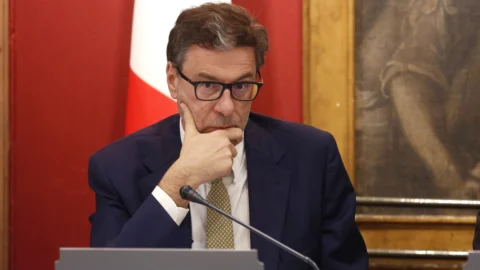
With the renunciation of theUnicredit by Andrea Orcel to continue the Ops on Bpm bank for the fog that thickens over the rules of the game, the Meloni government, and in particular the Northern League Minister of Economy Giancarlo Giorgetti, has certainly achieved the goal he set himself at the beginning of the banking game: to shed the role of impartial referee and don that of a player, blocking the path of any banker who thought he could act freely according to the simple rules of the market. The CEO of Unicredit, Andrea Orcel, has paid the price for this so far. Cristiano Ronaldo of mergers and acquisitions in the banking sector which had however underestimated the logic of power of the Government and the Northern League minister Giorgetti, who has been hostile to the Unicredit takeover bid since day one due to his all too obvious electoral interests in the areas where Banco BPM has a strong presence. at the Ministry of Economy and Finance we celebrate for Unicredit's retreat – which however the Stock Exchange rewarded yesterday unlike what it did with Banco Bpm – but, if you look closely, there are at least four reasons that make Giorgetti's success similar to a Pyrrhic victory.
Unicredit-Banco BPM: 4 reasons why the government's victory is fragile.
“Everyone does it that way” they say in government circles to underline that the interventionism of political power in the banking field it is not only an Italian exclusive but also in Germany, Spain and PortugalIn the US and China, governments are not hesitant to trample market rules to facilitate the banking combinations they deem most desirable. But the issue isn't whether dirigisme is back in fashion, but whether it benefits banks and the banking system.
With its obstructionism to the Unicredit-Banco Bpm takeover bid the Government can sing victory as much as it wants but it has consolidation prevented of the second banking champion, which would have done a great deal of good for competition within the national system and strengthened Unicredit's chances of winning in Germany with the takeover of Commerz.
And in fact the second reason that overshadows the Government's victory over Unicredit is that the success was achieved by shamelessly trampling on the market rules and dusting off the dirigiste suggestions in the banking field that were in vogue a quarter of a century ago at the time of the Governorship of Antonio Fazio at the Bank of Italy.
One wonders – and here is the third reason that should not give anyone, not even the Government, a good night's sleep – what international investors think facing the barrage of the Ministry of Economy and Finance and its Golden Power on Unicredit torn to pieces by the EU and how such an operation could attract foreign capital to our country.
But there is a fourth reason that raises a thousand doubts about the Government's banking policy and which sounds paradoxical – as noted yesterday The print – if we only consider that the first shareholder of Banco Bpm has in the meantime become the French giant of Crédit Agricole surrounded by other investors from across the Alps.
Giorgetti, with the utmost contempt for the ridiculous, had gone so far as to claim that Unicredit is a foreign bank because its shareholders include foreign funds and financial entities, despite having his head – which is what counts – firmly planted in Piazza Gae Aulenti in Milan – but he did not realise that Crédit Agricole had asked the ECB to exceed the 20% threshold in Banco Bpm while assuring that (for now) he does not intend to take control of the bank led by Joseph Chestnut.
The banking risk and the children and stepchildren of the Government
Not having antitrust constraints like Unicredit, the French giant, which is not by chance looking with interest at Anima recently acquired by Banco Bpm, can guarantee that no branches will be closed nor fired employees of the Bank in Northern League areas, but the paradox remains and confirms the unpleasant impression that the Government has given throughout this game: in risk, not all players are equal. There are children and stepchildren depending on the degree of affinity with the Prince's wishes. Good luck.