Politics is also made up of signals. And those that Italy is sending to Brussels on the implementation of the Pnrr they are making people turn up their noses European Commission, who fears that the new government will take a different path than the one taken by the Draghi executive. Concerns that today have been collected and relaunched by Corriere della Sera.
Pnrr Italia: the signals that Brussels does not like
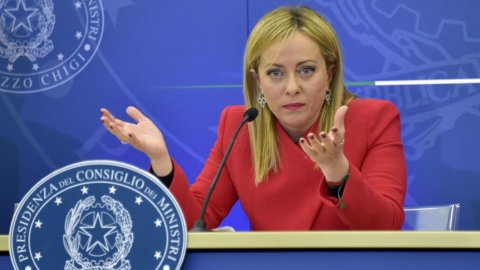
One example above all concerns a promise - so far unfulfilled - made by the Prime Minister, Giorgia Meloni during her first trip to Belgium. The premier had announced the arrival of a decree on the management system of the Pnrr in Italy. A month has passed and there is not even a shadow of the provision. In the meantime, however, it has been decided that the Minister of European Affairs, Raffaele Fitto, which holds the dossier on the Pnrr, will rely on the Central Service for the Pnrr of the General State Accounting Office to carry on its work.
Another dossier as complicated as it is divisive is the draft implementing decree of the Competition law, bequeathed by the old executive and essential for achieving the objectives expiring on 31 December without which Italy will not be able to receive the new tranche of 21 billion in loans. The crux of the dispute concerns the obligation to tender local public transport, on which Municipalities and Regions continue to stall, risking blowing up the disbursement.
And what about the budget law? There are two rules that really did not go down in Brussels: the raising of the threshold for payments with Pos to 60 euros and the increase of the cash ceiling to 5 thousand. Both are considered to be in contrast with the anti-evasion objectives thanks to which Italy had obtained the first installment of aid. But if on the second the Government intends to go ahead on its path, keeping what was one of the main electoral promises of the centre-right before the elections, on payments with Pos the Executive has said it is willing to take a step back if Brussels thought it appropriate.
By virtue of these "signals", writes the Corriere, the Commission will define the Italian budget law "only partially online”, the only case among high-debt countries together with Belgium.
Government: review the prices and times of the Pnrr
A few days ago the task force of technicians from the European Commission on the Pnrr, engaged in a series of meetings to take stock of the state of implementation of the measures put on Italy's agenda, but the highest government offices unanimously insist on a revision of some details of the National recovery and resilience plan.
According to the Deputy Prime Minister and Minister of Infrastructure, Matteo Salvini, the Pnrr "continues to be something that must not be changed, but retouched, revised" in the light of everything that is happening. In particular, argues the Northern League leader, the times must be reviewed, because considering that we are now at the end of 2022, "closing all the works and reporting them by 2026 seems to me absolutely ambitious". Not only that, according to Salvini, an update of prices is also necessary. The Minister of the Environment shares the same opinion Gilberto Pichetto Fratin: "We will have to review the Pnrr with Europe", because "due to inflation, only my Ministry of the Environment has a cost greater than 5 billion for the interventions", out of the 35 expected, says Pichetto, underlining that "either we cut on the works, or we're not in it,” he said.
Il Minister of European Affairs Raffaele Fitto In the meantime, let it be known that the will be communicated in the next few days real spending situation of the Pnrr. Initially, he recalls, the national recovery and resilience plan's spending forecast was 42 billion euros at the end of this year, this programming was revised downwards to 33 billion and then reduced to 22 billion in September. “In the coming days we will take note of how much has been spent” but “I am afraid that the percentage of expenditure will not be very high and will be far from 22 billion euros. The expenditure indicator is very worrying, because if we put all the available resources together and project them to 2026, it is clear that there is a need for a comparison at European and national level”.