Twenty-five years later, September 11th remains a date that divides history into a before and an after. September 11, 2026 marks the twenty-fifth anniversary of the attacks that struck the United States, killing 2.977 people and showing the world the vulnerability of the world's greatest power. Four planes hijacked, the Twin Towers destroyed, the Pentagon in flames, a Pennsylvania field becoming the site of the last stand for passengers and crew. From that morning in 2001 the world changed: military strategies, intelligence work, security policies, and the relationship between freedom and control changed. The images of the attacks entered the memories of millions. Their consequences spanned wars, political transformations, and private lives, continuing long beyond the emergency.
The quarter century comes with a wound still openIn New York, the publication of thousands of documents brings the spotlight back the health risks of Ground Zero and the reassurances spread after the collapse. The commemoration will also host a new moment of silence, dedicated to those who died in the following years from illnesses linked to the attacks.
September 11, 2001: The Morning America Discovered Its Vulnerability
It was a Tuesday. Nineteen al-Qaeda terrorists took control of four scheduled flights American Airlines and United Airlines, taking off from Boston, Newark, and Washington-Dulles and bound for California. They were long-haul planes, carrying large amounts of fuel.
to 8.46, local time, American Airlines Flight 11 struck the North Tower of the World Trade Center. Seventeen minutes later, to 9.03United Airlines Flight 175 crashed into the South Tower. Cameras, already trained on Manhattan, showed the second impact live. The sequence made it clear that the United States was under a coordinated attack. to 9.37 American Airlines Flight 77 reached the Pentagon in Arlington, Virginia. to 9.59 The South Tower collapsed, the second to be hit. The North Tower collapsed at 10:28 a.m. Just 102 minutes passed between the first impact and the disappearance of both towers.
Meanwhile, in Pennsylvania, the United Airlines Flight 93 tragedyInformed by telephone of what was happening, passengers and crew attempted to regain control of the plane. The aircraft crashed at 10.03 near Shanksville, failing to reach Washington, D.C., where the possible target was the Capitol or the White House. All forty passengers and crew members died.
The overall balance was 2.977 victims, excluding the hijackers. Among them were workers, travelers, military personnel, and rescue workers. The New York Fire Department lost 343 members. While thousands of people tried to escape from the buildings, others entered to save them.
The Post-9/11 Era: From the Rubble to the War on Terror
La American response quickly transformed the attack on the home soil into a turning point in international politics. The administration of George W. Bush launched the “war on terror”, indicating as objectives al-Qaeda, its leader Osama bin Laden and the structures that provided protection to the organization. For the first time in its history, NATO invoked Article 5 of the North Atlantic Treaty, recognizing the attacks against the United States as an attack on the entire alliance. On October 7, 2001, US and British bombing raids began in Afghanistan against the Taliban and al-Qaeda camps.
The Taliban regime was overthrown, but the conflict would drag on for twenty years. In 2021, the withdrawal of American and coalition forces was accompanied by the return of the Taliban to power, bringing to an end the long military campaign that had begun in response to the attacks. In 2003 came the invasion of IraqSaddam Hussein's association with al-Qaeda, fueled by US administration officials, helped build consensus for intervention, even though suspicions of Iraqi involvement in 9/11 proved unfounded.
Bin Laden, after the initial denials, he publicly admitted in 2004 his involvement in the attacks. He was killed in May 2011 during a U.S. Special Forces operation in Abbottabad, Pakistan. His death came nearly ten years after the massacre, when the decisions made in the aftermath of the attacks had already profoundly transformed the international balance of power.
From national unity to divisions, the political legacy of 9/11
The unity shown by the United States after the attacks did not last. The solidarity of the first few days was gradually joined by questions about the intelligence flaws, which had failed to connect the evidence gathered before the attack. Then came the wars, the human losses and the costs of prolonged military interventions, which contributed to fueling distrust towards institutions. September 11 also marked the end of optimism of the post-Cold War 1990s. Military superiority had not made America invulnerable, and globalization did not guarantee a peaceful future.
The search for security changed the relationship between the state and its citizens. The Patriot Act expanded investigative and surveillance tools, and in 2002 the Department of Homeland Security was created, which was also given jurisdiction over immigration. Guantánamo, controversial detentions, and the use of torture called into question the United States' credibility as a defender of rights and freedoms. Edward Snowden's 2013 revelations would later expose the extent of the National Security Agency's surveillance programs.
The solidarity mobilization was accompanied by discrimination and attacks against Muslims and people perceived as Middle Eastern. Sikhs, mistaken for Muslims, were also targeted, while American Islamic organizations condemned the attacks and participated in aid efforts. Suspicion of a presumed internal enemy contributed to exacerbate identity tensionsFears and resentments that, together with subsequent economic and social crises, would fuel a fertile ground for nationalist populism.
On the international levelAmerica's long-standing focus on counterterrorism absorbed resources and strategic attention as China advanced and Russian ambitions strengthened. Wars and controversies over Washington's methods contributed to eroding its authority among allies and adversaries.
And in the meantime, the memory of the attacks entered the social network ecosystem. The conspiracy theories They found new channels of dissemination, capable of amplifying extreme and suspicious content through communities increasingly closed in their beliefs. Even the reconstruction of that day became a battleground, intertwined with the crisis of trust in information and institutions.
Ground Zero, the aftermath that continues to kill
La cloud raised by the collapse of the towers It didn't disappear from the lives of those who breathed it when the sky reopened. Dust, asbestos, and other harmful substances affected rescuers, workers, residents, and students. Exposure continued during operations among the rubble and in contaminated environments.
On the eve of the twenty-fifth anniversary, the World Trade Center Health Program has approximately 150 subscribers. As of June 30, 2026, there were 57.044 cancer certifications, in addition to those related to respiratory diseases, gastrointestinal disorders, and post-traumatic stress. The certifications do not necessarily correspond to the same number of people, because the same patient can have more than one. For the first time, cancer certifications among those who lived, worked, or studied in the disaster area exceeded those of rescue workers. This figure shows how health consequences extend beyond the men and women involved in rescue and recovery operations.
On September 8, 2026, the New York administration has made public over 170 pages on air quality, on health risks and emergency management. The Mayor Zohran Mamdani He stated that the documents show what the city knew and how it attempted to limit its legal liability. Many, he charged, "got sick because they believed what the authorities said, that the air was safe." The issue had already emerged in 2003, when the Environmental Protection Agency's Office of Inspector General found that the available information was insufficient to support the broad assurances issued in September 2001. The newly released documents will require further analysis, but they may also offer useful information to those seeking to reconstruct their exposure and access assistance programs.
Il the price paid by firefighters continues to riseAccording to Mamdani's remarks at the September 2nd ceremony, more than 600 members of the New York Department have died in the years since from health complications related to 9/11. This year, 36 more names were added to the FDNY Memorial Wall.
The twenty-fifth anniversary and that extra silence between memory and divisions
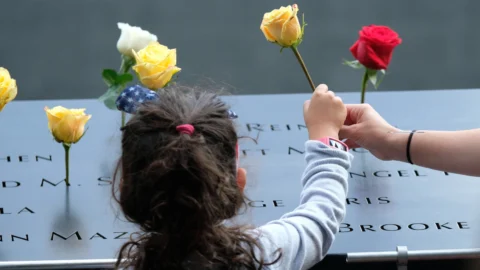
La memory of September 11 lives in the reconstructed sites and spaces dedicated to the victims. In Manhattan, the Memorial occupies the site where the towers once stood. At the Pentagon and in Shanksville, other monuments remember those killed in the attacks. For the twenty-fifth anniversary, the Flight 93 National Memorial has scheduled events from September 9 to 13, from the reading of names to the tolling of bells, to the forty lanterns dedicated to the passengers and crew members. In New York, to the six moments of silence that recall the impacts and collapses, a seventh will be added, after reading the names. It will be dedicated to people who died later for the health consequences of September 11th and will become a permanent part of the annual ceremony. It acknowledges a loss that continues in the lives of families and in the names added to the memorials. George W. Bush expected at the Manhattan commemoration, while Donald Trump will attend the Pentagon meeting and will be represented at Ground Zero by Vice President J.D. Vance. The president is said to have chosen the Pentagon as the venue for a speech, something the New York ceremony does not include.
On the eve of the anniversary, Trump he also re-proposed the story of a alleged rescue by two firefighters, who allegedly lifted him and carried him away when a building near the World Trade Center was feared to be collapsing. "Guys, I can run by myself," he reportedly told rescuers. This unconfirmed incident, which he had previously placed two days after the attacks, remains unconfirmed.
Twenty-five years later, the I remember that morning continues in the care of survivors, in the requests of families and in the names that are added to the memorials. It is to these people that the scene should remainFor Trump, as for anyone who represents the country, honoring 9/11 also means removing its memory from political prominence, respecting the facts, and rediscovering words capable of uniting a deeply divided America.