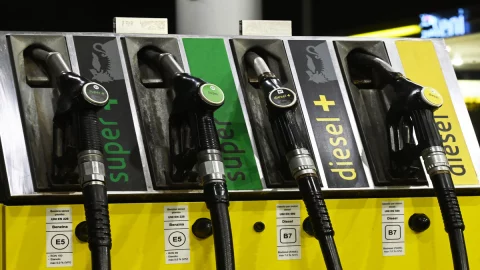
The diesel excise duty cut will remain in effect for another seven days, until September 17th inclusive. On September 10, the Council of Ministers approved a decree-law extending the overall discount of 17 cents per liter, bypassing the midnight deadline. Fiscal support for businesses has also been confirmed. of road transport, while the same provision includes provisions to accelerate authorizations for domestic oil and gas production.
The extension gives the government additional time to finalize the transition to targeted aid. Giorgia Meloni announced "new measures arriving next week," but issues regarding resources and beneficiaries remain to be resolved. Meanwhile, pump prices continue to rise, and consumer associations are calling for broader intervention, including for gasoline.
Diesel, another seven days of discounts. The decree is worth €102 million.
The reduction confirmed by the executive it concerns diesel used as fuel and is valid from Friday 11th to Thursday 17th September. The overall benefit of about 17 cents per litre The reduction stems from a 14-cent cut in excise duties and the resulting VAT savings. For the same period, the reduced rate also applies to paraffinic diesel fuels obtained from synthesis or hydrotreatment and to biodiesel released for consumption as motor fuel. The extension of the diesel discount alone costs approximately €85 million. The overall value of the measure, however, comes to €102 million, financed from budget funds, including the extension of the tax credit for road haulage companies through September.
The duration of the intervention is shorter than the hypotheses circulated before the Council of Ministers, when it was estimated that it would arrive at least close to the end of the month. This is the qeleventh intervention since the beginning of the crisis, while fuel support has already absorbed over 2 billion euros since March.
Targeted aid, yet to be decided who will benefit
The new extension keeps the general discount in place while the government is preparing the selective support system announced by the Prime Minister at the end of August. The goal is to focus resources on the groups most exposed to fuel costs, but a political consensus on the target audience has not yet been reached. Among the solutions being considered are a contribution through the "Dedicata a te" card and fuel support tools for employees. The League is calling for the inclusion of the self-employed and self-employed workers, an extension that complicates defining the mechanism and coverage.
It also remains to be seen clarify the scope of further aid to road hauliersAmong the industry's demands are greater concessions on highway costs and an increase in tax deductions per working day.
The timing is another open issue. According to the options developed so far, the new bonus could cover the last three months of the year, starting October 1st. If this approach is confirmed, the gap between the discount's expiration on September 17th and the start of the new support would remain to be managed.
Oil and gas commissioners to unblock permits
The decree also intervenes on procedures for strategic energy activities, with the aim of preventing administrative delays from compromising the continuity of supplies. The provisions concern onshore hydrocarbon exploration, exploration, and production. If a Region fails to reach a consensus on the requested agreement, a further deadline and institutional discussions will be set. In the event of persistent inaction, the Council of Ministers may exercise its powers through a commissioner ad acta, inviting the affected Region to participate in the meeting.
Meloni linked the measure to the need to increase domestic production"It makes little sense to buy this energy abroad when we can also produce it in Italy," she stated, arguing that greater domestic availability could reduce dependence on foreign sources and contain costs for families and businesses. In her video message, the prime minister also advocated for increased renewables and the decision to reopen the nuclear energy pipeline. The acceleration of concessions, as outlined by the government, should complement immediate fuel policy interventions with longer-term measures.
Prices still rising, consumers are demanding more
Meanwhile, prices continue to rise and the price increases continue to weigh on supplies. According to data from the Mimit Observatory referring to the morning of September 10, on the national road network the self-service petrol reached an average price of 2,077 euros per litre, compared to 2,067 the previous day. diesel It rose from 2,177 to 2,184 euros per liter. On the highway, again in self-service mode, the average reached 2,163 euros for gasoline and 2,258 euros for diesel. Pressure from the energy markets remains in the background, with Brent and WTI above 100 dollars a barrel and European gas above 81 euros per megawatt hour.
For the National Consumers UnionThe government's response is insufficient. President Massimiliano Dona calls the extension "an inadequate intervention to say the least" and calls for increasing the excise tax discount to 30 cents for diesel, while introducing a 15-cent reduction on gasoline. Codacons too The association deems "the extension of the diesel excise tax discount until September 17th to be completely insufficient" and calls for the measure to be strengthened. According to the association, based on MIMIT data, a tank of diesel costs €5 more than a month ago, while the increase for gasoline is €4. The association calls for action on both fuels to contain costs that risk being passed on to the prices of transported goods and household consumption.