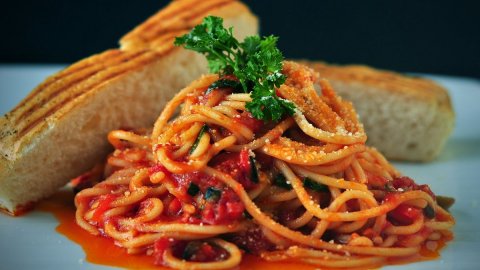
Let's get ready for increases. And what increases. The soaring gas price and the sharp increases on the energy bill are also weighing on us on pasta, the cost of which is rising from week to week. She explains it in an interview with Sun 24 Hours, Vincent Divella, managing director of the Apulian group among the main producers in Italy.
Speaking of price increases, the manager explained: “I we had to ask for the first 30 cents after the summer, to cope with the skyrocketing cost of our main raw material, i.e. wheat. Between June and today, the price of wheat on the Foggia stock exchange has grown by 90%. An increase that we would never have been able to amortize on our own, just think that for us semolina represents 60% of the entire production cost of pasta”.
It went even worse in the following months, when the increase in the price of wheat was joined by that of cellophane (+25%), that of gas (+300%) and that of electricity. “That's why we asked in January to large retailers another 12 cents per kilo. An increase, this, which should become effective with the renewal of orders at the end of this month”, added Divella, who does not hide: “prices may rise again” because the price increases on commodity exchanges continue. For the moment, the forecast is merciless: at the end of January, pasta prices will reach 1,52 euros per kilo, up 38 percent.
Also confirming the present and future price increases is Riccardo Felicetti, who al Sun 24 Hoursand he says: "The imbalances on the world market will not end here, and in the winter of 2022 we will have new problems, including speculative flare-ups".
According to the president of Coldiretti, Ettore Prandini, "with the Covid pandemic, a scenario of hoarding, speculation and uncertainty has opened up that must push the country to defend its food sovereignty". Italy is the second largest wheat producer in the world and in 2021 it produced 3,8 million tons (-3% compared to 2020. However, there is also another side of the coin. Italy is "also the main importer because many industries, instead of guaranteeing supplies with national products they preferred to buy on the international market, taking advantage of the low prices of the last decade”.
In this context, the Istat data for November show a decline in retail sales equal to -0,4% in value and -0,6% in volume. Above all, sales of foodstuffs fell (-0,9% in value and -1,2% in volume), while those of non-foodstuffs remained stationary.