

Apple's new tracking rules
E-commerce users often feel like they are being followed. You visit an item's file, put it in your cart, but don't buy it, and this can petulantly and sometimes harassingly chase you for days on end. Announce your engagement on social media and you'll be hit by a tsunami of honeymoon advertising.
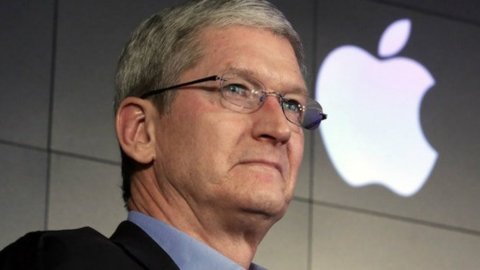
On April 26, 2021, Apple decided to start putting an end to this. Tim Cook's company, which controls one-fifth of smartphones worldwide and half of those in the United States, introduced a system software update that could clear this unsolicited meddling.
The latest Apple mobile operating system (iOS 14.5) forces third-party applications to ask users' explicit consent to be tracked. Certainly many will refuse to grant it. It is Apple's latest move on privacy, an issue that has been close to the heart of the Cupertino company since the days of its co-founder, Steve Jobs. Then Tim Cook took over the pro-privacy relay.
Today's move by Apple forces advertisers to fundamentally rethink how they target ads to mobile device audiences. It's a big deal for the latter it is also annoying.
Through micro-profiling and audience behavior monitoring, platforms that thrive on online advertising have managed to solve advertisers' age-old dilemma of not blowing up half their advertising budgets. A historic achievement for companies that rely heavily on advertising. Virtually all those in the consumer segment.
What happened is that a juicy portion of the global investment of these entities has moved to the network.
The boom in online advertising
Over the past decade, online advertising's share has grown from just 20% of the global advertising market to more than 60%, according to data from GroupM, the world's largest media buyer.
Last year, in the midst of the pandemic, the business grew by 9%. Even with business closures easing, advertising continues to thrive. On April 27, Alphabet, the parent company of Google that is the world's largest digital advertising platform, reported first-quarter advertising revenue up 34% from a year earlier, which was already growing strongly. The day after Facebook, the second largest advertising platform, presented a 46% increase in revenue.
Now, stronger privacy protections may pose some serious problems for these huge blockbusters. In 2018, the European Union passed the General Data Protection Regulation (GDPR) and America's most populous state introduced the California Consumer Privacy Act. Both laws made collecting user data more problematic. Since 2020, Apple's Safari web browser has blocked cookies that advertisers use to track user navigation. Google has similar plans for its much more popular browser, Chrome.
A storm is therefore about to break down on the world of advertising. Maybe it will just be an earthquake.
A seismic change
Apple's latest change makes explicit an option that was previously hidden in the operating system settings of its mobile devices. Users, when launching an application, will be asked to give consent for that application to access the identifier for advertisers (IDFA), a code that identifies their device and allows tracking any activity performed on the internal to other developers' apps and websites. This is a "seismic shift" in the advertising world, says Jon Mew, head of the Internet Advertising Bureau, the ad industry's reporting body.
The platforms best positioned to survive the quake are the ones that have already collected a lot of consumer data. The ads business, which is worth $147 billion to Google, gets most of its information from the terms people type into its search bar. At the limit, but at the very limit, it can do without tracking.
Amazon, whose digital ads business is the third largest and is growing rapidly, has the advantage of being able to track purchases related to ads already on its site — a "closed loop," as marketers call it. Apple knows where iPhone users go, what time they wake up, and whether they're healthy or not. It also has a small advertising business that could grow as its focus shifts to services.
For Facebook, which bases its business on the interests of its users and their shopping needs, the changes introduced by Apple are very worrying. In August, it announced that revenue from its Audience Network, through which it sells ads to other apps, could shrink by up to 50%. But the Audience Network represents less than a tenth of the total social network business.
Who will benefit?
Thanks to their widespread knowledge of users, incumbents such as Google, Facebook and Amazon will, in any case, be able to do better than any other competitor in the targeting activity. “In a world with far less data, whoever has relatively more wins,” said Brian Wieser of GroupM. The effect of the GDPR and similar measures has been, if anything, to increase the market shares of Facebook and Google, he added.
To improve purchase tracking, Facebook is working on creating its own closed loop. Last year it introduced Facebook Shops and Instagram Shops.
Mark Zuckerberg, the head of Facebook, last March he went so far as to say the following words:
“We may also be in a stronger position if Apple's changes encourage companies to move more activity to our platforms, if it makes it more difficult for them to use data… outside our platforms.”
Not all advertising platforms will be able to adapt so easily. Smaller publishers with less data and resources will suffer, says Nicole Perrin of eMarketer, a research firm. Publishers who rely on third-party cookies will be hit the hardest.
In fact, just on the day Apple announced its new policy, a group of German publishers filed a complaint with Germany's antitrust authorities.
Small platforms may find it increasingly difficult to persuade users to trust them to give up their data. AppsFlyer, an ad-tech company, found that iPhone users agreed more than 40% of the time they were asked for tracking by shopping and finance apps, but only 12% of the time by tracking apps. casual gaming
Company responses
The inability to share data is driving advertisers to find new strategies and new gimmicks. One is that of unification. In February, AppLovin, a smartphone software house, acquired Adjust, a mobile marketing firm, for $XNUMX billion. A workaround can also be to ask users to "register", which allows an app to track without the need for IDFA.
In this new landscape, instead of targeting general users, marketers could target more specific interest groups—such as coffee lovers, Daily Mail readers, and so on—just as they did in the pre-market era. Internet. It's a "back from the future," says Wieser.
Deprived of accurate ways to measure their impact, "direct response ads," which require consumers to take an action (such as clicking), lose much of their effectiveness and appeal. And that advertisers will once again have to measure the effectiveness of ads as they once did, i.e. by the increase in sales they have brought in.
Campaigns that drive brand awareness have never benefited much from tracking, so platforms that primarily appeal to branded advertising won't feel much different than they did before. Snap, a social network that is very popular among teenagers, — which belongs to this category — saw a 66% increase in advertising revenue in the first quarter of 2021.
Invest more to get the same result
The less advertisers know about their target audience, the more expensive advertising becomes. Facebook has made a strong case that Apple's decision will hurt small businesses.
He's probably right, says William Merchan of Pathmatics, a data company. Digital ads help reduce the waste of resources in media purchases, he says.
Now that advertisers are once again scrambling to determine which half of their budget is lost, they have no choice but to invest more.
Users and consumers will be able to get rid of the snoopers, but this will ultimately depress them. It will be sad to see that no one will look after us anymore.
But, too bad
Users and consumers will be able to get rid of the snoopers, but this will ultimately depress them. It will be sad to see that no one will deal with them anymore.
In the finale of Oci Ciornie, the very delicate 1987 film by Nikita Mikhalkov, the architect Romano Patroni (an immense Marcello Mastroianni, nominated for an Oscar), reduced to being a waiter on a steamer, meets a Russian gentleman (who later he will discover that he has married the unforgotten love of his life — Anna, ciornie eyes/black eyes). To this Roman gentleman, in an impulse of sincerity - a dowry that has always made him lacking - he tells his story, that of an inept husband, father, architect, lover and man. So sobbing he confesses: “Who remembers anyone anymore, huh? … But my friend, he opens his eyes. He opens his eyes, look around! Here we are in the twentieth century! But who thinks of someone else anymore, but who waits for someone anymore, nowadays, eh?”. To which the Russian gentleman is moved because he has really found the love of his life who is Anna di Romano. Sorry for the spoiler but it's really needed.
At least once we were taken care of by Google. Thanks Google also for having spied on and deluded us. We will really miss you!
. . .
Source: The Economist,, 28 April 2021



Repeated privacy violations are the reason I ditched Android for an iPhone. Never see each other again, google