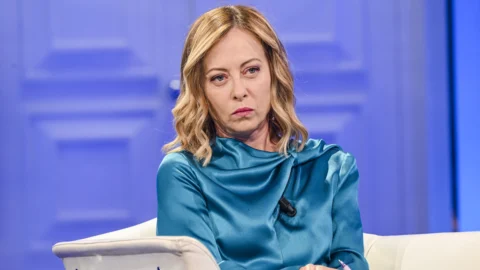
The torrid summer gives Italians no respite, but for the prime minister Giorgia Meloni autumn also promises to be "warm". They are on the horizon three regional elections, each with its own peculiarities and problems, which could put the stability of the center-right coalition to the test. It is about theUmbria (due to natural expiry), ofEmilia Romagna and Lombardy (for early voting) and of Liguria (due to the resignation of governor Toti), which will be renewed by the end of the year. Due to the Toti case, Meloni fears an electoral defeat which could negatively influence the second half of his mandate. To mitigate the negative effect of the probable defeat in Liguria, he is seriously considering the idea of a single election day on 17-18 November.
Liguria: the candidate needs to be found, for the dems there is Orlando
The most complicated situation for the center-right government is recorded in Liguria, where the resignation of governor Giovanni Toti, involved in judicial scandals, sparked a political earthquake. Here the vote within three months risks being a boomerang for the government. The necessity of find a valid candidate under tight deadlines it has become an urgent matter. The Northern League member Edward Rixi, initially seen as a possible replacement, has declined the invitation to apply, considering the time available insufficient to face an effective electoral campaign. Now, the center-right's hopes are entrusted to a civic candidate yet to be selected. The centre-left, however, seems to be focusing on the former Democratic minister Andrea Orlando, which further complicates the picture for Meloni and allies.
Umbria: an unexpected challenge
In Umbria, the situation appears uncertain. Since 2019, the region has been administered by the Northern League Donatella Tesei, whose mandate did not fully meet the expectations of the Umbrians. Recent polls indicate a growth in popularity for Stefania Proietti, mayor of Assisi, supported by a coalition of left-wing parties and civic movements.
Emilia-Romagna: the unknown of an open challenge
In Emilia-Romagna the electoral challenge has already started uphill. Michele DePascale, PD mayor of Ravenna, is favored and supported by the outgoing governor and new MEP Stefano Bonaccini. The center-right has chosen Elena Ugolini, school director and civic figure, as a candidate. The competition is complicated by internal divisions and the need for coordination between the Brothers of Italy, the League and Forza Italia.
The shadow of an election day
Faced with concerns, Giorgia Meloni is serious considering the idea of a single election day for all three regions, set for November 17 and 18. A strategy that could limit the negative impact of a probable defeat in Liguria, preventing a negative result from spreading to the other regions too. A move not without risks since concentrating all the elections on a single day could amplify voter discontent.
Tensions within breakfast
Electoral difficulties are not the only headache for the prime minister. Within the governing coalition, tensions are palpable. The differences on foreign policy, such as the support for Ukraine and the second presidency of Ursula von der Leyen, and on the internal one, in particular on the issue ofdifferentiated autonomy, put the cohesion of the majority to the test. What gives the prime minister problems is above all the pressure from Forza Italia, led by Antonio Tajani, who has called for a moratorium on autonomy reform, fearing it could further divide the country.
To further complicate the picture, there is the game for assure Raffaele Fitto, member of the future European Commission, an important delegation, as well as the management of the Italian public accounts under the lens of Brussels with the start of the infringement procedure for excessive deficit.