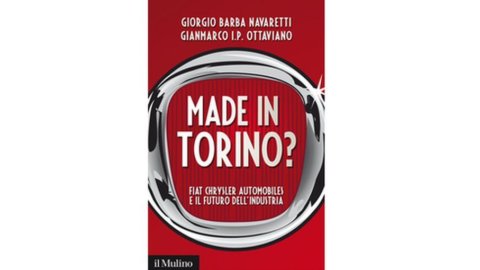
FALSE MYTHS AND LESSONS FOR XNUMXST CENTURY INDUSTRY
The key lesson to emerge from our analysis is that the future of manufacturing in mature economies will depend on the ability to manage multidimensional diversity in a global economy. The merger between Fiat and Chrysler, like any other merger, is a painstaking exercise that seeks to combine very different elements into a single, well-functioning body. This is the condition of every global activity. And it is the condition of contemporary industry which operates in a kaleidoscope of cultures, markets, technologies, institutions and geographies. All these different elements of diversity, which a global group must integrate, lead to the definition of strategies which are often in contrast with many clichés which characterize the debate on the future of the industry.
In the last two decades, the possibility of a sustainable future for manufacturing in mature economies, with prohibitive costs compared to the new emerging industrial economies, has been strongly questioned. Recently, however, also thanks to the development of manufacturing in Germany and the recovery in the United States, an increasingly widespread belief has matured that industry has a much stronger resilience than expected and that indeed various industrial activities, which had been transferred to economies with low labor costs, are returning to advanced countries. Rising wages and currency movements have gradually reduced the cost advantages of China and other emerging economies. And the drop in the cost of energy with the discovery of shale gas has favored the creation of new manufacturing jobs in the United States.
"Today we are probably more competitive globally than we have been in the last thirty years," says Jeff Immelt, the CEO of General Electric. «Will the share of manufacturing workers in the United States go from 9% to 30% of the total? I do not believe. But will there be a steady increase in employment in this sector in the coming years? I think so". Conversely, according to some skeptical commentators, such as the chief economist of Goldman Sachs, Jan Hatzius, the revival of manufacturing in the United States "seems more like a novelty than a fact, that is, it is a cyclical rather than a structural phenomenon".
Whether optimistic or pessimistic, these changing clichés are often based on false myths that Fiat Chrysler's analysis helps to question. The future of industry in industrial countries is possible, but it is based on very precise strategies and choices which it is good to have very clear. The first false myth is that the main cost parameter is wages and that the only way to compete with emerging countries is to lower wages and limit other labor benefits. Certainly all the new industrial economies took their first steps from labour-intensive activities (clothing, footwear, etc.) and abundant, low-cost labor ensured a formidable initial competitive advantage. Add to this looser regulations, fewer environmental constraints, more limited defense of intellectual property rights, abundant government subsidies and a rapidly expanding domestic market, and we have enough evidence to explain the spectacular growth of manufacturing in countries like Korea South, Singapore and later China and India.
Theories and empirical studies of international trade and economic geography, on the other hand, highlight how the location of industrial activities follows complicated paths which can only in part be influenced by the cost of production factors such as labour, by low taxes or by loose rules. Elements such as market size, economies of scale, transport costs, consumer preferences, economies of agglomeration, technological knowledge interact with factor cost in determining the geography of industrial activities. This is especially true for geographically integrated activities such as the automobile is typically. This combination of elements generates competitive advantages over time that are difficult to dismantle and are therefore profound.
Advantages that depend on the availability of services, infrastructures and a specialized workforce in the area. For this reason cars continue to be produced in the United States, Germany or Italy; Italy, Germany and the United States continue to be the major exporters of industrial machinery; many companies in traditional industries such as textiles still manage to survive in countries with high labor costs such as Italy or France. In short, mature economies cannot base their competitiveness on low labor costs or on a deterioration in the conditions of workers. The restructuring of the US auto industry in 2009 also meant sizable cuts in wages and benefits for workers in the Big Three. But, as we have seen, these had reached unsustainable levels, even in comparison with other producers in the United States. While competition from emerging countries certainly puts pressure on workers in industrial economies, this does not and cannot imply a significant deterioration in workers' conditions. Competitiveness in these countries must be strengthened by reducing the incidence of labor costs in other ways, above all by increasing productivity and the added value of finished products.
The second false myth is that there is a simple sustainable low-cost strategy for the survival of manufacturing in advanced countries. Keeping costs down is obviously key. In automotive manufacturing, this preoccupation typically translates into an obsession with scale. As we have seen, this is one of FCA's fundamental rationales: to reduce fixed costs through growth in volumes. Without the agreement, neither Fiat nor Chrysler had much chance of surviving on its own due to a lack of scale. It is not enough to increase the number of cars built. It is necessary to rationalize the range of products offered by grouping them into sufficiently homogeneous families to share many elements in common, without however sacrificing the differentiation required by the market. As many competitors have already done, Fiat and Chrysler together can achieve adequate scale and model variety by streamlining and combining platforms.
But even scale and variety alone are not enough. We need quality, what allows a company to generate greater added value, by selling more cars at a given price or by charging a higher price for a given production cost. As Chrysler, Fiat and many other manufacturers have learned the hard way, there is no price low enough to compensate for a bad quality car. Cost compression does not work if it implies low quality and little variety in a context in which investors must be able to be repaid and workers must be able to maintain adequate living standards in a sophisticated regulatory framework (in terms of environmental standards, product regulation, of the competition etc.). Implementing this high strategy is essential for companies operating in mature economies. A low strategy, which drastically reduces costs without adequate investment in quality, would be suicidal, constantly outdone by companies from emerging countries. This would inevitably lead to the closure or transfer of a large part of the industrial activities to countries with low labor costs. Firms that successfully pursue a "low cost" strategy, such as Renault with Dacia, base their low cost productions in emerging countries. Of course, in many sectors, where it is possible to fragment production geographically and build global value chains, it is also possible for the production of some components or assembly to be relocated. But this option often makes it possible to maintain and strengthen higher value-added activities in advanced countries.
The third false myth is that machines will completely replace man and that only fully automated factories will survive in countries with high labor costs. For now, machines cannot completely replace humans. As we have seen, even in the production of cars, one of the sectors with the highest technological content. Obviously there has been tremendous automation since the days of city-factories like Ford's Mirafiori or River Rouge, but car assembly nonetheless still requires various manual operations that machines are unable to replicate. Precisely because there is a limit to automation (and wage compression), industries in high-income countries must find other ways to improve labor productivity independent of technology and machines. Experience from World Class Manufacturing and other versions of lean production demonstrates that reorganizing workflow in assembly and command lines can generate colossal cost savings. These processes enhance the human component of factory work, assign workers cognitive as well as executive tasks and make the work of factories in mature countries less easily replaceable by those in emerging countries. Naturally this process requires a radical revision of labor contracts and industrial relations.
In Italy, under pressure from Fiat, these have been revised in a direction that is potentially favorable to any type of industrial activity. The fourth and final myth concerns economic policy and the idea that to support manufacturing it is necessary to preserve the status quo. We have clearly seen in the case of the automobile that during crises and recessions, especially if they are as prolonged as those of recent years, there is naturally concern for those who decide economic policy to avoid the irreversible loss of the industrial critical mass and of the "profound" competitive advantages » in order not to be out of the game at the time of the restart. Very often this concern translates into the goal of maintaining the employment levels of each individual company at all costs, even in the short term. This approach, however understandable, loses sight of the fact that not all companies, even in the same sector and even in the same historical moment, have the same destiny. Reducing excess capacity by closing weak and inefficient businesses, however painful, can serve to resize the industry to contingent levels compatible with final demand and with the productivity gains that technology and innovation, including organizational innovation, allow to achieve. This is a process that can be healthy, as it frees up resources for future more vigorous growth.
That said, the task of economic policy is not an easy one. It is clear that in phases of intense crisis (and precisely in the short term) there is a problem of supporting the affected workers and activities. But in the long run the central objective must be the transition towards sustainable economic activities under market conditions and not the support of the existing at any cost. This has been the guideline of American economic policy in the face of the difficulties of the Big Three during the Obama Presidency. Line pursued with an efficiency and speed that cannot be repeated in the Italian institutional context. European governments, by contrast, have always been more careful about protecting jobs in the short term by avoiding painful adjustments. This is the case of the use of the extraordinary redundancy fund in Italy and of the derogation fund, which keep jobless workers attached to their company (often without any possibility of recovery) beyond any reasonable limit or of the French government disbursements for support Peugeot-Citroën and Renault during the crisis or the recapitalization of PSA itself in recent months with public funds (as well as with a new Chinese partner).
Just as the European interventions implemented in 2008, when the financial crisis exploded, essentially supported consumption and demand, with general interventions or even aimed at specific producers, thanks to the introduction of emergency measures notwithstanding the EU state aid rules. Certainly, given the gravity of the crisis, measures to support demand were indispensable. But at the same time the adjustment towards a new and higher competitiveness has been delayed, there has not been an efficient reduction of production capacity and it is not clear what the European landscape will be when demand, hopefully later this year, picks up again .
Complicated reasoning about the future of industrial policy is far beyond the scope of this book. The conclusive point here is that the market sustainability of economic activities defines the goal and the limit of an economic policy action aimed at industrial development. This sustainability can temporarily fail for exceptional reasons, such as the 2009 crisis, and public action can help in a transitional phase. But in the end you have to deal with the market. And in fact, nations and their governments also play in the market. In a context in which increasingly global companies can choose where and how to produce, it is essential for a country like ours to be able to offer suitable context competitiveness conditions. Especially with a view to strengthening an industry with high added value, there is room for an economic policy action that helps climb the ladder of added value. This means doing things that are well known, on the agenda of all the governments that have succeeded one another at the helm of our Republic (the famous structural reforms). But also working with businesses to build and strengthen those profound comparative advantages which, as we have argued in several parts of this book, are the ones that determine the fortune of each productive area, beyond temporary advantages such as low labor costs or favorable tax conditions. Infrastructures, skills and services cannot always be offered by the market. When they are indispensable to the industrial competitiveness of a mature economy, then there really is room for the public hand here.
In conclusion, the adventure of this transatlantic union which gave rise to FCA is full of lessons, food for thought and critical points. In the United States it was experienced with growing enthusiasm, as a further example of the ability, which they feel very American there, to team up in times of difficulty and then find an effective way out. In Italy it continues to be viewed with diffidence, above all due to the low immediate repercussions that the operation has had here and a widespread skepticism towards a company to which the country often feels it has given more than it has received. It is possible to survive , generating profits and jobs, without large mass-produced products like the Uno and the Punto? Will FCA be able to ensure the quality and attractiveness of the new products necessary for the rebirth of Italian manufacturing? How important is the history of the brand? Why should Marchionne be able to break through in the premium and luxury segments where no one has succeeded before him? It is in fact a game largely still to be played. Now at least the rules of the game are clearer: there is an industrial strategy on which the company intends to build its future. The hope is that this book has made it possible to better understand the meaning of this strategy and can therefore promote a debate on its strengths and weaknesses, for FCA, its workers and the country as a whole.