REAL INDICATORS
Flying in the blue painted blue, happy to be up there. The words of Domenico Modugno's wonderful song come to mind while observing the high-altitude performance of theUS economy. Among other things, the winning tune in Sanremo in 1958 was also an enormous success in America, which was at the time involved in the race with the USSR for space record (the dog Laika had gone into orbit in November 1957)
After the long debate whether the US growth would have experienced a soft landing (uneventful slowdown) or hard landing (braking with recession) on the way to reaching a sustainable pace, i.e. compatible with inflation within the limits set by central bankers, we find that it has already landed without apparently decreasing speed much. Indeed, in the second half of 2023 the GDP traveled at the very enviable (for us Europeans) average of 3,8%, accelerating compared to the first half of the year; at the same time theinflation has decreased as far as the Fed wants it, even in the main measure of the consumer spending deflator excluding energy and food.
Where did it come from boost to GDP? Almost half from consumer spending, which moreover is worth two thirds of internal demand, one fifth of public spending, equally divided between consumption and investments and in line with its incidence, one tenth of non-residential investments (plants, machinery, software, offices, planes, centers commercial...), and the rest scattered like confetti (we are at Carnival!).
The increased consumption was fueled above all by prodigious machine creates jobs, and also a little by the reduction of savings rate. The latter has halved compared to the level that prevailed in 2018-19, but there is still a good chunk of treasure accumulated when health restrictions prevented many purchases. Jobs have increased at a faster pace than before Covid, but have not yet reached the values they would have had without the pandemic.
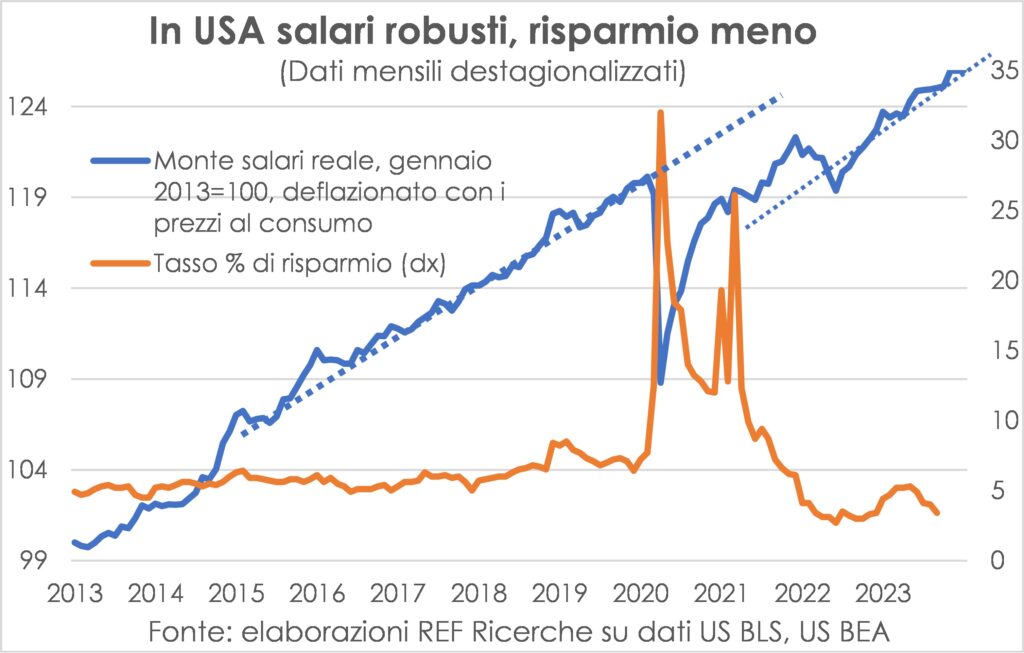
The interesting aspect is that in January the dynamics remained intact and intense and the same will be the case in the coming months, given the still high ratio between vacancies and unemployed. This guarantees that consumption will continue to be the engine of growth in the Stars and Stripes, also because real wages have begun to increase again, thanks to the decline in inflation combined with still significant salary increases.
These are not the only ones good economic news of the first weeks of 2024. There are at least two more. On a geographical level: in Asia China has hammered another nail to climb into the recovery, even if orders continue to show little dynamics, India has reaccelerated at a very rapid pace and Japan also recorded a solid increase in activity and orders in the tertiary sector; in Europe, faced with the continued and marked weakness of France and Germany, Italy and Spain are still growing despite the tendency to decline in industrial production.
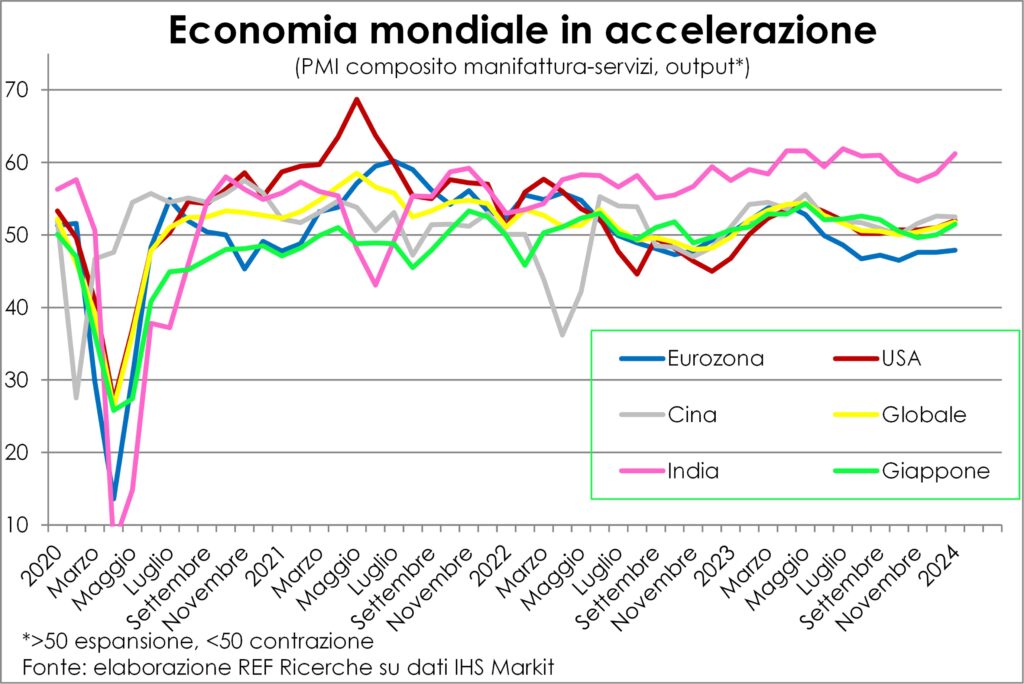
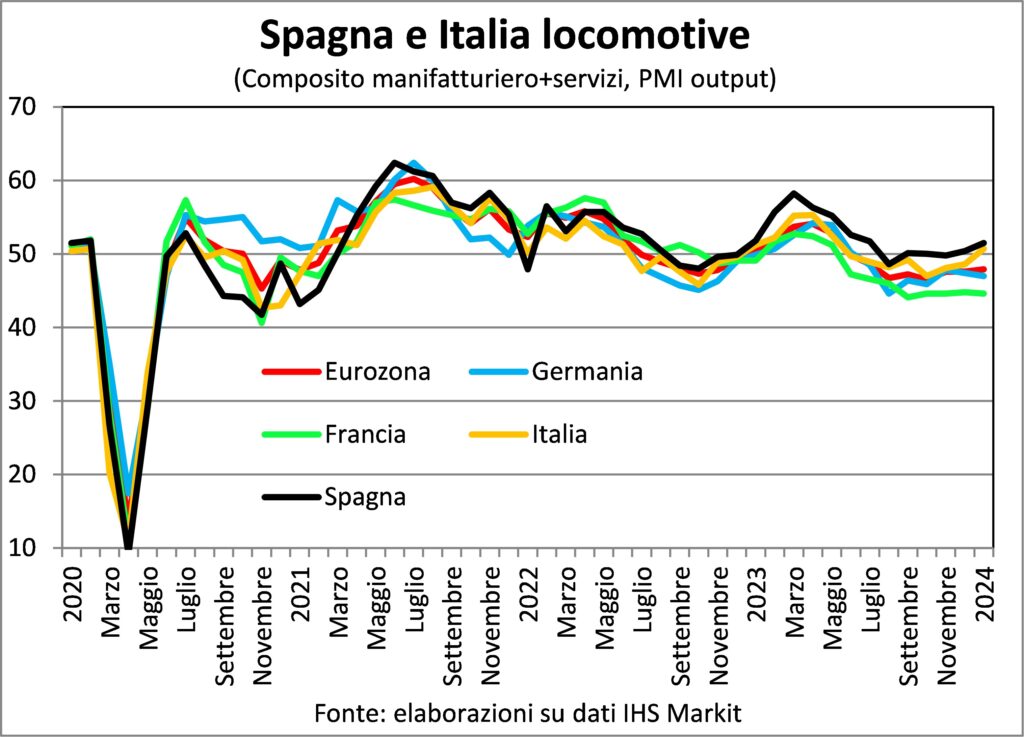
On a sectoral level, at a global level the curves of production they are improving both in services and in manufacturing, while for orders only those in the tertiary sector are expanding, because industrial ones remain in decline (but to a lesser extent).
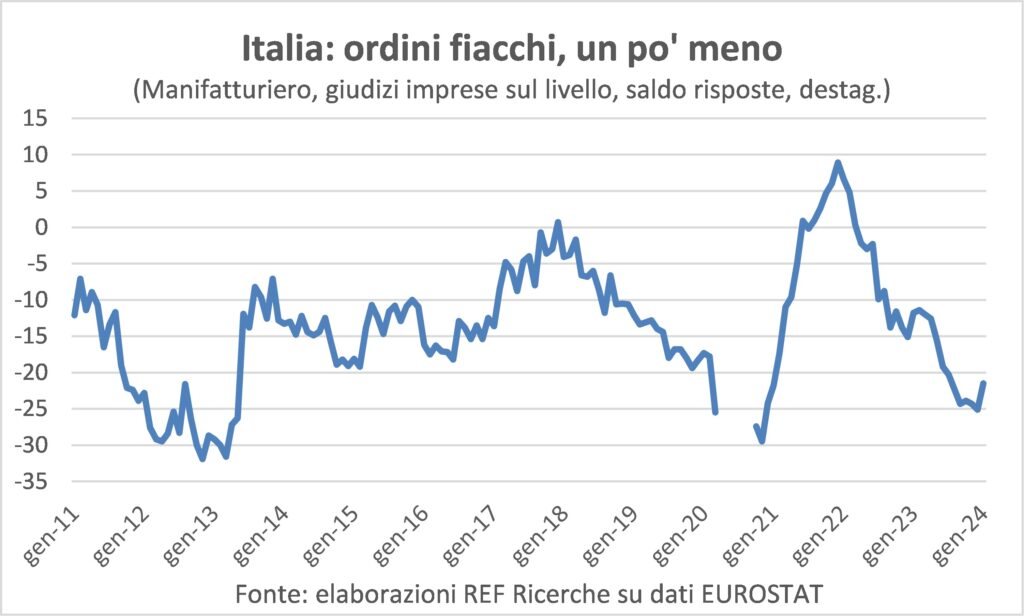
La lack of ordersIn fact, this is what worries Italian manufacturing companies the most. Ratings improved somewhat in January, although they remain sluggish. But for once Italy doesn't get pneumonia when the rest of Europe has a cold.
In summary: the signs of reinvigoration of the world economy have become more evident and widespread, e.g forecasts will be revised further upwards, after the adjustments at the beginning of 2024 by the OECD and IMF; the economic systems have demonstrated considerable resistance to the treatment of higher rates, and the fear of recession must be sent to the attic; the demand for services has spread a safety net, supporting employment and cushioning the fall in manufacturing and construction activity, which are more sensitive to the higher cost of money; the US is experiencing higher growth with decreasing inflation; the expectation is consolidated a 2024 worthy of Goldilocks.
The dream of flying in the blue painted blue can continue, despite the widening of the war fronts from Ukraine, to Gaza, to the Red Sea. But, regarding the Red Sea, apart from the geopolitical risk of an expansion of the conflict towards Iran, on an economic level the consequences are modest: oil tankers and containers will have to make a longer journey, and, for a limited time, freight rates they will cost a little more.
INFLATION
La disinflation continues. More slowly now that the impact of the cost reduction is wearing off raw material energy, non-oil and food commodities. Their decline will also have indirect repercussions, affecting the price lists charged by the companies that use them. But it is clear that these repercussions are diluted as they travel along the supply chains towards final demand and move from industry to the tertiary sector.
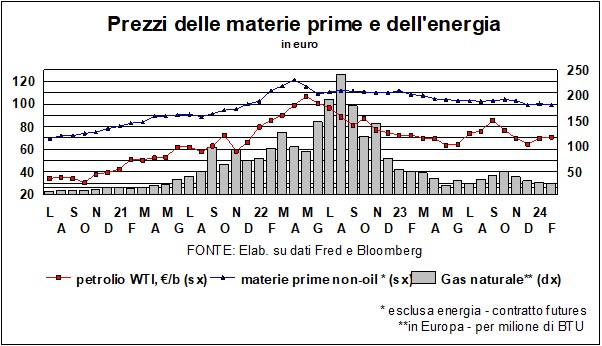
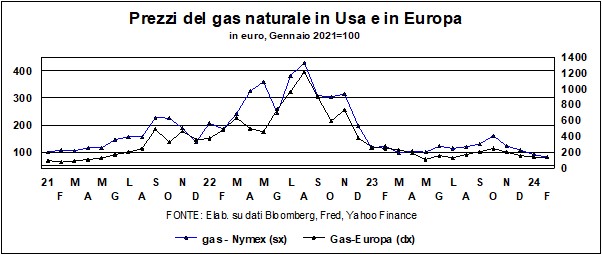
That's why the curve of the acceleration first and then the deceleration of consumer prices is much less marked when prices are observed best before date core. And within these, to understand if there are residual inflationary outbreaks, we need to look at that 'core of the core' which are the consumer prices of non-housing services. Since the production cost of the latter is largely composed of cost of labor, monitoring the trend of wages is a way to understand where the cooling of inflation will end up, whether the hydra will return docile to that fold that reassures central bankers, markets and citizens and where it escaped from two and a half years ago . Even taking into account that what is important lies between wages, understood as the cost of labour, and prices productivity diaphragm. Which can make a bold pace of wages compatible with a moderate rise in prices (and also the opposite: with low productivity gains even tepid wage increases can keep the rise in prices high).
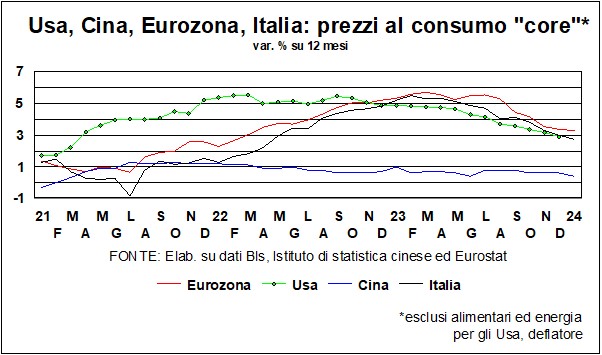
So, what does the analysis say aboutsalary trends? What in the United States they are certainly cooling, even if the different measures differ in pace and intensity. Most of all they slow down salary offers, which are those that had also surged the most but which concern a small portion of the stock of employed people. At the other extreme there is the wage tracker, which follows the remuneration obtained by individuals and which in January fell to the lowest value since December 2021. In the middle there are hourly wages, which instead had a sharp increase on last month but which are affected by the composition of employment, being an average, and by the hours worked per week, which were reduced by the adverse weather.
In 'euro area this mass of statistics is really missing. The dynamics of labor costs are recorded quarterly and the series is stopped in the summer of 2023 (+5,3% over the previous four quarters). The wages offered are slowing down, but not everywhere and in any case their annual variation is close to the recently reached peak. In Italy, contractual wages are very different - and slow to move - compared to de facto wages, but it is worth pointing out that in the latest Istat data the December 2023 index has shot up, to +7,9% on the year, driven by the payment of the contractual holiday allowance for the Public Administration, which recorded a +22% for PA salaries (this is, however, a one-off). In any case, contractual wages are not standing still (and yet they are moving...), given that in December wages in industry are at +4,5%, for metalworking at +6,2% and for credit at +7,3 ,1%. With inflation below XNUMX%, real wages are doing well…
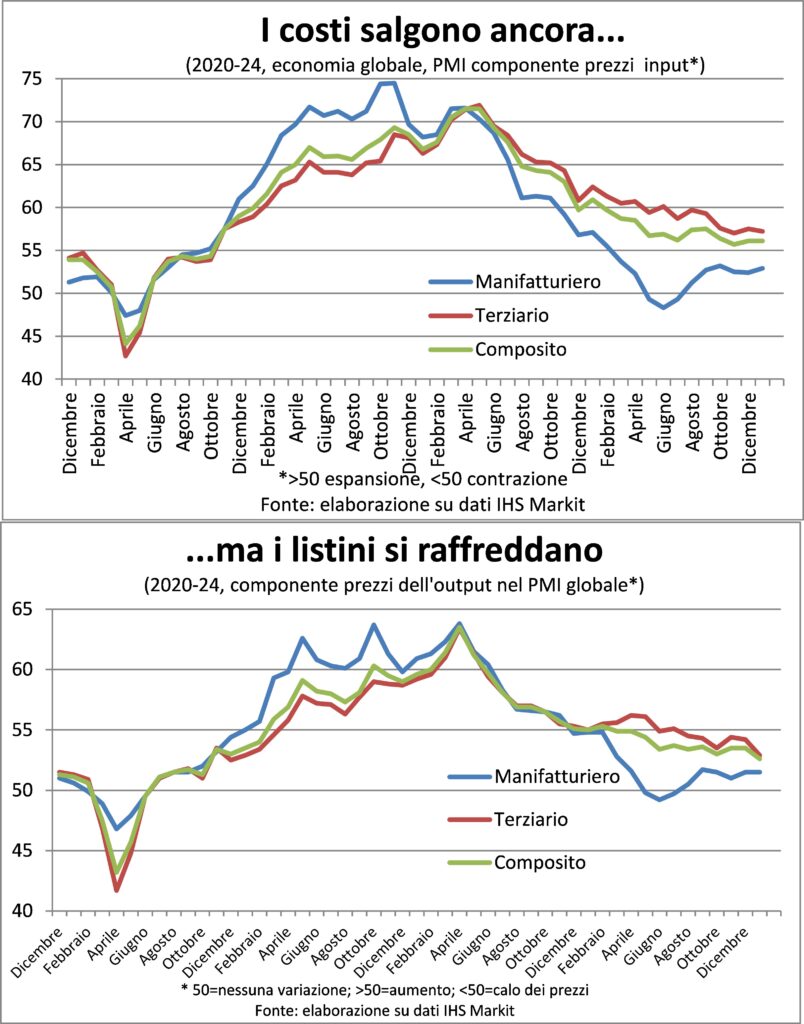
Coming from the particular to the general, it must be noted that on a global level tensions over prices paid and charged However, they are returning, despite many companies reporting increased costs due to the dangerous navigation of the Red Sea. The prices charged component fell in January to the lowest level since October 2000: 52,6, it was at 63,5 in April 2022, and before the pandemic it stood at 51,5. But it was a time of creeping deflation.
RATES AND CURRENCIES
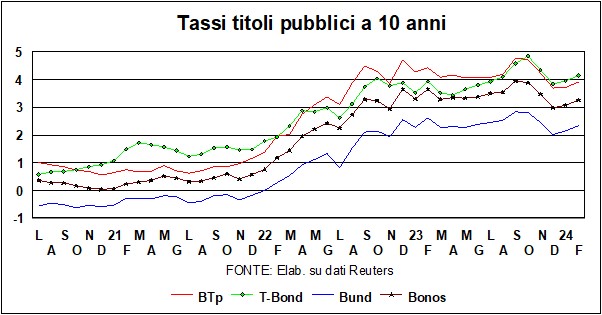
I financial markets they don't really know what to think about the stability of economic activity: on the one hand they should be happy with the good news on thereal economy, which boost profits; on the other hand, they worry that that good news also comforts them Central banks – primarily the Fed – in postponing the desired easing of monetary policy. And the prevalence, sometimes of one and sometimes of the other, explains the swing in rates. But markets should, after weighing the pros and cons, welcome the stability of the economy: if there is growth, "everything else will be given to you" (Matthew, 6,33).
However, this holding poses other problems for monetary policy. It has often been said that the restrictive maneuver on the key rates (also caused by the drying up of liquidity linked to the non-renewal of the securities held by the Central Banks) was, on both sides of the Atlantic, the most intense and rapid of the post-war period. In fact, in the space of 24 months, rates have risen by more than 5 points for the Fed, and by 4,5 points for the ECB, to today's levels of 5,3% (Fed) and 4,5, respectively. 30% (ECB). It will be said that we started from a very low level, but the level reached is compared with an average of the last XNUMX years for the Fed and the last 24 for the ECB (which was born only in 1999), respectively, by 2,5% and 1,6%. One might have expected a blow of this magnitude would have led to a sharper slowdown in the economy than that subsequently observed. There is a parallel here with the movements of you change: devaluations and appreciations – and this is an observation that has been made for some time – they have fewer effects than before on competitiveness and inflation: competitiveness factors other than price have assumed greater importance, and globalization has blunted the impacts on prices. But let's get back to rates and the economy.
The factors that have attenuated the impact of rates on economic activity at this turn of the cycle there are at least two: on the one hand - and this is nothing new - banks are less and less the privileged suppliers of credit to businesses. These also have other sources of financing, from risk capital (stock exchange - which in turn has various declinations -, venture capital, through crowdfunding and various other devilry of the fintech…). It is no coincidence that where banks have a lower share of financing for businesses - as in America – the economy avoided the rate increase with greater ease.
The second factor is theincrease in employment, both in Europe and America. Paradoxically, the more the thoughtful warnings about job losses linked to globalization, telematics and - lastly - Artificial Intelligence multiplied, the more the statistics churned out comforting increases in employment. The reasons for this welcome are not yet entirely clear, but it certainly played a role growing importance of services, which are structurally labor-intensive, and which have grown more rapidly after the closures imposed by the pandemic.
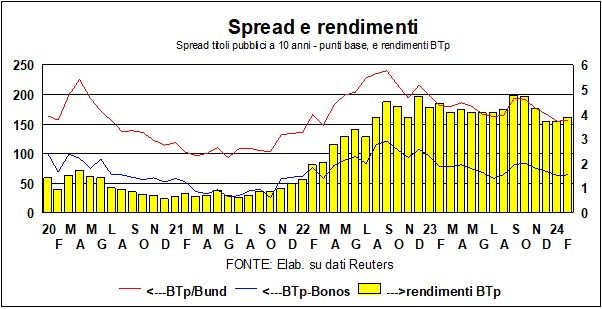
That said, what will the Fed and ECB do? Further rate increases can now be ruled out (although another central bank, the Australian Reserve Bank, which has just confirmed the key rate at 4,5%, has said it does not want to rule out future increases). And the Bank of Japan has never increased them so far, so it will have to recover... The past increases in the cost of money have not yet exerted all their effects (monetary policy acts, according to the famous expression of the Nobel Prize winner Milton Friedman, with delays " long and variable”), and it is therefore better to stay at the window and wait (with your finger on the trigger?). It is very likely that something will move (downward) in the second half of the year. And Italy will be able to benefit from it, as can be seen from the good performance of the spread.
Meanwhile, there are reasons to think that the monetary policy posture, apart from rates and Qt (Quantitative tightening), Are you slowing down the economy more than it should? There are those who complain that the ECB rate for bank deposits, at 4%, does not encourage institutions to do their job, which is to lend money. Why bother with giving funds to companies, when they can earn 4% simply by parking said funds at the ECB, at zero risk? The objection is that the average rate of loans to businesses is above 4%, and it is a zero risk too. In the sense that rates for businesses already incorporate a risk premium, and therefore, in the aggregate, can be said to be zero risk. The problem lies in the demand for credit, which depends on confidence and aggregate demand. If the economy improves, and businesses ask for loans, we don't see why banks shouldn't do their job.
- high rates, as expected, they cause victims lowering the value of assets, especially in construction. The problems are especially acute for commercial buildings, and the concerns, which began in America, are also spreading to some institutions in Europe. And there are the spillovers from the Chinese real estate crisis: with China's real estate having to sell off investments elsewhere to raise cash, this will put further downward pressure on values in Europe and the US. But it's not another typical crisis subprime: Central Banks know how to deal with these problems.
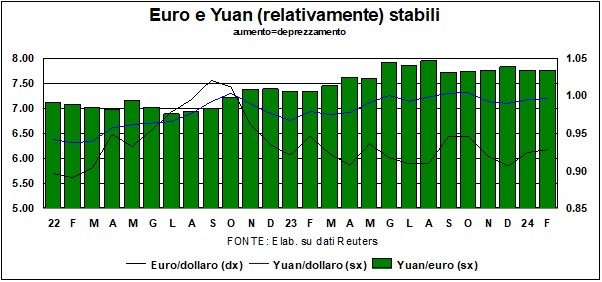
Il dollar it strengthened, while remaining, against the euro, in the 1,05-1,10 range in which it has been resting for months. The native strength of the American economy acts as a support, and the weakness of the former locomotive of the Eurozone - Germany - keeps the euro in check. There chinese coin, which in September had recorded a depreciation of 16% (against US$) compared to the levels at the beginning of 2022, has strengthened slightly, but maintains a substantial competitiveness/price margin: a margin it needs, as evidenced by the fact that his Trade surplus with the United States fell to its lowest level for many years (and has lost, in favor of Mexico, the role of main supplier to the USA).
I stock markets, like the American economy, they don't really want to land. The S&P500 is at the record level of 5000 and almost everywhere (see also the MSCI World Index) the stock markets are going up historical highs; even Japan's Nikkei is only 5% off its December 1989 highs (it took a while!). Is there a bubble smell? We've been smelling it for a long time, but the facts have proven us wrong... But they haven't proven it wrong recommendation to give first place to actions in the evergreen garden of savers and investors.