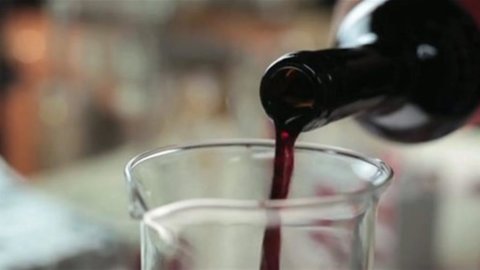
Hakuyo Glass is a Japanese company that produces glass bottles: until a few years ago profits were good, then, with the spread of plastic bottles, the demand for glass bottles began to decline. At Hakuyo they tried to understand why consumers no longer wanted to use glass. Glass bottles are more beautiful - they said - more ecological, more hygienic and have greater heat resistance.
A market survey finally revealed that the main advantage that plastic bottles have over glass bottles is that the lid opens more easily. Upon hearing this news, Hakuyo ran for cover and decided to make a restyling of their product. Noriko Hashida, a professor at Shibaura Institute of Technology's College of Engineering and Design, was contacted and his team was tasked with designing a bottle that could be opened effortlessly by everyone, including children, elders and young girls. anemic.
First, Hashida asked a sample of men and women between the ages of 20 and 80 to try to open 15 glass bottles already on the market and for each bottle he assigned a score relating to the "ease of opening the lid" and to the "appealability" of the bottle. She then measured the muscular efforts made to unscrew the cap using an electromyograph and examined how a force applied to the bottles, using clay casts. The research has led to two fundamental results: 1) a safe and comfortable grip of the bottle depends on the shape of the bottle itself; 2) the shape of the bottle also affects the ease of opening.
At this point, the Shibaura Institute team reviewed several possible shapes, and then gradually narrowed the field and eventually identified the parallelogram as the cross-sectional shape that best rewards the muscular work exerted to open the bottle. Hakuyo immediately applied for a patent and intends to commercialize the new bottle as an ideal container for food as soon as possible.
Attachments: Japan Today